lucid dreaming
Reality Check Lucid Dream Practice After Audio
A quiet reality check lucid dream practice to use after Dream-Self audio, with body-based tests, timing cues, and soft repetition before sleep tonight.
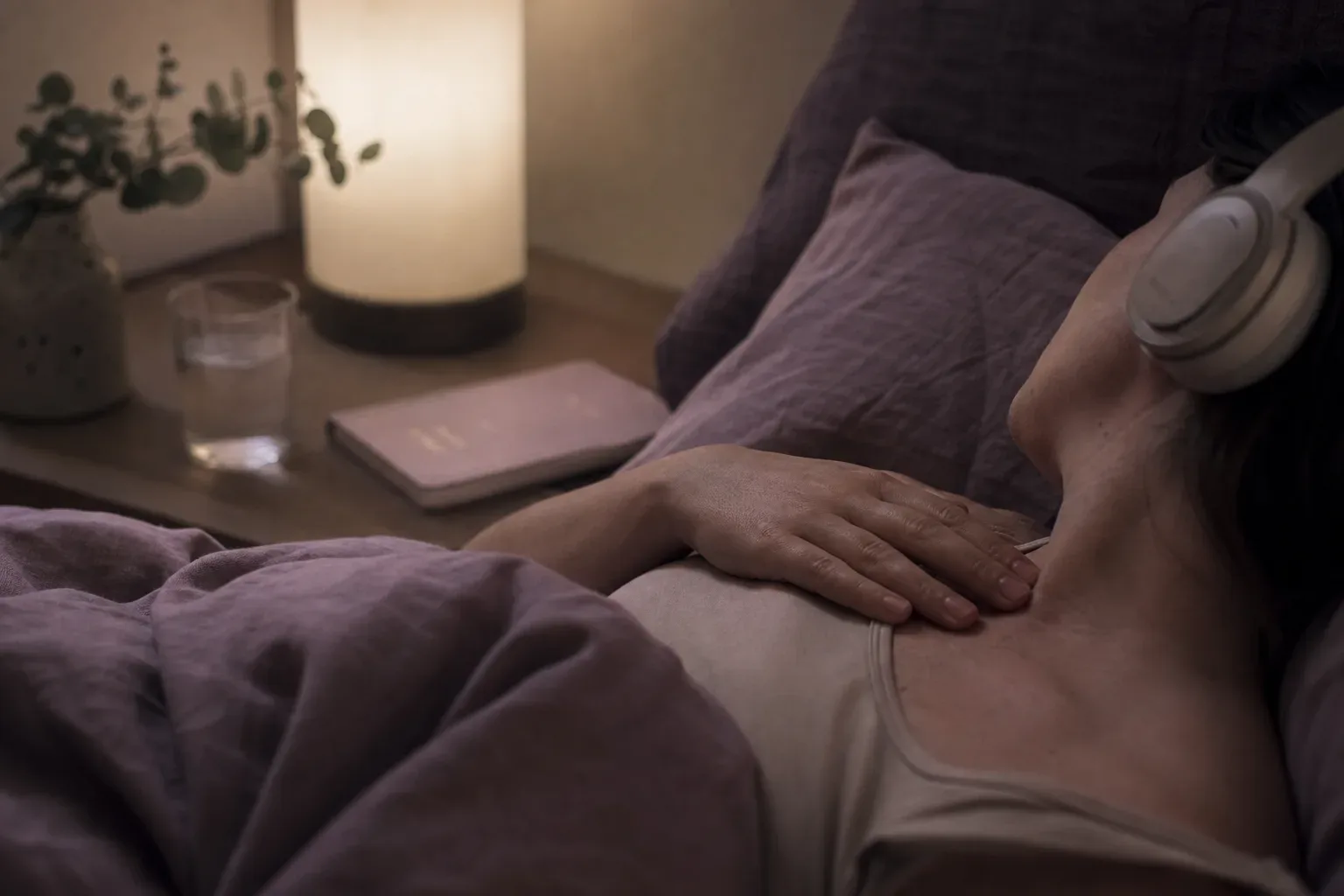
The room is dark. Your headphones are still warm. A reality check lucid dream practice after Dream-Self audio is this: listen first, stay still, ask if you’re dreaming, do one simple test, then sleep. The check is small on purpose. It teaches your dream mind what to notice.
Why place a reality check after Dream-Self audio?
Place it after the audio because the listening has already softened your attention and given the mind one clear future-facing cue.
The AYA Method is a daily audio manifestation practice. Each day you listen to a short personalized recording — your Dream-Self Moment — narrated from the version of you who has already manifested the life you intend. Listening is the practice. Repetition is the work. The audio is the method.
A reality check doesn’t replace that. It sits beside it. The daily affirmation and Manifestation Board can support the wider practice, but here the useful thing is the audio’s timing: you’re already quiet, inward, and close to sleep. Lucid dreaming researchers often work with the border of sleep because REM periods lengthen across the night, with cycles repeating roughly every 90 minutes according to standard sleep architecture studies from the National Institute of Neurological Disorders and Stroke.
Lucid dreaming isn’t rare. A 2016 meta-analysis by Saunders and colleagues reported that about 55% of people have had at least one lucid dream, and about 23% report them once a month or more. That matters because the practice doesn’t ask you to become a different kind of sleeper. It asks you to repeat a cue until it becomes familiar enough to appear when the dream is already happening.
A reality check works best when it feels ordinary enough to follow you into the dream.
The body helps here. After audio, the nervous system has fewer tasks. No scrolling. No explaining. No performance. You can use that quiet minute to mark a simple question in tissue: Am I dreaming? Somatic work doesn’t make the dream obey you. It teaches attention to return without force.
If you want the wider context, read the Manifestation pillar slowly. Then come back to the bed. The check begins where the body is, not where the mind wishes it were.
What reality check should you use first?
Use one check that is physical, repeatable, and slightly strange when it works.
Choose less. Not five tests. Not a full ritual. One reality check lucid dream cue is enough for the first 7 nights. Stephen LaBerge’s early lucid dream research, including the 1981 eye-signal verification work at Stanford, showed that lucidity becomes measurable when dreamers remember a planned action inside the dream. That is the heart of the practice: remembering a planned action when the usual rules soften.
Here are three checks that fit well after audio:
- Nose-pinch breath check. Pinch your nose closed and try to breathe through it. In waking life, you usually can’t. In a dream, many people can.
- Text reread check. Read a short line, look away, then read it again. Dream text often shifts.
- Finger-to-palm check. Press one finger into the opposite palm and ask if it could pass through. In waking life, it won’t. In dreams, it sometimes does.
Use the same one every night. In a 2017 study by Denholm Aspy and colleagues with 169 participants, techniques that relied on prospective memory, especially MILD, performed better when practiced close to sleep and paired with a clear intention. Reality checks use a similar muscle. You rehearse remembering.
| Check | Best for | Time needed | Quiet cue |
|---|---|---|---|
| Nose-pinch breath | Body-based dream signs | 10 seconds | Can I breathe? |
| Text reread | People who read before bed | 15 seconds | Did the words change? |
| Finger-to-palm | Tactile learners | 10 seconds | Is this solid? |
Don’t make the check dramatic. Drama wakes the body. A quiet test can pass through the gate of sleep more easily than a complicated one. If you practice affirmations, you may already know this: one sentence repeated with sincerity often does more than ten sentences repeated with strain.
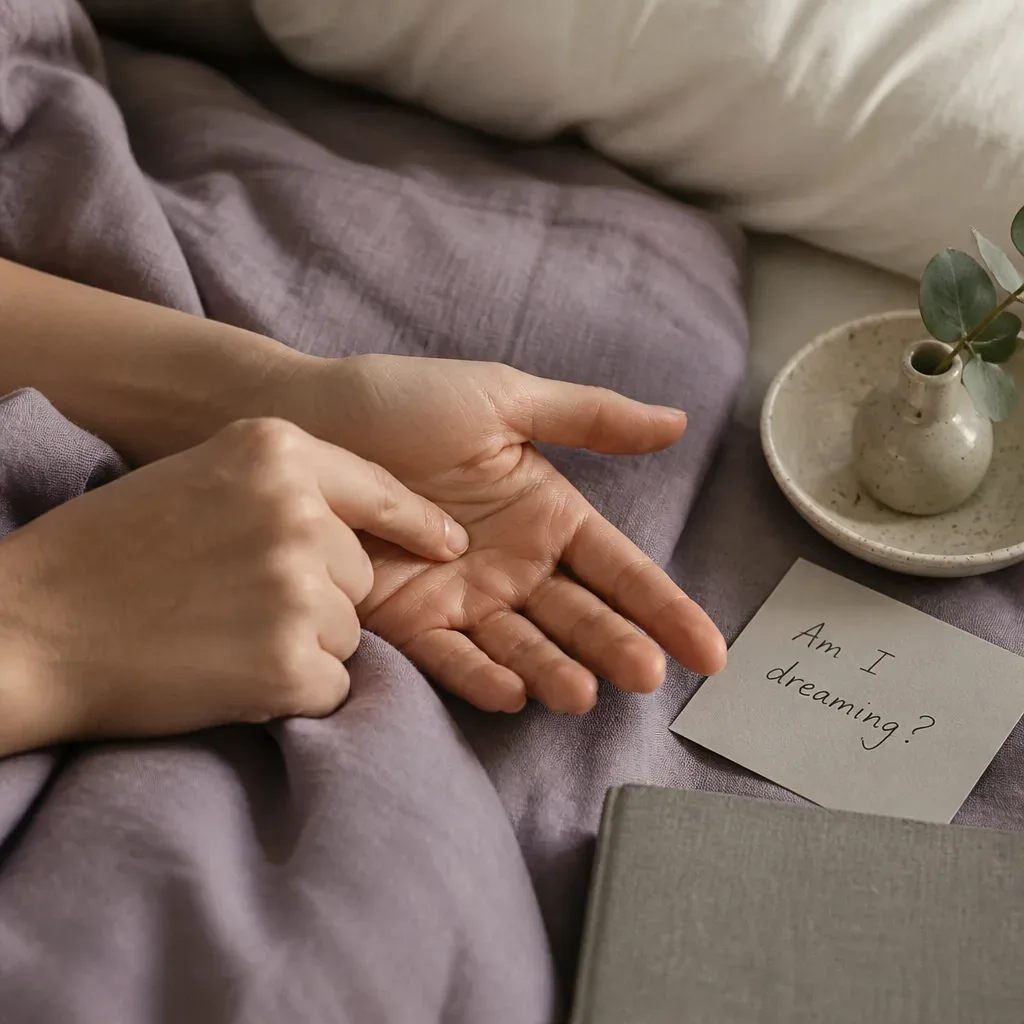
How do you do the 7-minute practice tonight?
You do it by listening, pausing, checking, naming the intention, and then letting the practice end.
Set a small container. Seven minutes is enough. A sleep routine doesn’t have to expand until it crowds out sleep. The American Academy of Sleep Medicine notes that most adults need at least 7 hours of sleep for health, so the practice should protect bedtime, not steal from it. Keep the light low. Put the phone face down after starting the audio. Let the bed stay a bed.
Try this sequence:
- Minute 0 to 3: Listen to your Dream-Self Moment. Don’t add a task. Let the words arrive.
- Minute 3 to 4: Stay still. Feel the mattress. Notice the jaw, throat, ribs, belly, and hands.
- Minute 4 to 5: Ask the question. Say inwardly, Am I dreaming right now?
- Minute 5 to 6: Do one reality check. Use your chosen test once, slowly.
- Minute 6 to 7: Set the cue. Say, If this feels strange in a dream, I’ll know I’m dreaming.
The sentence matters. Prospective memory is the ability to remember to do something later, and it is central to many lucid dreaming methods. In small lucid-dream induction studies, including Aspy’s work, intention phrases are often paired with sleep interruption or bedtime repetition. You don’t need to wake yourself tonight. You only need to speak the cue plainly.
The practice is not to force a lucid dream. The practice is to become the kind of listener who notices.
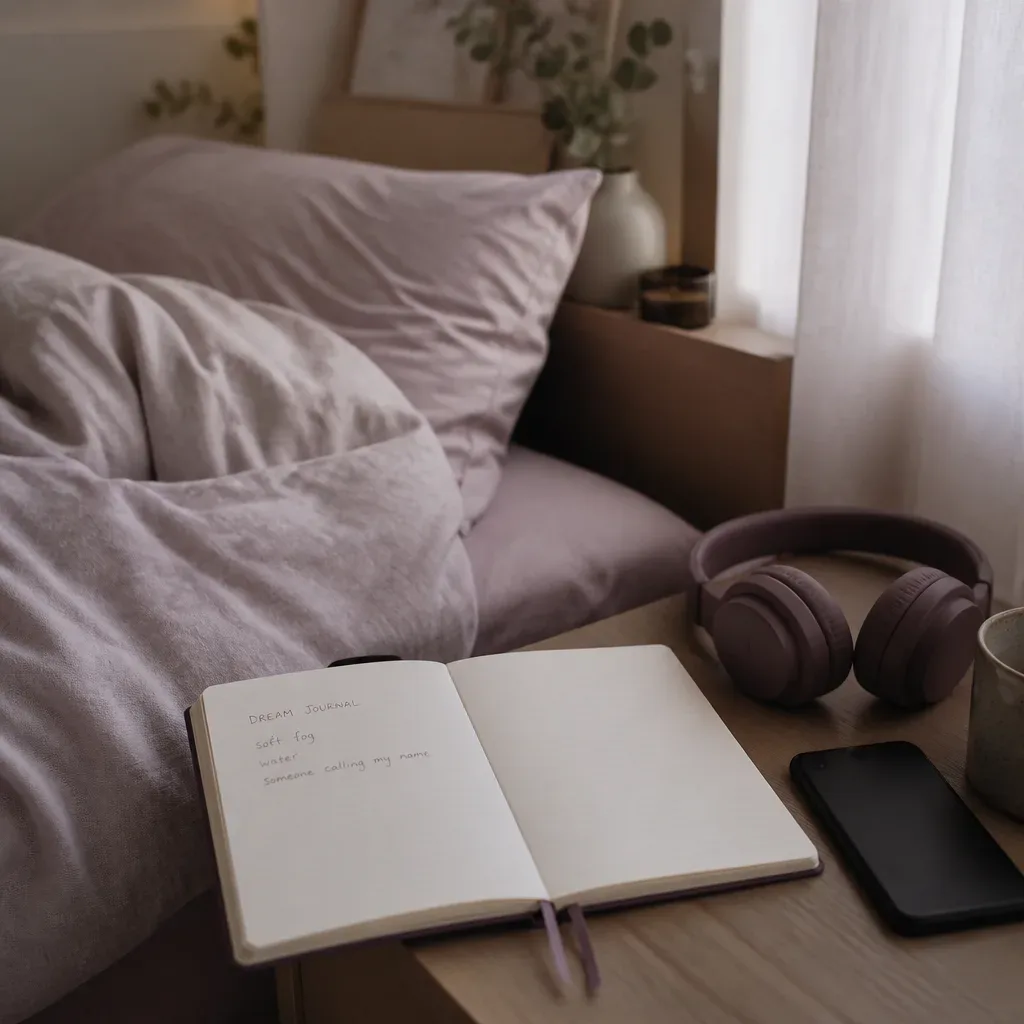
If you wake in the night, don’t reach for proof. Write down one image if you keep a dream journal. Schredl and Erlacher’s dream recall research has repeatedly shown that recall frequency can improve with regular attention and recording. One line is enough: blue hallway, grandmother’s coat, teeth like shells. The mind learns that dreams are worth remembering.
What should your body notice during the check?
Your body should notice the felt sense of asking, not just the answer you give.
Most people rush the question. They ask, Am I dreaming? Then they answer no before the body has received the question. Slow it down. The point isn’t to prove waking life. The point is to create a recognizable pause. In lucid dreams, dream signs are often odd but emotionally ordinary: a dead relative appears, a room has no door, your phone won’t work. The check teaches you to pause when something is off by even 5%.
Use the body as the anchor. Put one hand on the sternum if that feels safe. Let the exhale lengthen by one count. Dr. Andrew Huberman has often discussed the physiological sigh as a fast downshift for arousal, and lab work from Stanford on cyclic sighing has suggested short daily breath practices can reduce stress markers over weeks. You don’t need a full breath protocol here. One softer exhale is enough.
Then do the test. Notice texture. Skin against skin. The small pressure of thumb and finger if you pinch your nose. The tiny disbelief of trying to breathe anyway. This is somatic detail. It gives the dream something to copy.
A useful check has three layers:
- Question: Am I dreaming?
- Sensation: What does my body feel as I ask?
- Test: What happens when I try the chosen action?
Intention travels at the speed of tissue, not the speed of thought.
Some nights the check will feel flat. That’s fine. In meditation research, even 8-week programs often show change through repetition rather than one special session, and sleep learning is no different. You are laying down a groove. Softly. Night after night.
How does this fit with manifestation without making sleep tense?
It fits when manifestation gives the dream a direction, while the reality check keeps the practice simple.
Lucid dreaming can become another place to try too hard. You can feel it in the forehead. You can feel it in the tongue. The wish to become lucid turns into a small command. The body hears command as work. Sleep prefers permission. This is why the Dream-Self Moment comes first: it gives your attention a felt image of a life already known, then asks you to listen rather than strain.
Neville Goddard wrote often about entering sleep from the wish fulfilled. Joe Dispenza speaks in a different register about rehearsing a future self until the body begins to recognize it. You don’t have to take either teacher literally to see the shared principle: the state before sleep matters. Hypnagogic research also points to this border as a vivid transition, with imagery and body sensations appearing as waking loosens.
If you use astrology and manifestation as a timing language, keep it gentle. A moon phase can remind you to practice, but it doesn’t need to become pressure. One check after audio on three nights of the week is better than an elaborate plan that collapses by Thursday. Lucidity likes sincerity more than spectacle.
Here is the difference to keep clear:
| Part of practice | What it does | What it is not |
|---|---|---|
| Dream-Self audio | Lets you listen from the future self | A task to analyze |
| Reality check | Trains dream awareness | A guarantee |
| Dream journal | Supports recall | A grading system |
| Affirmation | Names one clear cue | The main method |
The audio is the method. The check is a doorway tap. If the dream opens, good. If it doesn’t, the body still practiced returning to a chosen truth without force.
What should you do when the check fails or nothing happens?
When nothing happens, keep the practice smaller rather than adding more.
Most nights will be ordinary. This isn’t a failure. In lucid dreaming surveys, frequent lucid dreamers are a minority: the Saunders meta-analysis placed monthly or more frequent lucid dreams at about 23%, which means regular lucidity is not the baseline for most sleepers. If you expect nightly results, the practice will begin to feel like a test you can lose.
Start with recall. For 14 nights, write one line when you wake. If you remember nothing, write, no recall. This still marks attention. Dream researchers often use diaries because recall is unstable and easy to overestimate after the fact. A one-line record gives you a real pattern: more dreams after early bedtime, stranger dreams after late meals, clearer recall after less alcohol.
Then adjust only one variable at a time:
- Move the audio 10 minutes earlier if you keep falling asleep before the check.
- Use the nose-pinch check if visual checks feel too mental.
- Practice one daytime check after something odd happens, such as a light flickering or a sentence repeating.
- Stop journaling in full paragraphs if it makes you too awake.
Daytime checks help because dreams borrow from waking life. Do one at lunch. One when you enter a doorway. One when you see your reflection. Keep it under 20 seconds. The quiet rule is the same: ask, feel, test, return.
The dream doesn’t need your pressure. It needs your return.
If fear appears, pause lucid dreaming practice for a few nights and stay with the audio only. Nightmares, sleep paralysis, or intense dreams can make the nervous system guarded. Studies of lucid dreaming and nightmares are mixed but promising in small clinical settings, especially when people learn to recognize the dream state. Still, your body gets a vote. Listen to it.
When is the best time to use reality checks for lucid dreams?
The best time is after your Dream-Self audio at bedtime, plus once after a natural night waking if you wake easily.
REM sleep becomes longer in the second half of the night, so many lucid dreaming techniques use wake-back-to-bed timing. That means waking after 4 to 6 hours, staying awake briefly, then returning to sleep with intention. It can work, but it can also disturb rest. If you’re sensitive, have insomnia, or wake for caregiving, don’t add more waking. Use what life already gives you.
A gentle version looks like this: if you naturally wake around 3 a.m. or 5 a.m., don’t turn on bright light. Stay still. Remember your cue. Do one mental reality check by asking, If the next scene is a dream, will I know? Then sleep. No phone. No timer. No performance.
For people who like structure, use this weekly rhythm:
| Night | Practice |
|---|---|
| Monday | Audio plus one bedtime check |
| Tuesday | Audio only |
| Wednesday | Audio plus one bedtime check |
| Thursday | Audio only |
| Friday | Audio plus check and one-line journal |
| Saturday | Optional natural-waking cue |
| Sunday | Rest, recall, no extra effort |
This gives you 3 to 4 checks a week, which is enough to build association without crowding sleep. It also respects what Pew Research Center has reported more broadly about digital life: many adults already feel tethered to devices. Your practice should not become one more reason to hold the phone in bed.
Keep returning to the simple form. Listen. Pause. Ask. Test. Sleep. If you want a wider frame for intention language, the Affirmations pillar can help you keep the cue clean. If you want the larger home of the practice, return to the AYA Method and remember what it asks first.
The night doesn’t need to be conquered.
Only heard.
Listen on Aya

