affirmations
Sleep Affirmations vs Dream-Self Audio Before Bed
Sleep affirmations can calm the mind before bed, while Dream-Self audio gives the body a fuller future-self scene to rehearse.
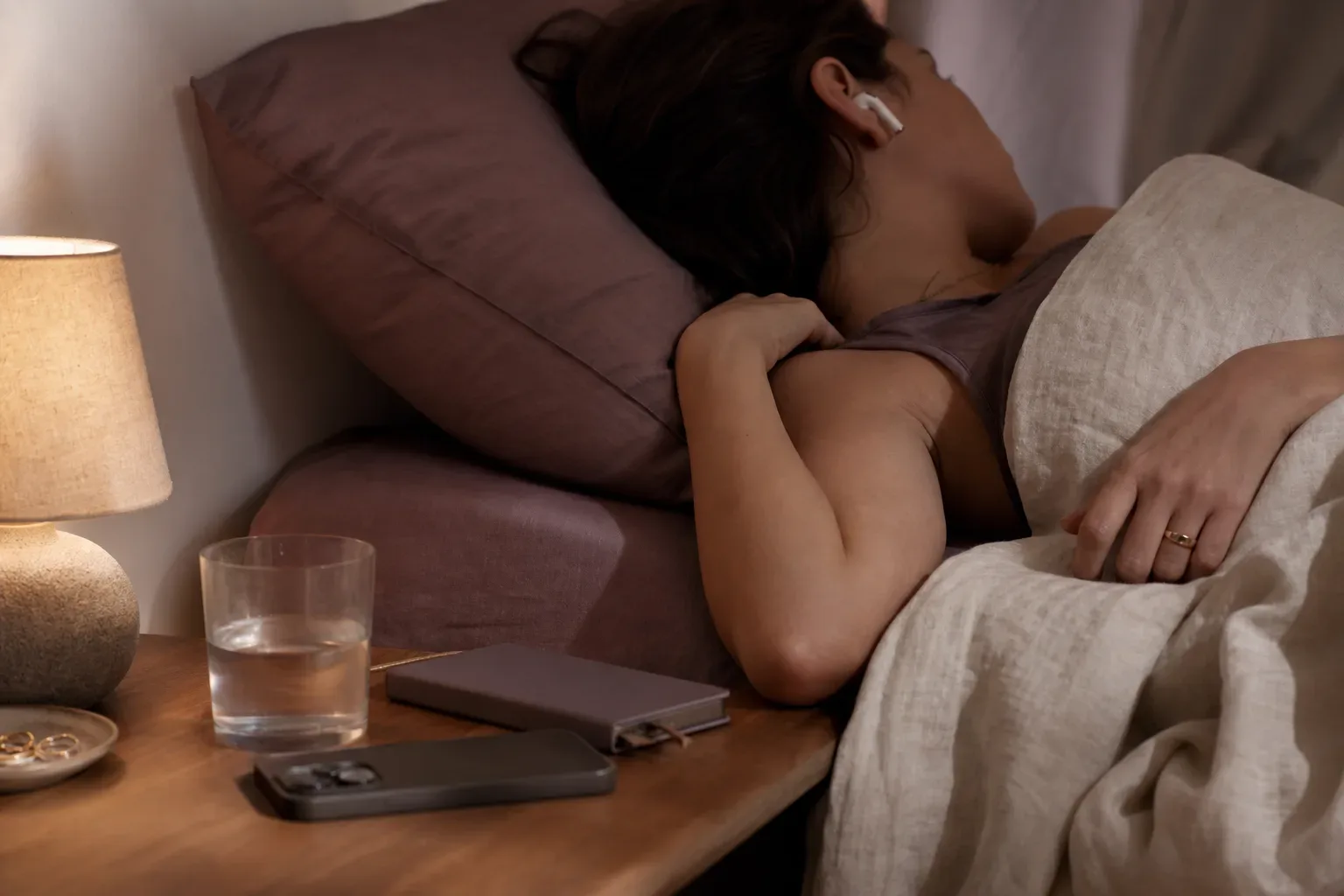
The lamp is low. Your phone is face down. Sleep affirmations work best as short, repeated sentences before bed, while Dream-Self audio works by letting you hear a fuller version of your future self. One steadies the thought. The other gives the body a scene to remember.
What are sleep affirmations doing before bed?
Sleep affirmations give the mind one simple sentence to hold as the day loosens its grip.
At night, the mind likes to sort. It replays the message you should have answered, the tone you heard at lunch, the thing you forgot to buy. A sleep affirmation gives that sorting mind a smaller task. One sentence. One rhythm. One place to rest. The practice can be as plain as this: I am safe to sleep. I can let today be done. I know how to return to myself.
A 2013 review in Social and Personality Psychology Compass described self-affirmation as a process that can protect a person’s sense of self-integrity under stress. That does not mean a sentence fixes everything. It means the mind can respond differently when it is reminded of a stable part of you. Before bed, that stable part matters. Sleep is tender. You cannot wrestle yourself into it.
Sleep affirmations also have one practical advantage: they are low effort. The National Sleep Foundation has long suggested that a consistent wind-down routine can help cue sleep. The exact routine matters less than the repeatable signal. If you say the same line for 30 nights, your body begins to know what comes next. The sentence becomes a small room you can enter.
If you are learning more about the wider practice, the Affirmations pillar is a good place to begin. It names why language matters without making language carry more than it can hold.
A good sleep affirmation does not shout over fear. It sits beside it until the room gets quieter.
What is Dream-Self audio doing that affirmations do not?
Dream-Self audio gives your mind and body a narrated future-self scene, not just a single statement.
This is where the AYA Method comes in softly. The AYA Method is a daily audio manifestation practice. Each day you listen to a short personalized recording — your Dream-Self Moment — narrated from the version of you who has already manifested the life you intend. Listening is the practice. Repetition is the work. The audio is the method.
The difference is not only format. It is the amount of context your nervous system receives. A sleep affirmation may say, I am becoming steady. A Dream-Self Moment might let you hear your own future self moving through a morning, choosing with calm, speaking differently, receiving what once felt distant as ordinary. That gives the mind more to rehearse. It gives the body more to believe by repetition.
Neuroscientist Dr. Andrew Huberman has often discussed the role of repeated cues, attention, and nervous system state in learning. Bedtime is not a magic portal. It is a state change. Your alertness drops. Your body is preparing for sleep. In that softened window, a short audio practice can become a reliable cue, especially if you keep it under 10 minutes and listen at a low volume.
Neville Goddard wrote often about the state akin to sleep, using the drowsy edge of bedtime as a place to inhabit an assumed reality. You do not have to use his language to see the point. The body learns through felt rehearsal. Audio can make that rehearsal less abstract.
| Before bed practice | Best for | What it asks of you |
|---|---|---|
| Sleep affirmations | A short calming thought | Repeat one sentence gently |
| Dream-Self audio | A fuller future-self rehearsal | Listen and receive the scene |
| Both together | A ritual with a soft ending | Audio first, affirmation last |
Which one is better for falling asleep?
Sleep affirmations are usually better for immediate sleep, while Dream-Self audio is better when you want sleep to follow a felt inner rehearsal.
If your only need is to drift off, keep the practice very plain. One affirmation may be enough. Sleep researchers often recommend reducing cognitive load at night. A 2015 study in JAMA Internal Medicine found that mindfulness awareness practices improved sleep quality in older adults with sleep disturbance compared with sleep hygiene education alone. The lesson is not that every bedtime needs meditation. It is that a quieter relationship with thought can help.
Sleep affirmations are useful because they do not demand much imagination. You can repeat them with your eyes closed. You can match them to your breath. You can forget the words halfway through and still receive the signal: I am done for today. This is why many people return to them after long or crowded days.
Dream-Self audio asks for listening. That can be soothing, but it is a little more structured. If the recording is too stimulating, too loud, or too dramatic, it may wake the mind instead of settling it. The better bedtime audio has a slow pace, familiar tone, and no demand to perform. You do not need to visualize perfectly. You only need to listen.
Here is the quiet rule I use in somatic practice: if it raises your effort, shorten it. If it softens your breath, keep it.
A simple bedtime order can help:
- Dim the room at least 20 minutes before sleep.
- Put the phone on airplane mode if you can.
- Listen to your Dream-Self audio once, low and slow.
- Choose one sleep affirmation as the final line.
- Stop adding input. Let the body finish.
This keeps audio as the method and the affirmation as a complement. Small enough to repeat. Clear enough to become yours.
Which practice helps manifestation feel more real?
Dream-Self audio often makes manifestation feel more real because it includes identity, setting, emotion, and repetition in one listening practice.
A single affirmation can name a new belief. That is valuable. But many people struggle because the sentence feels far away from the body. I am confident may sound clean on the page and false in the chest. The mind can reject what the body has not yet touched. Dream-Self audio gives the body more contact points: your future voice, your ordinary details, your felt sense of being already inside the life you intend.
For a wider foundation, the Manifestation pillar explains why repetition and identity matter. In behavioral terms, repetition changes familiarity. In spiritual terms, repetition teaches the self what is allowed to feel normal. Both views point to the same small door: what you hear often becomes easier to inhabit.
Joe Dispenza’s work often centers on mentally rehearsing a future self until the body begins to respond to it as familiar. You do not need to accept every claim around that work to use the practical piece. Rehearsal matters. Athletes have used mental imagery for decades. A 1994 meta-analysis in Journal of Applied Sport Psychology found that mental practice can improve performance, especially when paired with physical practice. Manifestation is not sport, but the nervous system still learns through repeated inner rehearsal.
Sleep affirmations can also make manifestation feel real when they are specific and believable. Compare I have everything I want with I can receive more than I allowed yesterday. The second sentence gives the body a smaller, truer step.
The body does not need a grand promise. It needs a believable next truth.
If you like symbolic timing, you may also enjoy reading about astrology and manifestation. Let timing be supportive, not a rule that makes you tense.
When should you choose sleep affirmations instead?
Choose sleep affirmations when you are tired, overstimulated, grieving, traveling, or too full to receive a longer recording.
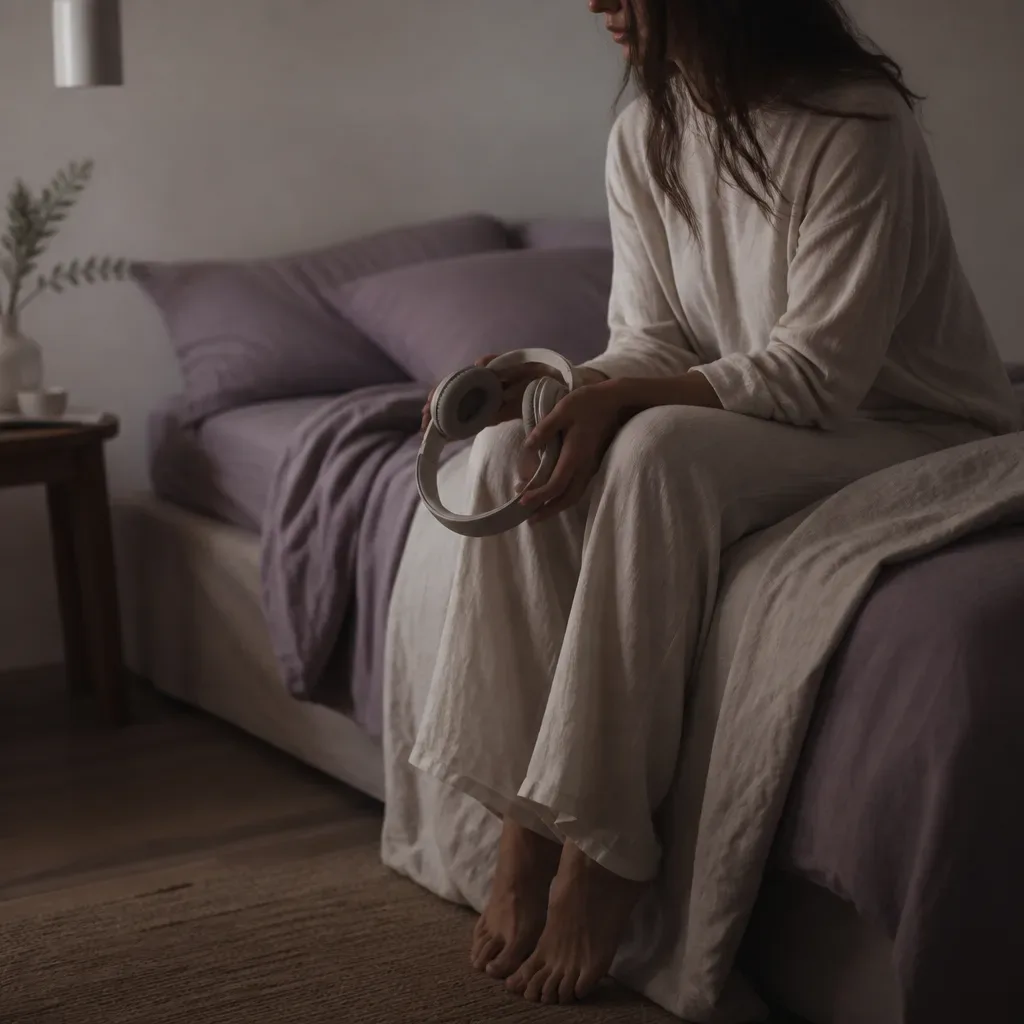
There are nights when a full practice is too much. Your body knows. Maybe you have been touched by too many voices all day. Maybe your nervous system wants less sound, not more. In that case, a sentence is kind. One breath. One phrase. No pressure to create a scene.
The American Academy of Sleep Medicine recommends adults sleep at least 7 hours per night for best health. If a manifestation practice keeps you awake past your natural window, it is not serving the night. The practice must bow to sleep. Sleep is not a prize for doing enough inner work. It is a biological need.
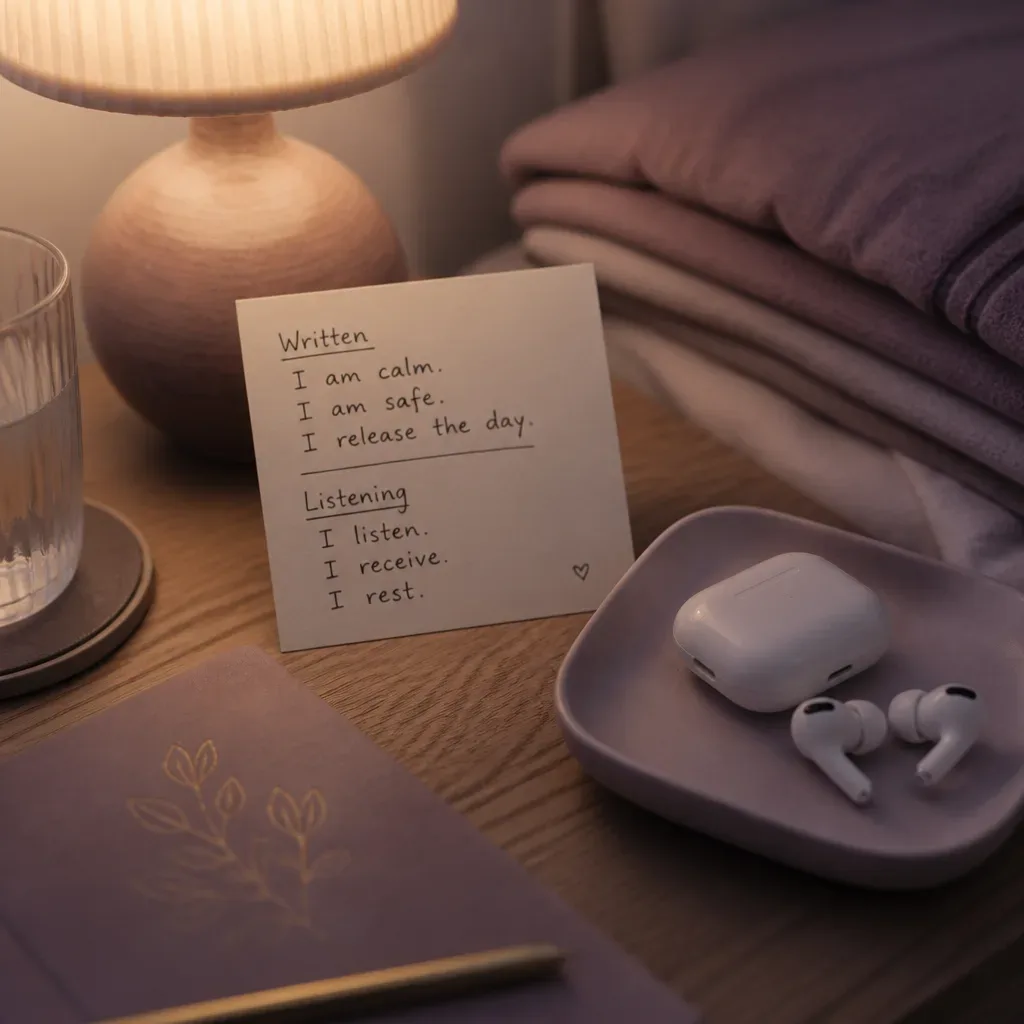
Sleep affirmations are also easier in shared rooms. You can whisper them. You can think them. You can write one on paper before turning the light off. If you wake at 3:17 a.m., you do not need to find headphones. You can return to the same line: I am here. I am safe enough for this moment. Nothing more is required.
Use sleep affirmations when:
- You have less than 3 minutes.
- You feel too alert for audio.
- You need silence.
- You are emotionally raw.
- You want one sentence to repeat during night waking.
- You are building trust with the practice again.
The Affirmations pillar can help you choose language that is both tender and believable. The best sentence is not the prettiest. It is the one your body does not have to fight.
When should you choose Dream-Self audio instead?
Choose Dream-Self audio when you want a fuller rehearsal of identity before sleep and you can listen without strain.
Some nights are ready for more than a sentence. You feel available. Not perfect. Just open enough to hear yourself differently. This is when Dream-Self audio can be especially useful. The recording does not ask you to invent the future from a tired mind. It carries the scene for you. You receive it. You listen. You let the repeated voice become familiar.
This matters because the brain is highly responsive to story and self-reference. A 2017 paper in Nature Human Behaviour noted that self-referential processing is a central feature of how the brain organizes personal meaning. In plain terms: when something sounds like you, and it concerns who you are, the mind pays attention. A personalized Dream-Self Moment uses that doorway gently.
Dream-Self audio is also helpful when your affirmations have become flat. Repeating I am loved may not reach you if the body has no scene for it. But hearing your future self describe the way you receive care, speak clearly, and move through a room with less guarding may give that sentence somewhere to live.
This is also why audio should stay at the center of the AYA Method. The app may include a daily affirmation and a Manifestation Board, but those are complements. The listening is the practice. The Dream-Self Moment is the part you return to, again and again, until the future starts to feel less like a performance and more like home.
Repetition is not about forcing belief. It is about making a new self less foreign.
If you are pairing this with broader manifestation, keep the night gentle. Bedtime is not the hour for fixing your whole life. It is the hour for giving your body one clear memory of where you are going.
How do you combine them without making bedtime too busy?
Use Dream-Self audio as the main practice and one sleep affirmation as the closing cue.
The mistake is adding too much. A recording, then ten affirmations, then journaling, then checking whether you feel different. That kind of ritual can turn into another task. Before sleep, your body needs fewer doors. Not more.
Try this for 14 nights, which is long enough to notice a pattern without making it a life sentence. Pick one Dream-Self audio. Listen once. Then choose one sleep affirmation that matches the feeling you want to carry into sleep. Keep the same affirmation for the full two weeks. Researchers studying habit formation have found wide variation in timing, with a 2009 European Journal of Social Psychology study reporting an average of 66 days for a behavior to become automatic. Fourteen nights will not make everything automatic, but it will show you whether the ritual is kind to your body.
Use this comparison when deciding:
| If tonight feels like… | Choose… | Keep it this long |
|---|---|---|
| Too much thought | One sleep affirmation | 30 to 90 seconds |
| Soft and receptive | Dream-Self audio | 3 to 7 minutes |
| Hopeful but tired | Audio plus one affirmation | Under 10 minutes |
| Restless at 3 a.m. | One repeated phrase | Until breath slows |
If you use a Manifestation Board, let it happen earlier in the evening. Images can wake the mind if you study them too close to sleep. Keep the last practice auditory or verbal. The final input should be easy to release.
A quiet sentence to end with might be: I can let this new life find me while I rest.
Tonight, let the last voice you hear be kind and yours.
Listen on Aya

