mindset
Soft Life Manifestation: 3-Minute Audio Before Work
Soft life manifestation can begin with one short audio before work. A quiet 3-minute practice for intention, steadiness, and real mornings.
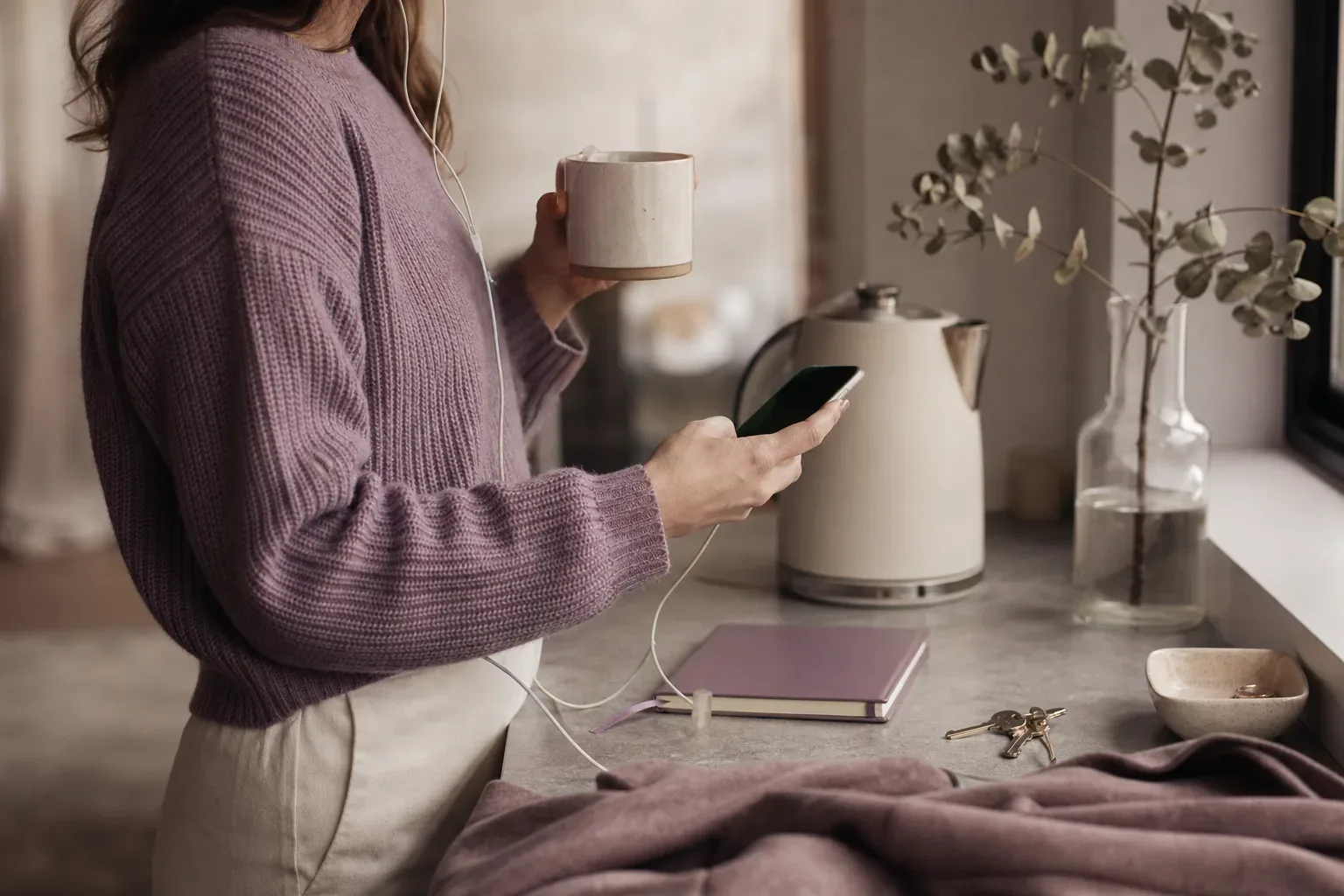
The kettle clicks. Your phone is still face down. Soft life manifestation is a 3-minute audio practice before the day starts asking for proof from you. You listen to the self you’re becoming, choose one sentence to carry, and enter work without making stress your identity.
What does soft life manifestation actually mean?
Soft life manifestation means practicing desire without making exhaustion the price of it.
The phrase soft life gets misunderstood quickly. It can sound like refusal. It can sound like silk pajamas and no alarm. But for most of us, it means something plainer: I don’t want my nervous system to pay for every goal I name. In a 2023 Pew Research Center report, about 70% of U.S. adults described themselves as spiritual in at least one way, even when their formal religious ties differed. That tells you something. People are still looking for meaning. They just don’t always want more noise.
Soft life manifestation keeps effort, but removes punishment. You can answer emails. You can care for children. You can study, build, cook, commute, and still refuse to treat depletion as evidence that you’re serious. Softness isn’t the opposite of work; it’s the way you enter work without abandoning yourself.
This is where manifestation becomes less theatrical and more useful. It isn’t a performance of certainty. It is repeated contact with the life you intend, held gently enough that your body can believe you. Neville Goddard wrote often about assuming the feeling of the wish fulfilled. You don’t have to accept every metaphysical claim to use the principle. Rehearsal changes attention. Attention changes what you notice, practice, tolerate, and choose.
A softer practice asks a smaller question. Not, how do I become flawless by 7:00 a.m.? Not, how do I force belief? The question is quieter: what would I hear for 3 minutes if my future self weren’t shouting?
Why use audio before you hustle?
Audio works because it reaches you before you start negotiating with the day.
Reading is beautiful. I say this as a librarian who has shelved more unread ambition than I can count. But when you’re tired, reading can become another task. Audio asks less. You press play. You listen. In 180 seconds, the practice begins and ends without requiring a better version of you than the one who woke up.
The AYA Method is a daily audio manifestation practice. Each day you listen to a short personalized recording — your Dream-Self Moment — narrated from the version of you who has already manifested the life you intend. Listening is the practice. Repetition is the work. The audio is the method. You can read more about the AYA Method if you want the full shape of it.
There is a reason short audio can feel easier to keep. A 2006 Duke University paper often cited in habit research found that more than 40% of daily actions are repeated in familiar contexts rather than freshly decided each time. That is not a moral failure. It is how mornings survive. If you attach 3 minutes of listening to a cue that already exists, you reduce the number of choices between you and the practice.
Dr. Andrew Huberman has spoken often about using brief protocols to shift state, and a 2023 Scientific Reports study by Balban and colleagues found that 5 minutes of daily cyclic sighing improved mood and reduced physiological arousal more than some comparison breathing practices over a month. Audio manifestation is not breathwork, and it should not pretend to be clinical treatment. Still, the timing matters. A few minutes before the rush can soften the way you meet the rush.
Three minutes is short enough that your old life has very few excuses.
How do you practice it in three minutes?
You practice by choosing a cue, listening once, keeping one sentence, and taking one small action.
Here is the version that gets finished. Not the impressive version. Not the notebook with twelve tabs. The finished one.
- Pick the cue. Choose something already attached to morning: the kettle, your toothbrush, your coat, the bus stop, the first seated minute at your desk.
- Press play before input. No messages first. No headlines first. If possible, let the audio be the first chosen voice of the day.
- Listen without fixing yourself. The Dream-Self Moment is not a scolding. Let it narrate from the life you intend as if that life is already familiar.
- Choose one sentence. After 3 minutes, name the line that stayed. Write it if you want. Whisper it if the house is quiet.
- Take one matching action. Put water in your bag. Open the document. Send the kind reply. Leave 4 minutes earlier. Small counts.
A 2009 study from University College London, published in the European Journal of Social Psychology, found that habits took anywhere from 18 to 254 days to become automatic, with an average of 66 days. That range is merciful. It means you are not broken if the practice does not feel natural by Thursday.
| Minute | What you’re doing | What to avoid |
|---|---|---|
| 0:00-0:20 | Start the audio and sit or stand still | Checking notifications |
| 0:20-2:40 | Listen to your future self speak in the present tense | Correcting every word in your head |
| 2:40-3:00 | Let one sentence land | Turning it into a full planning session |
| After | Take one small action that matches | Demanding a dramatic mood change |
This is soft because it does not ask you to perform belief. It is structured because it gives your attention a place to go. Both matter. A practice with no shape evaporates. A practice with too much shape becomes another thing to resent.
The audio is a threshold. You cross it quietly, then you go make your coffee.
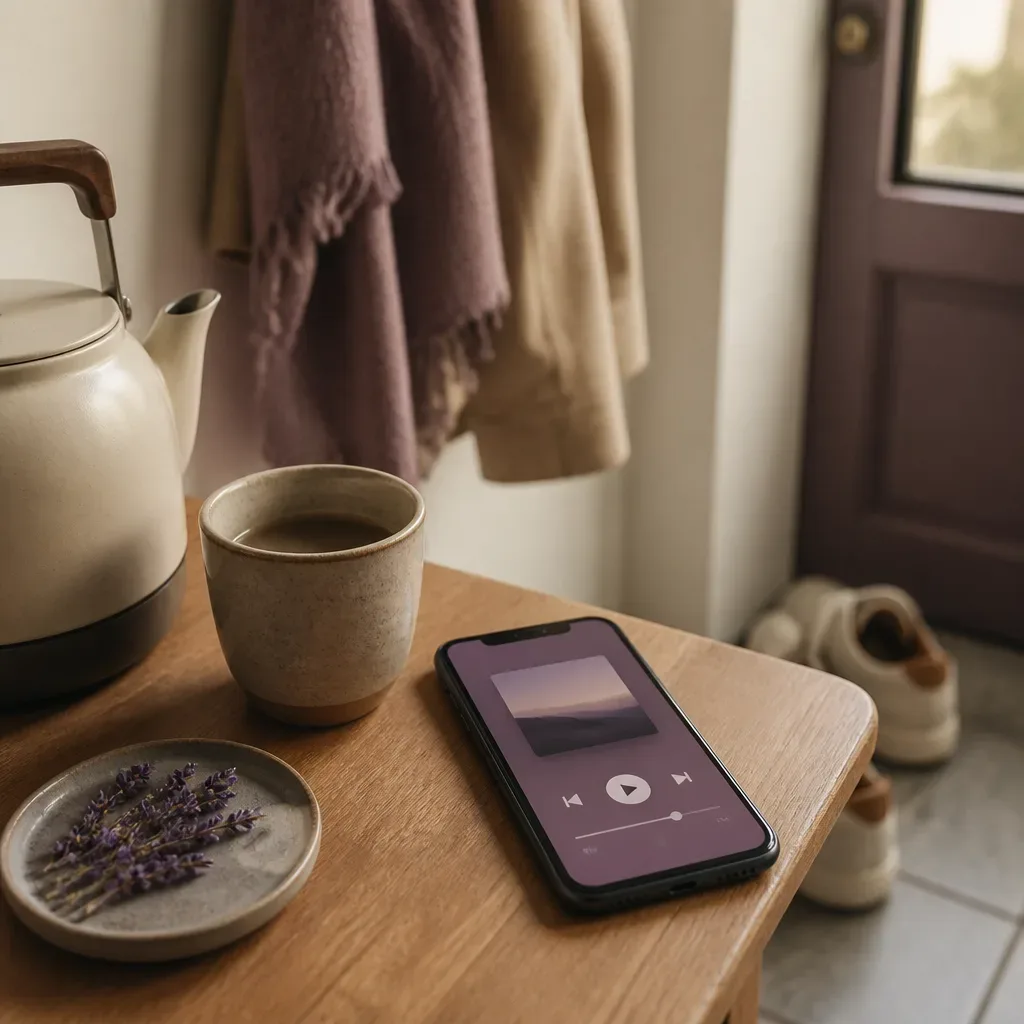
What should the audio say to the part of you that rushes?
The audio should speak to you as already becoming steady, not as someone who must earn steadiness first.
Many manifestation scripts fail because they sound like posters. Too clean. Too shiny. Too far from the kitchen floor. Soft life manifestation needs language your actual morning can bear. If your rent is due, your inbox is full, and someone has used the last clean spoon, a sentence like “everything is perfect” may not feel true. A sentence like “I move through this morning without betraying myself” has more room in it.
Joe Dispenza often writes and teaches about mental rehearsal, identity, and repetition. You do not have to adopt his full framework to see the practical point: repeated inner rehearsal can make a chosen state more available. In cognitive psychology, mental imagery has been studied for decades in sport and behavior change; small studies suggest that vivid rehearsal can affect motivation and follow-through when paired with action.
Your audio can include lines such as:
- “I begin before the rush begins.”
- “My worth is not measured by how strained I look.”
- “I answer the day from the self I am practicing to know.”
- “I can move slowly and still move clearly.”
- “I do not need panic to be responsible.”
A daily affirmation can support this, especially if one line stays with you after listening. But the affirmation is not the center here. The daily affirmation and Manifestation Board are complements. The method is the audio. If you have only 3 minutes, listen.
The practice isn’t to chase a new self. It is to listen until the true one feels ordinary.
How is this different from a vision board, journaling, or astrology?
It is different because the primary act is listening, while the other tools help you see, write, or time what you intend.
A vision board is visual. Journaling is reflective. Astrology can be symbolic and seasonal. Audio is immediate. It enters while your hands are busy, while your eyes are tired, while your morning is still half-made. This is why it suits soft life manifestation. It does not require a desk, a candle, or a mood.
That said, the practices can sit near each other without competing. A Manifestation Board can make the image visible. A journal can catch the sentence that stays. Astrology and manifestation can give some readers a timing ritual, especially around moons, seasons, or personal transits. The question is not which one sounds most impressive. The question is which one gets finished often enough to matter.
In small studies on expressive writing, including the work associated with James Pennebaker, writing for 15 to 20 minutes over several days has been linked with changes in stress and meaning-making. That is useful. It is also longer than many mornings allow. A 3-minute audio is not a replacement for every reflective practice. It is the smallest door.
| Practice | Best for | Time needed | Place in soft life manifestation |
|---|---|---|---|
| Dream-Self audio | Hearing the self you’re becoming | 3 minutes | The main practice |
| Daily affirmation | Carrying one sentence | 10-30 seconds | A complement |
| Manifestation Board | Seeing the desired life | 2-10 minutes | A complement |
| Journaling | Sorting thoughts | 5-20 minutes | Optional support |
| Astrology timing | Marking cycles | Varies | Optional support |
There is also good caution here. Princeton Engineering Anomalies Research, later linked with broader Global Consciousness Project discussions, studied intention and random systems in controversial ways. Those studies do not prove that a wish turns directly into fact. They do remind us that attention is a serious subject. For daily life, that is enough to begin with care.
Choose the tool by the morning you have, not the morning you wish you had.
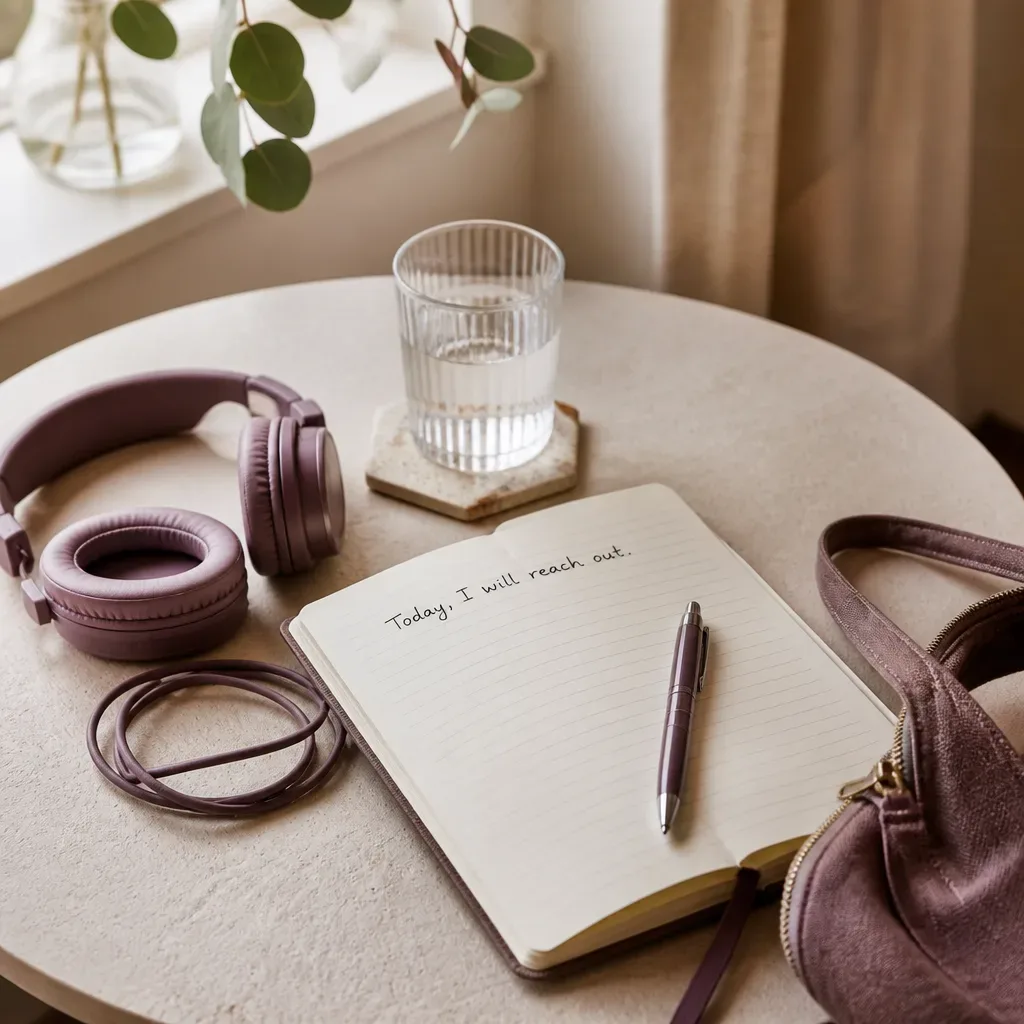
What if your morning is already too full?
If your morning is full, make the practice smaller instead of making yourself harsher.
You do not need a sacred corner. You need a repeatable cue. The bus is allowed. The bathroom is allowed. The three minutes before a shift begins are allowed. I have listened to things that mattered while standing beside a bin outside the library because the staff room was occupied. It still counted.
This is where habit design matters more than mood. BJ Fogg, the Stanford behavior researcher, has taught for years that tiny behaviors work best when they attach to an existing prompt and feel easy enough to repeat. The softer the start, the less heroic the keeping. Heroic rituals are lovely until Tuesday.
Try one of these cues:
- After you plug in the kettle
- After you put on your shoes
- After you sit in the car but before the engine starts
- After you scan your transit card
- Before you open email
- Before you walk into a meeting room
A missed morning is not a verdict. It is just a morning.
The UCL habit study’s 18-to-254-day range is useful again here. It shows how uneven repetition can be. Missing once does not erase the pattern. Missing often may mean the cue is wrong, not that you are. Move the audio closer to something you already do. If you never sit down before work, don’t build a seated practice. If headphones are always missing, use the phone speaker softly while you fold a towel.
Soft life manifestation should not require a lifestyle renovation. If it does, it has misunderstood you.
How do you keep it soft after the audio ends?
You keep it soft by letting the audio become one chosen behavior, not a mood you have to maintain all day.
After listening, do not inspect yourself for proof. That is the old pressure wearing a calmer coat. Instead, choose one action that matches the self you heard. If your Dream-Self Moment said you trust your timing, leave without rushing. If it said you speak clearly, answer the first message plainly. If it said your body is not an obstacle, eat something before coffee.
This matters because manifestation without behavior can become private theatre. Behavior without inner contact can become dry striving. The middle is small and alive: hear the self, then do one thing as her. Research on implementation intentions, especially the work of psychologist Peter Gollwitzer, has shown that if-then plans can improve follow-through across goals. The form is simple: if this cue happens, then I do this action.
You might write:
- If I finish the audio, then I drink water before checking messages.
- If I feel the rush rise, then I repeat one sentence from the recording.
- If I miss the morning, then I listen before lunch without drama.
- If I start comparing, then I return to the next small task.
This is also where the broader manifestation practice becomes grounded. Not bigger. More exact. You are not asking the morning to become perfect. You are asking yourself to stop handing your first attention to panic.
The soft life is not proof that nothing is hard. It is proof that hardness does not get to name you.
Can this still count if you’re ambitious?
Yes, because ambition does not have to be loud to be real.
Some people hear soft life and think it means smaller dreams. I don’t. In the library, the ambitious books come back unread all the time. The small books come back with bent corners, tea marks, and quiet devotion. This has taught me more than any productivity shelf: the practice that survives contact with your life is the practice that changes it.
Soft life manifestation can belong to the person building a company, returning to school, healing a relationship with money, or trying to become kinder under pressure. It simply refuses the bargain that says you must be unwell to be worthy of what you want. The American Psychological Association has reported that work and money remain common sources of stress for adults, with annual Stress in America surveys often showing majorities naming finances as significant. A practice before work is not decoration. It is protection for attention.
There is room for effort here. There is room for desire. There is room for the app’s Manifestation Board after the audio, if seeing the image helps. There is room for one line from affirmations when the train is late. There is even room to check astrology and manifestation if timing rituals help you return. But the center stays simple.
Listen for 3 minutes. Let one sentence stay. Do one small thing that proves you heard it.
The day can begin without taking you from yourself.
Listen on Aya

