noise colors
Pink Noise for Sleep: Listen to Dream-Self Audio First
Use pink noise for sleep after your Dream-Self audio, so your intention is heard before the room turns soft and steady. Pink Noise for Sleep: Listen to Dream-Self Audio First
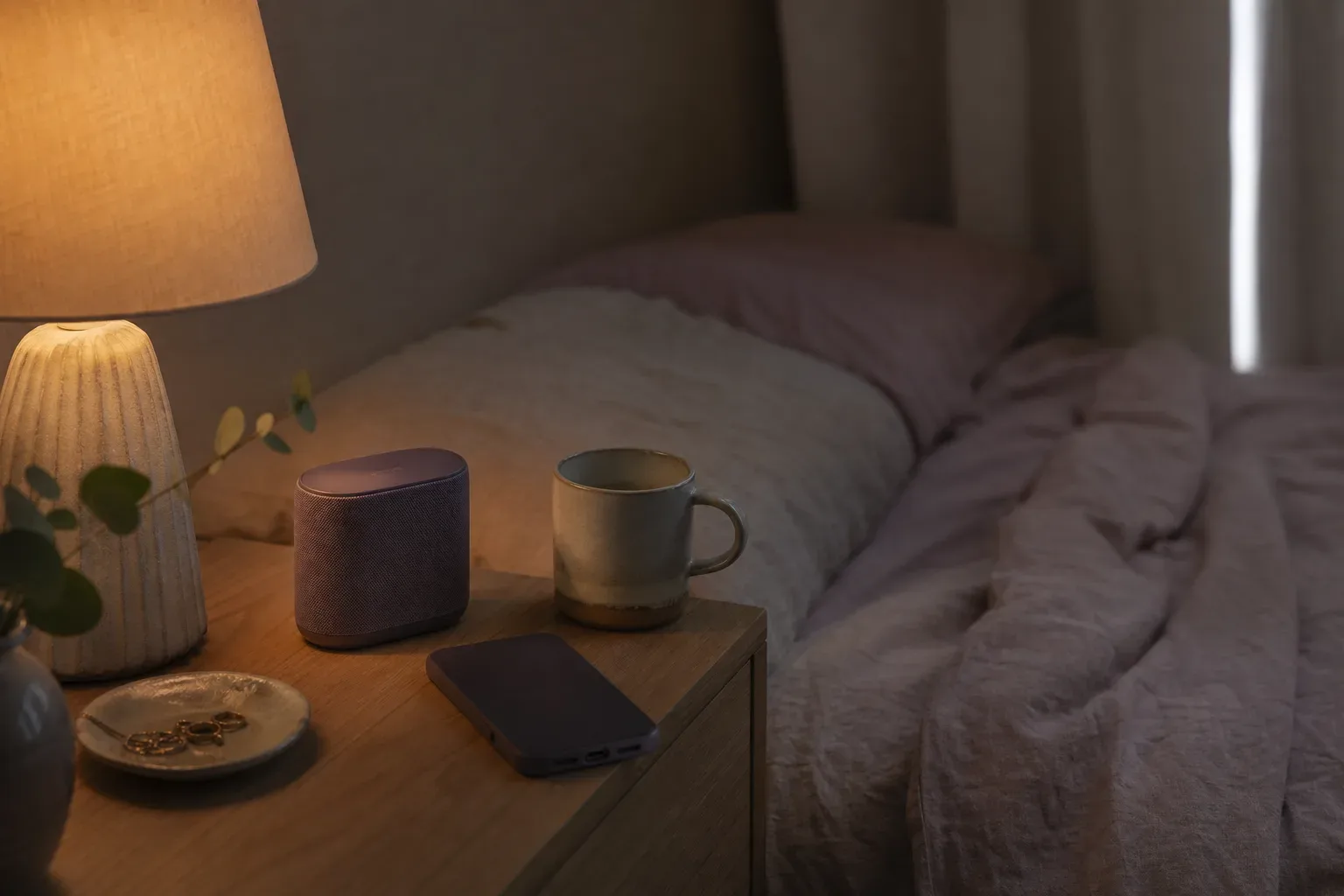
The lamp is off, and your phone is face down. Use pink noise for sleep after you listen to your Dream-Self audio, not before. Let the personalized words have your full attention first. Then let the steady sound soften the room, mask small interruptions, and help your body stop checking for danger.
Why should Dream-Self audio come before pink noise?
Dream-Self audio comes first because intention needs attention before sleep sound turns everything into background.
The last spoken words you choose at night matter. Not because sleep is magic. Because the brain is still sorting what to keep, what to predict, and what to rehearse. A 2021 review in Sleep Medicine Reviews notes that pre-sleep cognitive arousal is linked with poorer sleep onset and more wakefulness. In plain language: what you do with your mind before bed often follows you under the blanket.
The AYA Method is a daily audio manifestation practice. Each day you listen to a short personalized recording — your Dream-Self Moment — narrated from the version of you who has already manifested the life you intend. Listening is the practice. Repetition is the work. The audio is the method.
Pink noise has a different task. It does not speak to your future self. It covers the refrigerator click, the motorbike outside, the hallway door, the dog shifting downstairs. The American Academy of Sleep Medicine recommends at least 7 hours of sleep for most adults, yet the CDC has reported that roughly 1 in 3 U.S. adults do not get enough. A small sound choice will not repair a life that is asking too much of you. But it can remove one small barrier.
One clean order helps: words first, wash of sound second. The mind receives the sentence. The body receives the steadiness. A practice becomes easier when each part has only one job.
The audio is not something to hide under noise. It is the moment you agree to listen.
If you use manifestation as a nightly practice, keep it simple enough to repeat when you are tired. That is the test. Not whether it feels dramatic. Whether you can return to it on an ordinary Tuesday.
What is pink noise, and why does it feel softer at night?
Pink noise is a steady sound with more strength in lower frequencies, so many people hear it as softer than white noise.
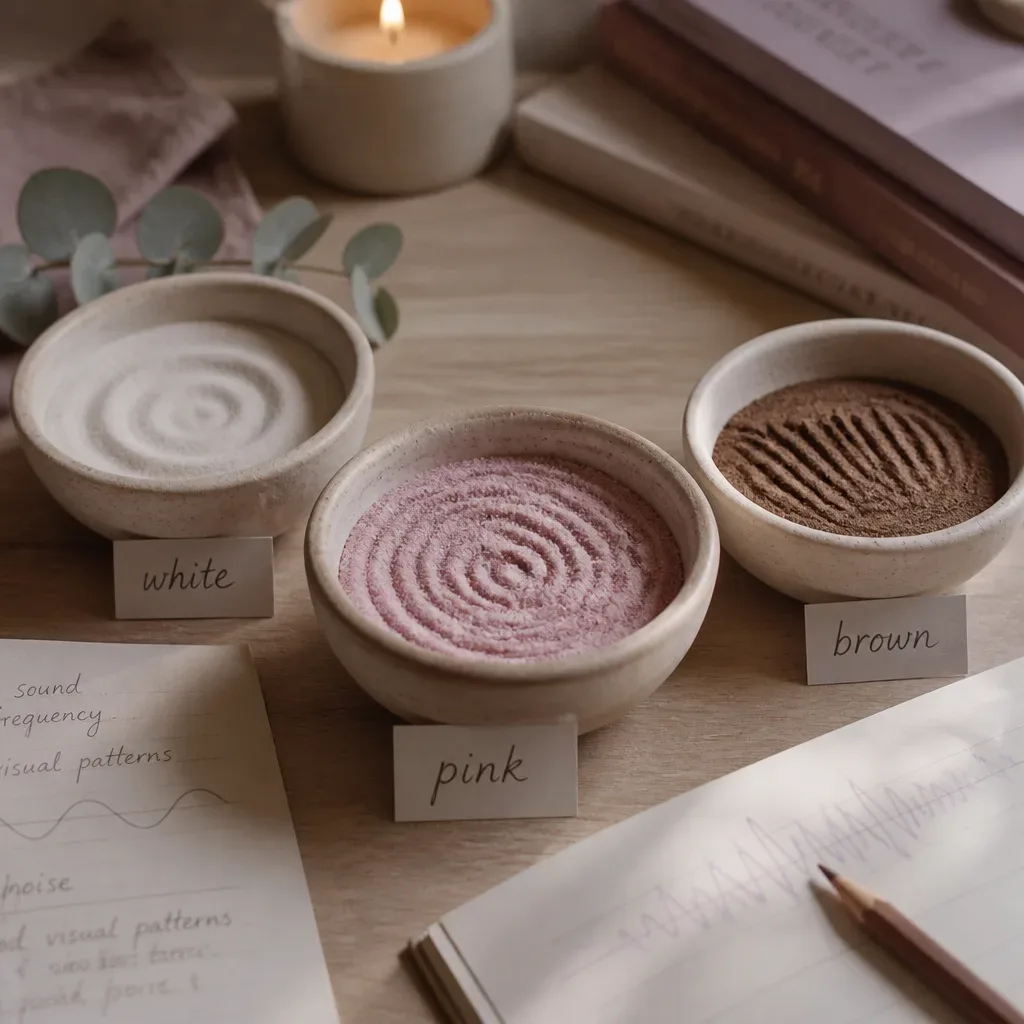
White noise gives equal intensity across frequencies. Pink noise lowers intensity as frequency rises, often by about 3 decibels per octave. That is why rain, wind in trees, and distant surf are often described as pink-ish, though real recordings vary. Brown noise goes lower still, with a deeper, heavier sound. None is morally better. Your nervous system gets a vote.
Sleep researchers have tested pink noise in a few specific ways. A 2013 Neuron study by Ngo and colleagues found that timed auditory stimulation during sleep enhanced slow oscillations and improved word-pair memory in a small group of 11 healthy participants. A 2017 study in Frontiers in Human Neuroscience also reported improved deep sleep and memory in older adults using acoustic stimulation. These were controlled settings, not a promise that any app loop will do the same.
Still, the idea is useful. Slow, steady sound can reduce contrast. A sudden sink pipe is less sharp when the room already has a low, even layer. The National Institute for Occupational Safety and Health warns that long exposure above 85 decibels can harm hearing, but sleep sound should be far below that. Think closer to a quiet room, not a machine shop.
Here is the simple comparison:
| Sound color | What you may hear | Best use at night |
|---|---|---|
| White noise | Bright hiss, fan-like | Masking voices or traffic |
| Pink noise | Rain-like, rounded | Soft sleep backdrop |
| Brown noise | Low rumble, heavy | If higher sound feels sharp |
Use pink noise like a glaze on a pot. Thin. Even. Not thick enough to hide the form beneath it.
How do you set up a 20-minute night routine?
Set up the routine in the same order every night: prepare the room, listen once, start pink noise, then stop managing sleep.
I like routines that can survive a tired body. In clay work, the best tools are already on the table before the wheel begins. At night, do the same. Put the charger where it belongs. Choose the sound before you are half asleep. Lower the light. The Sleep Foundation often notes that a regular bedtime routine can help signal the body that sleep is near, especially when it is repeated for 30 minutes or less.
Try this for 7 nights:
- Dim the room for 5 minutes. Lower overhead light. If you check your phone, do it once. Dr. Andrew Huberman often advises avoiding bright light late at night because light can affect circadian timing, especially blue-rich light.
- Name one state in 10 seconds. Quiet. Brave. Patient. Held. Use one word, not a speech.
- Listen to your Dream-Self Moment once. Let the words arrive without multitasking. If the app also offers a daily affirmation, treat it as a complement, not the center.
- Start pink noise for sleep. Set it low. If you use a timer, begin with 45 to 90 minutes.
- Stop evaluating. If sleep comes, let it come. If it does not, keep the body resting. That still counts.
A 2009 paper in the European Journal of Social Psychology found that habit formation took a median of 66 days, with wide variation from 18 to 254 days. So do not judge the practice by one night. A kiln does not show the true color while it is still heating.
This is where affirmations can be gentle if you use them carefully. One sentence is enough. Too many words can become another task. The Dream-Self audio leads. The affirmation can sit beside it like a small cup of water.
What volume and timing are safe for sleep?
Keep pink noise low, steady, and timed to your actual need rather than letting it become another thing your body has to tolerate.
A useful rule is this: if the sound feels interesting, lower it. Sleep sound should not entertain you. It should disappear. Many people do well around 40 to 50 decibels, roughly library to quiet conversation level, though phone speakers and rooms vary. The World Health Organization has noted that nighttime noise can disturb sleep, with lower thresholds than daytime annoyance. Your bedroom should not become a sound test.
Distance matters. A speaker across the room is often kinder than one beside your ear. Earbuds can trap sound and pressure, and they may not be comfortable for side sleepers. If you share a bed, the other person’s sleep counts too. Two people can have different sound needs. That is not a failure of intimacy. It is acoustics.
Timing is personal. Some people need only the first 20 minutes, especially if the problem is falling asleep. Others wake from street noise at 3 a.m. and prefer all-night playback. If you are unsure, use a timer for 60 minutes for the first 3 nights, then compare. You are not seeking a perfect setting. You are seeking a setting your body stops arguing with.
Watch for these signs that the sound is too much:
- You wake irritated by it.
- You turn it up each night.
- You feel pressure or ringing in your ears.
- You cannot hear a smoke alarm, child, or needed signal.
- You feel dependent and anxious without it after only a few nights.
A soft practice does not take away your ability to respond to life.
What if your mind keeps talking after the audio ends?
If your mind keeps talking, give it a smaller job than solving your life.
This is normal. The brain does not always bow because a recording ended. Research on insomnia often points to rumination as a major factor. Cognitive behavioral therapy for insomnia, or CBT-I, has strong support from groups including the American College of Physicians, which recommended it as first-line treatment for chronic insomnia in 2016. That does not mean you need a clinical protocol tonight. It means the mind’s late-night loops are known. You are not strange.
After the Dream-Self Moment, use pink noise as the room’s boundary. Then bring attention to something plain. Count 10 exhales. Feel the heel on the sheet. Notice the jaw. If thoughts come, do not debate them. A thought fed at midnight often asks for breakfast too.
Here is a small reset you can use without turning on a light:
- Say inwardly: heard.
- Feel both hands.
- Listen to the pink noise for 5 breaths.
- Return to the body, not the argument.
This also protects the practice from becoming pressure. Manifestation is not meant to become another reason to accuse yourself. The nightly audio is a return. Not a performance. If you also track moon phases or timing through astrology and manifestation, keep that information quiet at bedtime. Too much meaning can wake the mind back up.
How can you tell if pink noise is helping or just becoming a habit?
You can tell by tracking a few simple signs for one week, not by trusting the mood of one morning.
Sleep is variable. Alcohol, late meals, stress, hormones, travel, room temperature, and screens can all change it. The National Sleep Foundation has often cited a cool room, around 60 to 67 degrees Fahrenheit, as helpful for many sleepers. If the room is too warm, pink noise may get blamed for a problem it did not cause.
Use a small notes app or paper card. Do not make it elaborate. Rate only what matters:
| Night | Dream-Self audio heard? | Pink noise timer | Time to sleep | Wake-ups | Morning state |
|---|---|---|---|---|---|
| 1 | Yes or no | 60 min | Short, medium, long | Number | 1 to 5 |
At the end of 7 nights, look for pattern, not perfection. Did you fall asleep with less checking? Did outside sound bother you less? Did the Dream-Self audio feel clearer when it came first? If yes, keep going for another week. If no, change one variable. Lower the volume. Shorten the timer. Try brown noise. Or use silence.
The point is not to become a person who needs a certain sound to be well. The point is to remove enough friction that your chosen words can land. Princeton’s Global Consciousness Project is often mentioned in manifestation circles, but its claims are debated and not a sleep protocol. For bedtime, stay close to what you can test in your own room.
A real practice leaves you more honest, not more superstitious.
If you wake calmer after listening first and masking sound second, that is useful evidence. Small evidence is still evidence.
What should you not do with pink noise and manifestation audio?
Do not bury the Dream-Self audio under pink noise, loop spoken words all night, or use sound to force sleep.
The order matters because attention matters. If you play pink noise loudly while your Dream-Self Moment speaks, the body may rest, but the practice gets blurred. If you loop the spoken audio all night, the words can become wallpaper. Repetition is the work, yes. But daily listening is different from unattended playback.
Neville Goddard wrote often about the state before sleep, treating it as a tender threshold for assumption. You do not have to accept every claim to see the practical wisdom: the drowsy mind is suggestible. Modern self-affirmation research, including work reviewed in Social Cognitive and Affective Neuroscience, has shown that values-based affirmation can affect brain systems linked with self-related processing. Still, more is not always better. One clear listen can be cleaner than 8 hours of murmuring.
Avoid these common mistakes:
- Starting pink noise before the Dream-Self audio begins.
- Letting volume creep higher each night.
- Changing sounds every 5 minutes because sleep has not arrived.
- Reading intense material after the audio.
- Treating one restless night as proof the practice failed.
If your sleep problems are frequent, painful, or paired with breathing pauses, panic, or daytime impairment, ask a clinician. The American Academy of Sleep Medicine estimates that chronic insomnia disorder affects about 10 percent of adults. Snoring with pauses can point toward sleep apnea, which needs proper care. A sound routine is not a substitute for medical help.
You can still keep the quiet part. Listen once. Start the pink noise. Let the room become less sharp. Let the future self speak before the night takes over.
Sleep beside the sound that asks the least of you.
Listen on Aya

