frequencies binaural
Theta Waves Manifestation: Play Audio Before Sleep
Theta waves manifestation works best as a quiet pre-sleep ritual: listen to Dream-Self audio, stay relaxed, and repeat nightly.
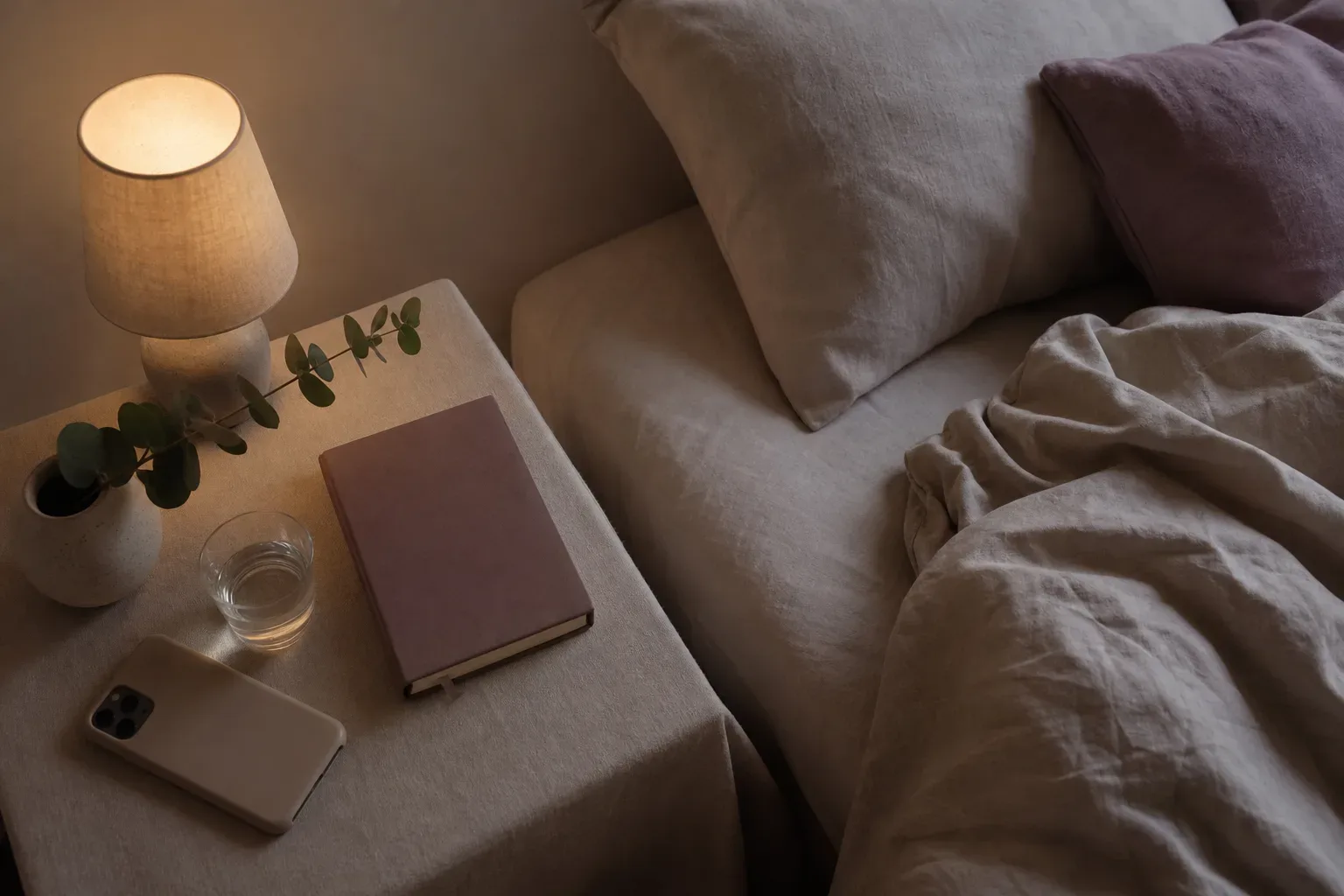
The lamp is off. The phone is face down. Theta waves manifestation means using the drowsy 4–8 Hz pre-sleep state to hear your Dream-Self audio while the mind is quiet, receptive, and less defended. Keep the recording short, soft, and repeated nightly. The audio stays first. Sleep comes after.
What are theta waves, and why do they matter before sleep?
Theta waves are slow brain rhythms, often measured around 4–8 Hz, that tend to appear when you’re drowsy, inward, and close to sleep.
You don’t need to become a neuroscientist to use this well. You only need to know the weather of the hour. In electroencephalography, or EEG, theta activity is commonly associated with the borderlands of waking and early sleep. Sleep medicine usually names N1 as the first light stage of non-REM sleep; it can last 1 to 7 minutes before deeper sleep begins, according to clinical sleep staging manuals used by the American Academy of Sleep Medicine.
That threshold matters because the mind is less busy there. Not empty. Softer. Research on memory consolidation, including work by Matthew Walker and Robert Stickgold, has shown that sleep helps stabilize and reorganize what you’ve learned. The exact mechanism is complex, and theta is only one part of it, but the practical point is plain: what you place near sleep has a better chance of being carried inward.
A sleepy mind is not a weak mind; it is a permeable one.
For theta waves manifestation, the question isn’t whether a frequency can make your life obey you. It can’t. The better question is: what do you let your mind hear when its guard is lower? Neville Goddard wrote often about the state akin to sleep, and Joe Dispenza speaks about rehearsing a future self while the body settles. Those are not laboratory proofs. They are practice maps. Use them carefully.
Before sleep, your attention narrows. Your body slows. Your phone can either scatter you into 30 small urgencies, or it can give you one clear recording. Choose the one clear recording.
How do you prepare the room for theta waves manifestation?
Prepare the room by removing stimulation, choosing one sound, and making the bed a place where your mind receives fewer instructions.
Start with light. A 2019 review in Chronobiology International notes that evening light, especially bright blue-heavy light, can delay melatonin timing and make sleep onset harder for many people. You don’t have to live by candlelight. Just lower the brightness 30 minutes before bed if you can. In my greenhouse, I know which seedlings suffer when the lamp stays on too long. People aren’t seedlings, but bodies do listen to light.
Then prepare the sound. If you’re using a theta-style track under your Dream-Self audio, keep it quiet. Binaural beats require headphones because each ear receives a slightly different tone; the perceived beat is created by the brain. Studies on binaural beats are mixed. A 2020 review in Psychological Research found variable effects across attention, mood, and anxiety outcomes, with study design making a large difference. So be honest. If it helps you soften, use it. If it makes you monitor yourself, stop.
Use this small order:
- Put your phone on airplane mode.
- Set the volume below speaking level.
- Lie down before pressing play.
- Place one hand somewhere steady: chest, ribs, or belly.
- Let the first sentence arrive without correcting it.
Listening is a way of rehearsing who you are willing to become.
This is also where the AYA Method enters quietly. The AYA Method is a daily audio manifestation practice. Each day you listen to a short personalized recording — your Dream-Self Moment — narrated from the version of you who has already manifested the life you intend. Listening is the practice. Repetition is the work. The audio is the method.
The app also includes a daily affirmation and a Manifestation Board, but here they are only supports. For this nighttime practice, the voice is the center. Let the room know that.
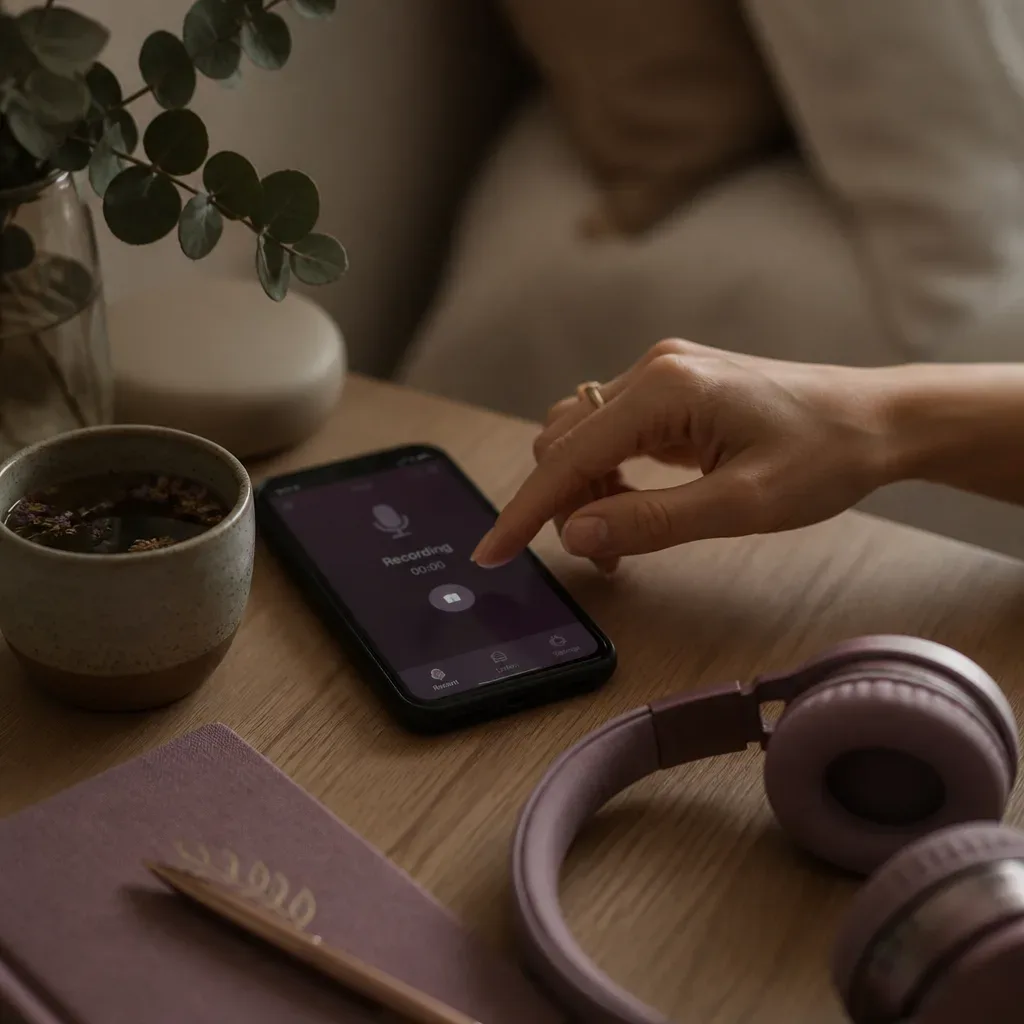
What should your Dream-Self audio say at night?
Your Dream-Self audio should say what you can safely hear before sleep: true, specific, present-tense words from the self you’re practicing becoming.
Night is not the hour for shouting at yourself. Avoid sentences that feel like performance. The nervous system notices strain. A 2016 paper in Social Cognitive and Affective Neuroscience found that self-affirmation can engage brain regions linked with self-related processing and future valuation, but the statements matter. If a phrase feels false in the body, it may create argument instead of trust.
The best bedtime audio is concrete. It names the life you’re tending in ordinary images. Not only outcomes. Also habits, boundaries, and the way you carry yourself when no one is clapping. If your intention is steadier work, the audio might say: “I close the laptop when the day is done. I trust the work I finished. I wake with one clear next step.” That is easier for the body to hold than a grand sentence with no ground under it.
You can pair this with the Affirmations pillar if you want language help. Just remember the order. In AYA, the daily affirmation is a complement. The Dream-Self Moment is the bedtime sound.
| Better before sleep | Harder before sleep |
|---|---|
| Present-tense identity | Desperate requests |
| One clear desire | Ten competing desires |
| Sensory detail | Abstract pressure |
| A calm voice | Loud repetition |
| Short length | Endless looping |
The body believes repetition before it believes drama.
If you’re writing your own notes before recording, try 120 to 180 words. Spoken slowly, that often becomes 60 to 90 seconds. Repeatable is better than ornate. A recording you can listen to for 30 nights is worth more than one you admire once and avoid after.
How do you play Dream-Self audio before sleep, step by step?
Play it as the final chosen sound of the day, with no checking, scrolling, or analysis after it ends.
Here is the simple version. It takes about 12 minutes. That number is not sacred. It is small enough to repeat and long enough to let your body understand that something has changed. Behavioral habit research by Phillippa Lally and colleagues at University College London found that habit formation took an average of 66 days in one 2009 study, with wide variation from 18 to 254 days. So don’t ask one night to carry what repetition is meant to carry.
The 12-minute pre-sleep practice
- Minute 0–1: make the cue visible. Turn off the lamp, place the phone face down, and start the audio.
- Minute 1–3: settle the body. Let the jaw loosen. Let the tongue rest. Breathe through the nose if that’s easy.
- Minute 3–8: listen to the Dream-Self Moment. Do not repeat every word. Receive it.
- Minute 8–10: keep still. Notice one sentence that stayed with you.
- Minute 10–12: let sleep take over. No notes unless you’re wide awake and calm.
If you wake during the night, don’t restart the practice unless it feels kind. Sleep matters. The Centers for Disease Control and Prevention reports that many adults need at least 7 hours of sleep per night, and chronic short sleep is linked with several health risks. Manifestation should not steal sleep from you. It should help you stop spending your last waking minutes in scattered thought.
There is a clean boundary here. You are not trying to control dreams. You are not trying to force symbols. You’re giving the mind one coherent self-image before it rests. That is enough.
Do not chase a sign. Return to the sound.
If you like timing rituals, you might enjoy reading about astrology and manifestation, but don’t let timing become another way to postpone the practice. The moon can be beautiful. The audio still has to be played.
Should you use theta sounds, binaural beats, or silence?
Use the sound that helps you listen without effort; silence is valid, and theta sounds are optional.
There is a tender mistake people make with frequency work. They begin to serve the frequency instead of the practice. They search for the exact hertz, the perfect headphones, the longest track. Meanwhile, the sentence they need to hear is waiting. In EEG research, theta is a measured brain rhythm, not a magic button. External audio may encourage relaxation for some listeners, but it doesn’t guarantee a theta-dominant brain state.
Small studies have suggested that binaural beats may influence anxiety or attention in some settings. For example, a 2019 meta-analysis in Psychological Research reported modest effects, while also noting that carrier frequency, beat frequency, duration, and context all mattered. That is a careful finding, not a commandment. Your own nervous system gets a vote.
Use this guide:
- Choose silence if audio layers make you tense.
- Choose soft ambient sound if you live with street noise or house noise.
- Choose binaural beats only if headphones feel comfortable in bed.
- Choose spoken audio first when you have only one option.
- Stop any track that causes headaches, agitation, or sleep trouble.
For manifestation, the content of attention matters. Princeton Engineering Anomalies Research, often called PEAR, studied intention and random systems for decades, and its results remain debated. You don’t need to settle that debate at bedtime. You only need to practice directing attention toward the life you are consenting to build.
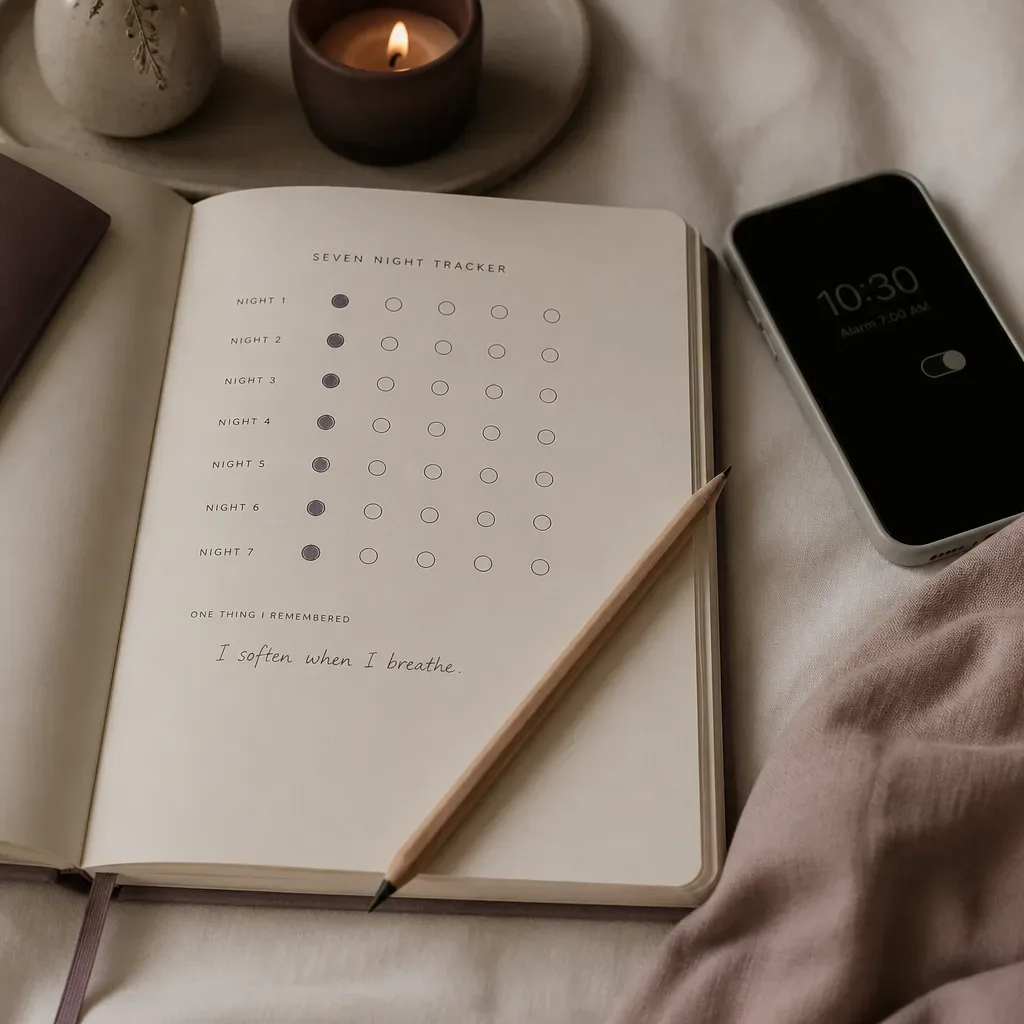
How do you know if the practice is working?
You know it is working when it becomes easier to return to the chosen self during ordinary moments, not when life performs on command.
Track the humble signs. You pause before answering a message. You leave the second glass of wine. You send the application. You stop rehearsing old shame for 10 minutes. These are not fireworks. They are roots. In behavioral medicine, self-monitoring is a well-supported tool; a 2011 review in the Journal of the American Dietetic Association found that consistent self-monitoring was associated with better weight-management outcomes. Different topic, same principle: what you notice daily becomes easier to tend.
Keep a seven-night note. Not a diary that becomes another demand. Just three marks:
| Night | Did I listen? | One sentence I remember |
|---|---|---|
| 1 | Yes / No | |
| 2 | Yes / No | |
| 3 | Yes / No | |
| 4 | Yes / No | |
| 5 | Yes / No | |
| 6 | Yes / No | |
| 7 | Yes / No |
After seven nights, ask one question: did this make the end of the day cleaner? If yes, continue. If no, adjust the length, voice, volume, or time. A practice that shames you will not stay. A practice that fits your real life may become a hinge.
If you’d like a broader frame for the visible parts of the practice, the Manifestation Board can help you see the images and intentions that support the audio. Keep its place clear. The board is something you can see. The Dream-Self Moment is what you hear. The hearing is the method.
Seven nights won’t prove your whole future. It can prove whether you are willing to meet yourself softly at the same hour.
What should you avoid when practicing before sleep?
Avoid anything that turns bedtime manifestation into pressure, sleep loss, or a test of worth.
The first thing to avoid is overuse. If one recording feels good, ten loops may feel better in theory. In practice, it can keep the mind alert. Sleep research consistently links irregular sleep and insufficient rest with poorer mood, attention, and health markers. The CDC’s 7-hour adult sleep recommendation is plain for a reason. Your future self needs a rested body, not a heroic bedtime ritual.
The second thing to avoid is using theta language to bypass care. If you have insomnia, panic, trauma symptoms, epilepsy, bipolar disorder, or distress that worsens at night, ask a clinician before experimenting with sleep audio or frequency tracks. This is not fear. It is respect. As an herbalist, I say the same about plants: gentle does not mean suitable for everyone.
The third thing is measuring too soon. Don’t listen once and spend the next day hunting proof. That turns attention into a courtroom. Joe Dispenza often speaks about rehearsing a new self until it feels familiar; Neville Goddard wrote about assuming the feeling of the wish fulfilled. Whether those teachers are part of your shelf or not, the shared instruction is repetition.
Here is the quiet rule:
If the practice makes you softer, steadier, and more honest, keep tending it. If it makes you frantic, make it smaller.
You can return to the AYA Method in the morning too. Petra’s own rhythm is kettle on, one Dream-Self Moment while the water works, tea after. But at night, the shape is even simpler. Listen. Let the last chosen voice be kind. Then sleep.
The room goes quiet, and you stay with what is yours.
Listen on Aya

