evening rituals
Before Bed Visualization With a 3-Minute Audio
A quiet before bed visualization practice using a 3-minute Dream-Self audio, made for tired evenings when you still want to return to yourself.
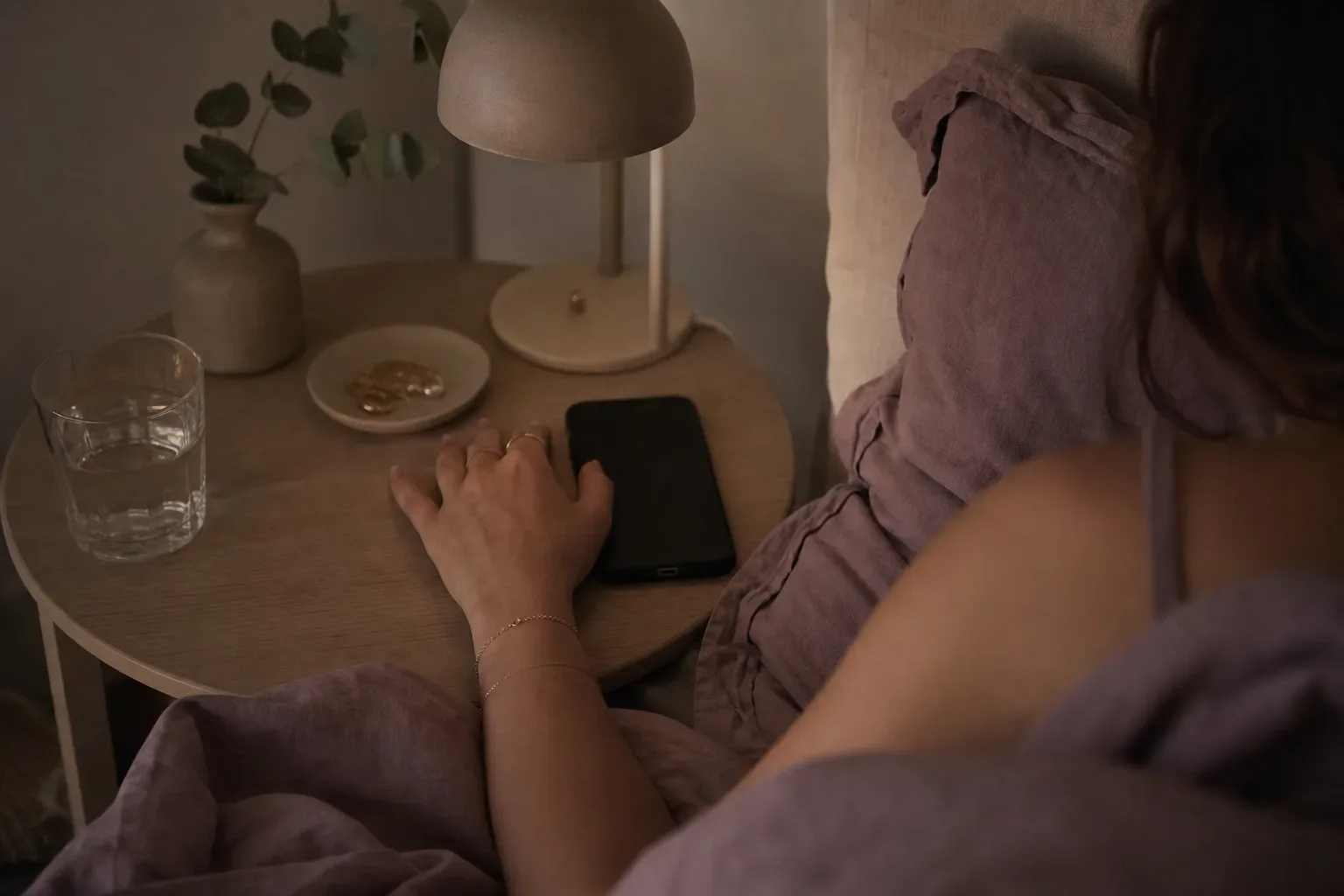
The lamp is already off. Your phone is face down. Before bed visualization works best when it is small: one clear future scene, held for three minutes by a Dream-Self audio, repeated nightly. You are not trying to impress your mind. You are giving it somewhere quiet to rest.
What is before bed visualization, really?
Before bed visualization is the practice of placing one chosen future scene in your attention as the body prepares for sleep.
It is not a film you must direct perfectly. It is not a test of whether you believe enough. It is closer to placing a bookmark in the mind. A scene. A sentence. A felt sense of already being the person you keep saying you want to become. Sleep medicine often speaks about consistency because the body learns from repeated cues; the American Academy of Sleep Medicine recommends stable wind-down patterns as part of healthy sleep hygiene.
A good scene is ordinary enough to enter. You see your hand on the mug before the call. You hear yourself answering with steadiness. You feel the clean relief of having kept the promise. Neville Goddard called this kind of practice imagining from the end, not looking at the end from far away. The phrase is old. The test is simple. Can you inhabit it for 180 seconds?
This is where audio helps. The AYA Method is a daily audio manifestation practice. Each day you listen to a short personalized recording — your Dream-Self Moment — narrated from the version of you who has already manifested the life you intend. Listening is the practice. Repetition is the work. The audio is the method.
Three minutes is not a lesser practice. In a 2009 European Journal of Social Psychology study, habit automaticity took a median of 66 days to form, but the daily action itself could be small. The body trusts what returns. A practice that survives an ordinary Tuesday is wiser than one that needs a new personality.
A night ritual does not have to be impressive. It has to be findable when you are tired.
Why do it before sleep instead of in the morning?
Before sleep is useful because the mind is already narrowing, and the body is already moving toward less resistance.
Morning has its own beauty. I like one page written before work, preferably before anyone asks me where the stapler is. But evening has a different kind of honesty. By night, you know what the day actually asked of you. You also know how much strength is left. That makes the practice more truthful.
Sleep researchers have long studied the pre-sleep period because cognitive arousal can delay sleep. A 2017 paper in the Journal of Experimental Psychology found that writing a specific to-do list for five minutes before bed helped participants fall asleep faster than writing about completed tasks. The finding is modest, but it says something tender: the mind settles when it is given a clear container.
Before bed visualization gives the mind a container that is not a worry list. It says: here is the scene. Here is the person you are rehearsing. Here is the next self, described softly enough that your nervous system does not need to argue. Dr. Andrew Huberman has often noted that the visual system and autonomic state are linked; lowering light exposure at night is one practical way to help the body understand that it is safe to slow.
There is also memory. Sleep is involved in memory consolidation, with decades of research showing that new learning is processed during sleep stages. You are not using sleep like a machine. You are respecting timing. The last thing you repeat at night may not run your life, but it does become part of the room you sleep in.
For a wider base on the practice itself, keep this quiet introduction to manifestation nearby. Not as homework. As a shelf you can return to.
How do you prepare the room without making a ritual too large?
Prepare the room by removing one source of friction, lowering one kind of stimulation, and choosing one repeatable cue.
This is the part people overbuild. They buy the candle, the journal, the special pen, the linen thing, the other linen thing. I say this as a librarian who has watched beautiful notebooks come back to the donation box with page one filled and the rest untouched. The practice has to fit the person who arrives at bedtime, not the person who made plans at noon.
Use this small sequence:
- Put the phone on low volume and Do Not Disturb.
- Dim the light or turn away from the brightest lamp.
- Sit or lie in the same place each night.
- Choose the same 3-minute Dream-Self audio.
- Let the end of the audio be the end of the effort.
The National Sleep Foundation has reported that adults generally need 7 to 9 hours of sleep, but many people protect bedtime poorly because the last hour becomes a second day. Your practice should not steal from sleep. It should escort you there.
A cue matters because the brain likes patterns. Implementation intention research by Peter Gollwitzer, reviewed across many studies, suggests that “if-then” plans help people act with less debate. If I put my phone face down, then I press play. If my head touches the pillow, then I listen. Small gates. Less negotiation.
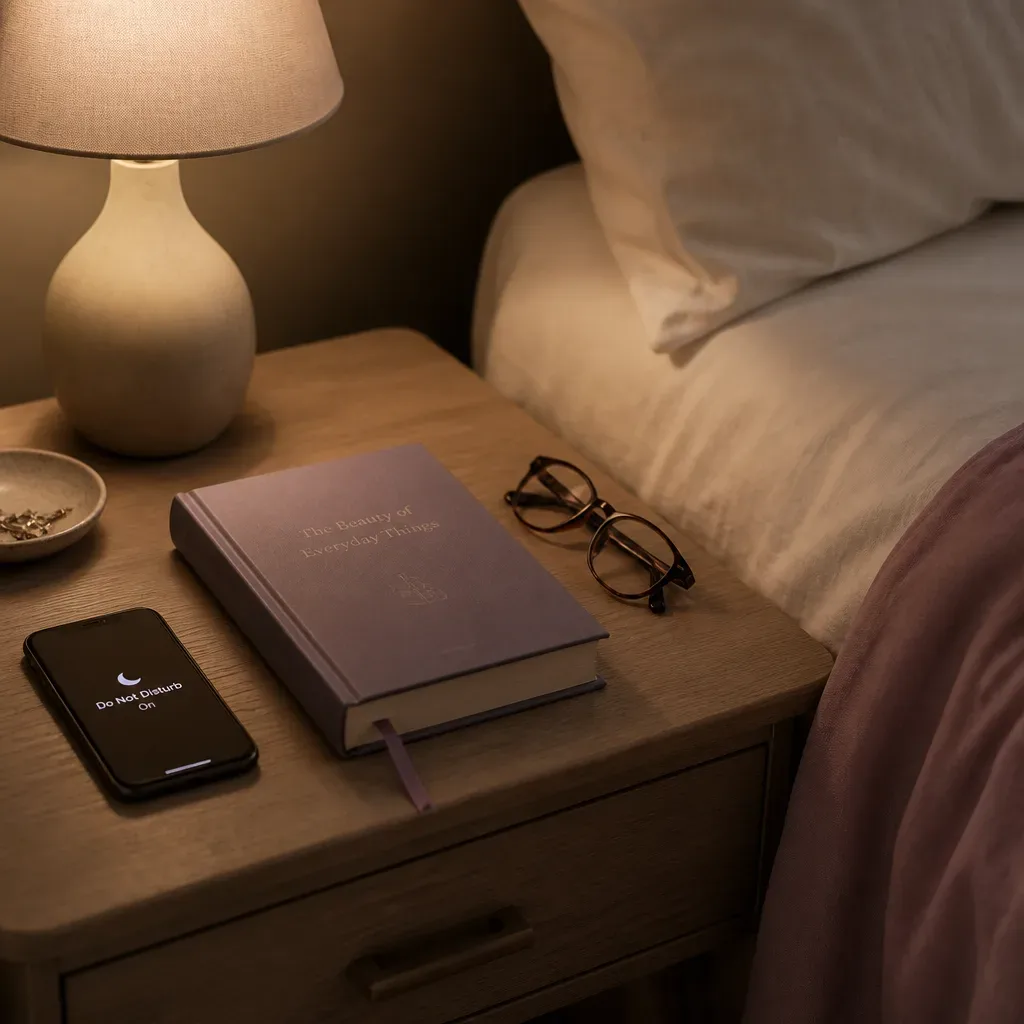
Here is a simple way to see the difference between a ritual that survives and one that quietly becomes decorative:
| Bedtime practice | Too large | Keepable |
|---|---|---|
| Visualization length | 20 minutes | 3 minutes |
| Scene count | 5 futures | 1 scene |
| Tools needed | Journal, candle, playlist, timer | Audio only |
| Attention required | Perfect focus | Gentle return |
| Success measure | Felt certain | Pressed play |
The keepable version may look like nothing from outside. That is its strength. A practice hidden inside ordinary life is harder to abandon.
What should your 3-minute Dream-Self audio include?
Your 3-minute Dream-Self audio should include one scene, present-tense narration, sensory detail, and a calm ending.
The scene must be specific. Not “my better life.” Not a floating wish. A scene has edges. You are walking into the meeting with a rested face. You are opening the email and not shrinking. You are making dinner in the apartment that finally feels like home. You are finishing the paragraph. Specificity gives the mind something to hold.
Joe Dispenza often speaks about mentally rehearsing a future state until the body can begin to recognize it. You do not have to accept every claim made in that world to use the practical point: rehearsal changes familiarity. In sports psychology, mental practice has been studied for decades, and meta-analyses have found that imagery can improve performance, especially when paired with physical practice. The effect is not magic. It is rehearsal with attention.
A Dream-Self audio is not a pep talk. It should sound like the version of you who already knows. Quiet confidence. No shouting. No glittering promises. The narration says what is true in the scene, not what you are begging to become true. The difference matters. Begging tightens the body. Remembering softens it.
If you work with affirmations, keep them short before bed. One line is enough. The daily affirmation can support the audio, but it does not replace it. The method is listening. The sentence is a small lamp beside it.
A useful 3-minute structure looks like this:
- First 30 seconds: the body settles, the room is named, the breath slows.
- Next 90 seconds: the Dream-Self scene is narrated in present tense.
- Next 45 seconds: one sensory detail becomes vivid.
- Final 15 seconds: the audio gives a closing line and releases the day.
The future self becomes easier to meet when she stops sounding like a demand.
How do you visualize if your mind keeps wandering?
You visualize with a wandering mind by returning to one anchor instead of trying to hold a perfect picture.
Some people see images clearly. Some people barely see anything. Some think in words, body sensations, or a kind of knowing. None of this disqualifies you. Research on aphantasia, a term popularized by neurologist Adam Zeman and colleagues, suggests that a small percentage of people have little or no voluntary visual imagery. They still plan, remember, love, and practice. Seeing is not only pictures.
Choose an anchor. It can be an object, a phrase, a sound, or a body feeling. If the scene is you speaking with steadiness, the anchor might be your hand resting on the table. If the scene is your future home, the anchor might be the key turning. If the scene is creative work, it might be the first sentence already written.
When your mind wanders, do not scold it. Scolding is just another form of staying awake. Bring it back the way you would bring a child back from the wrong library aisle. Kindly. Firmly. Again. Mindfulness studies often use this same mechanism: attention wanders, attention returns. A 2011 study by Mrazek and colleagues linked mind-wandering with working memory and attention, reminding you that wandering is common, not personal failure.
Use this repair plan:
- Notice the drift.
- Name it softly: “planning,” “worry,” “remembering.”
- Return to the anchor.
- Let the audio keep moving.
- Do not restart unless you truly want to.
The restart impulse can become its own little trap. You do not need an unbroken three minutes. You need three minutes in which returning is allowed. That is the whole tenderness of the practice.
What if astrology, timing, or moon phases help you stay with it?
Use timing symbols if they make the ritual easier to remember, but let the nightly audio remain the center.
Some people like a moon phase. Some like Sunday resets. Some like the private drama of starting on the first of the month. I understand this. Libraries also have calendars, stamps, due dates, little rituals of return. A date can help the mind begin. The danger is waiting for a perfect date and losing the ordinary night in your actual hand.
If you use astrology and manifestation, keep it practical. A new moon might be a night for choosing the scene. A full moon might be a night for noticing what has become clearer. Mercury retrograde might be a reason to simplify the words in your audio, not a reason to abandon your practice. Symbols should serve repetition. Repetition should not serve symbols.
Pew Research Center has reported that about 29% of U.S. adults say they believe in astrology, with higher interest among younger adults and women in several surveys. That does not make astrology a requirement. It makes it a common language people use for timing and reflection. If it helps you return, fine. If it makes you anxious, leave it outside the bedroom.
The quiet rule is this: never add a layer that makes the practice harder to complete. Before bed, your attention is a small cup. Do not keep pouring into it. The Dream-Self audio is enough. A date, a moon, or a card can be a doorway, but it should not become the house.
The best symbol is the one that brings you back to the practice, not away from it.
How do you know the practice is working?
You know it is working when the scene becomes easier to return to and your next small action becomes less dramatic.
Do not measure this only by whether the outer result has arrived. That will make you stare at the seed every night. Measure the first signs: less argument before pressing play, clearer language around what you want, a calmer body when the scene begins, one small daytime action that matches the person in the audio. The first evidence is often behavioral.
Behavioral science is useful here because it is humble. BJ Fogg’s work on tiny habits emphasizes that small actions become reliable when they are easy, cued, and emotionally satisfying. You do not need to feel certain. You need to make the action easy enough to repeat. In the AYA app, the Manifestation Board can help you see the image during the day, but it is a complement. The listening remains the practice.
You might track the ritual for 14 nights, not to grade yourself, but to notice what repeats. A simple note is enough:
- Did I press play?
- What was the scene?
- What anchor did I keep?
- Did one daytime action feel easier?
- Did the practice make sleep harder or softer?
If it makes sleep harder, shorten it. If it turns into analysis, remove the journal. If the scene feels false, make it more ordinary. Instead of the award speech, see yourself sending the application. Instead of the finished house, see yourself clearing one drawer. Manifestation becomes less theatrical when it gets close to the next honest action.
A 2015 meta-analysis in Health Psychology Review found that self-monitoring is often associated with better behavior change outcomes, especially when paired with clear goals. Your tracking can be as plain as a row of dots. The dot says: I returned.
What you repeat at night becomes less strange by morning.
What is the exact 5-minute before bed visualization routine?
The exact routine is two minutes of settling plus three minutes of Dream-Self audio, done in the same order each night.
Here is the whole practice. You can begin tonight, even if the room is not beautiful and the laundry is looking at you with judgment.
- Minute 0 to 1: set the cue. Put the phone on Do Not Disturb. Lower the light. Get into the position you can actually keep. The Centers for Disease Control and Prevention notes that about 1 in 3 U.S. adults report not getting enough sleep, so do not build a ritual that delays rest.
- Minute 1 to 2: choose the scene. Name it in one sentence: “I am answering with steadiness.” “I am waking in the home that feels like mine.” “I am finishing the work calmly.”
- Minute 2 to 5: press play. Listen to the 3-minute Dream-Self audio. Let the narration carry the future self in present tense. When the mind wanders, return to one anchor.
- After the audio: stop. Do not analyze. Do not improve it. Let one phrase remain and let sleep come if it wants to.
If you want support beyond the night practice, read the broader manifestation pillar during the day, not in bed. If you use written lines, keep affirmations beside the practice, not above it. The audio is the method. The rest is a small shelf for the mind.
There is a strange mercy in a short ritual. It gives fewer places to hide. Press play. Listen. Return tomorrow. That is all.
The room can stay ordinary.
Listen on Aya

