evening rituals
Revenge Bedtime Procrastination: Listen First
Revenge bedtime procrastination keeps the night open after a long day. Try a short audio-first ritual before the scroll begins.
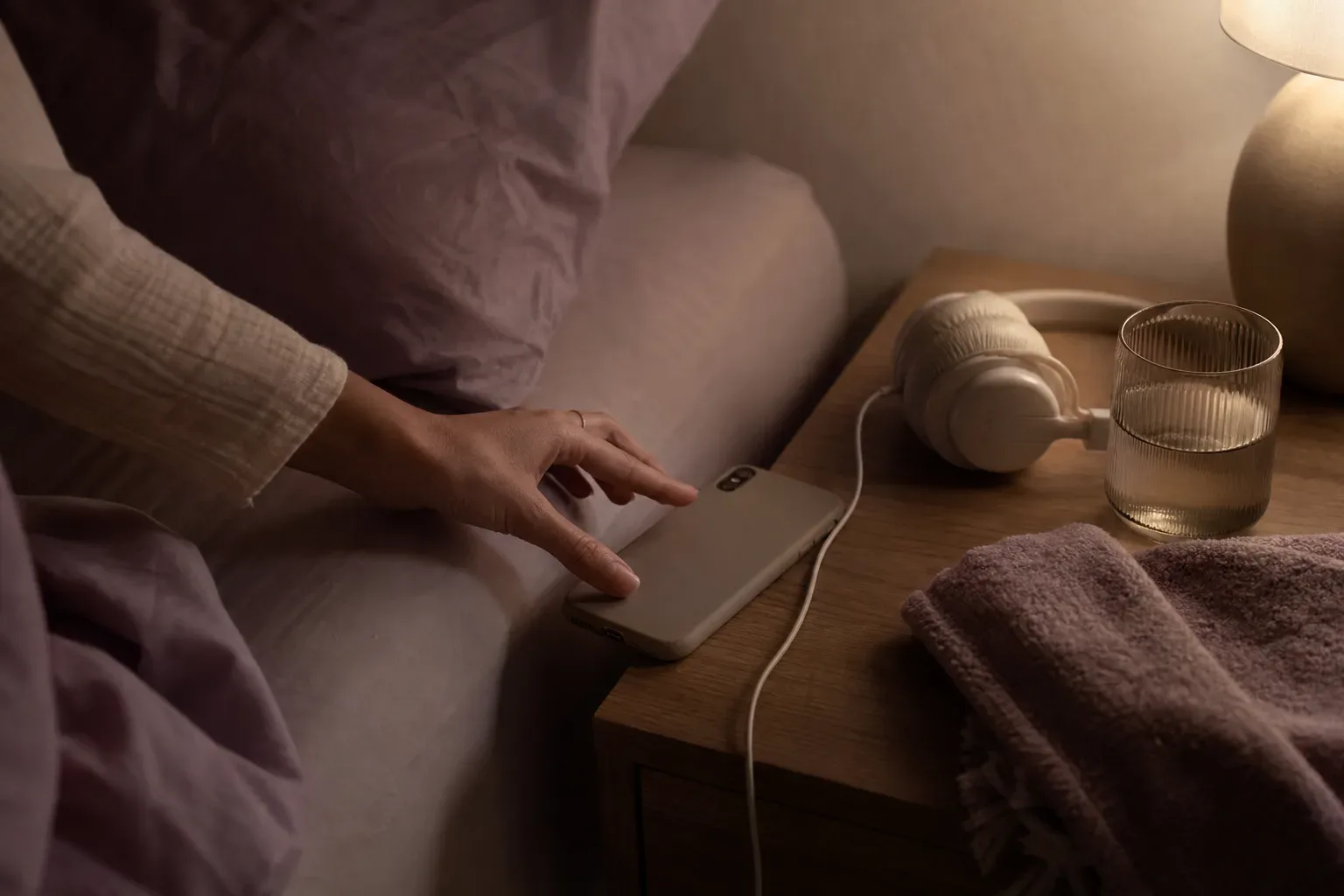
The phone is warm in your hand. Your eyes are tired, but the scroll keeps opening. Revenge bedtime procrastination means you’re delaying sleep to reclaim a little life from the day. The gentlest first move is not force. Listen to a short audio before you scroll.
What is revenge bedtime procrastination, really?
Revenge bedtime procrastination is staying awake on purpose when sleep would help you, because the night feels like the only time that’s yours.
The term sits close to what sleep researchers call bedtime procrastination. In a 2014 paper in Frontiers in Psychology, Floor Kroese and colleagues described it as failing to go to bed at the intended time, while no outside circumstance prevents it. The revenge part came later in popular language, especially around overwork and thin personal time. It has a specific ache. You’re not just awake. You’re taking something back.
That matters because shame doesn’t help here. A 2020 Philips global sleep survey found that stress was one of the most common barriers to sleep, named by 33% of adults surveyed across 13 countries. The late scroll often isn’t laziness. It’s a small protest from a body that had no room to exhale at 2 p.m.
Revenge bedtime procrastination usually has three signs:
- You know you’re tired.
- You know sleep would help tomorrow.
- You still keep choosing a low-effort activity that stretches the night.
A habit can be unwise and still make emotional sense. That’s the first quiet truth. If you treat the scroll as the enemy, you miss the need underneath it. If you hear the need, you can answer it earlier, softer, and with less blue light in your eyes.
The goal isn’t a perfect bedtime. The goal is a truer threshold. One small ritual before the phone gets the whole room.
Why does scrolling feel like getting your life back?
Scrolling feels like relief because it gives quick choice, novelty, and privacy after a day that may have offered very little of each.
The brain likes easy reward when it’s tired. In 2024, Pew Research Center reported that 91% of U.S. adults own a smartphone, and the device is especially close to the body at night. It’s on the pillow, the nightstand, the bathroom sink. When your will is low, the nearest reward usually wins.
There is also a somatic piece. After a long day, the jaw may still be set. The breath may be high. The shoulders may be waiting for one more request. When the body hasn’t felt completion, bedtime can feel like surrender. Scrolling offers the illusion of a door you still control. You move your thumb. You choose the next clip. You leave the day without having to feel the day.
Research on self-control often points to fatigue and depletion, though the exact model is debated. A 2019 review in Social and Personality Psychology Compass noted that self-control is shaped by motivation, attention, and context, not just inner strength. This is kind. It means the answer is not to become stricter. It’s to change the first cue.
Try seeing the scroll as a false ritual. It has repetition. It has an entry point. It changes your state. It asks almost nothing of you. A real evening ritual can be just as small, but more honest.
| Late-night scroll | Listen-before-scroll ritual |
|---|---|
| Starts with impulse | Starts with a chosen cue |
| Feeds novelty | Feeds recognition |
| Keeps the body alert | Lets the body notice itself |
| Has no natural ending | Ends after 2 to 5 minutes |
| Often leaves regret | Often leaves a cleaner choice |
A boundary that begins with listening is gentler than a boundary that begins with punishment. It says: I still get a moment. I get it before the feed takes it.
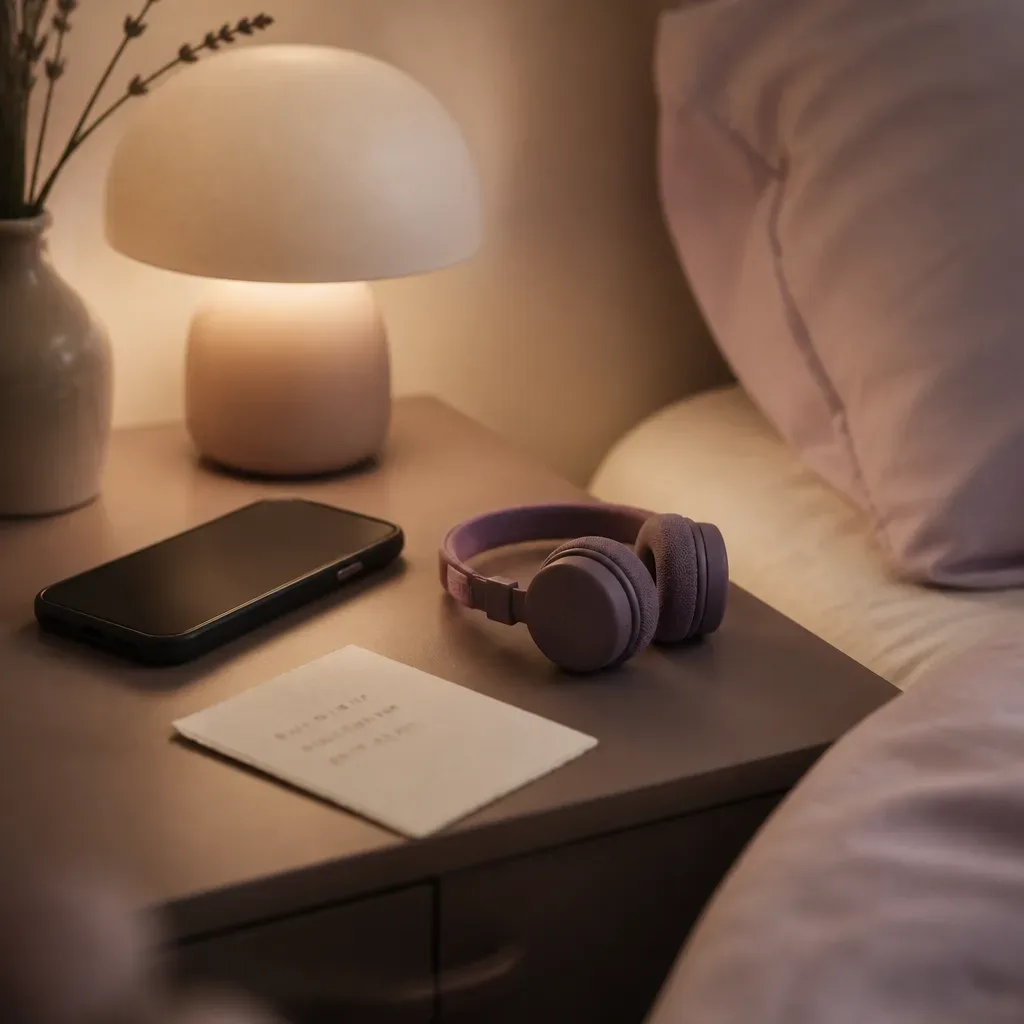
How do you listen before you scroll tonight?
You make one if-then plan, keep the audio short, and let the body mark the change before the app opens.
Peter Gollwitzer’s research on implementation intentions has shown that simple if-then plans can improve follow-through across many goals. The format is plain: if situation X happens, then I will do Y. For revenge bedtime procrastination, the plan might be: if I pick up my phone after 10 p.m., then I listen before I scroll.
Here is the whole practice. It takes about 8 minutes, including the small pauses.
- Choose the audio before night comes. Pick one short recording while you’re still clear. Two to five minutes is enough. Don’t negotiate with yourself at 11:47 p.m.
- Put the audio where the scroll usually begins. If your thumb opens social media first, place the audio app on the home screen and move the social app one folder away.
- Name the moment. Say, quietly, this is revenge bedtime procrastination. Naming reduces the fog. In affect-labeling studies, including work from UCLA researcher Matthew Lieberman, naming an emotion has been associated with reduced amygdala activity.
- Listen with one hand on the body. Sternum, belly, throat, or jaw. Touch gives the mind a place to stop performing.
- Pause for one full breath when it ends. The pause is the hinge. Then choose: sleep, a timed scroll, or one honest task like brushing your teeth.
The practice works best when it feels almost too small. Sleep advice often fails when it asks too much from the most depleted part of the day. The National Sleep Foundation has long recommended a consistent wind-down routine; this is the smallest version I know.
Keep the rule clean: listening comes first. Not because scrolling is forbidden. Because the first voice of the night should not be an algorithm.
What should you listen to, exactly?
Listen to something short, personal, future-facing, and calm enough that your body doesn’t brace against it.
The AYA Method is a daily audio manifestation practice. Each day you listen to a short personalized recording — your Dream-Self Moment — narrated from the version of you who has already manifested the life you intend. Listening is the practice. Repetition is the work. The audio is the method.
That definition matters at night. The audio is not background noise. It isn’t a lecture. It isn’t a task list. It is one short contact with the self you’re practicing becoming. If you use the AYA Method, the Dream-Self Moment can become the first thing your nervous system hears when the revenge scroll begins to call.
Manifestation is often made too loud. Here, it can be quiet. The wider idea of manifestation is not wishing hard while ignoring your body. It’s repetition, attention, and behavior meeting the same remembered future. Joe Dispenza often writes about rehearsing a future state; Neville Goddard called attention to the feeling of the wish fulfilled. You don’t have to adopt every part of their worldviews to notice the common thread: repeated inner rehearsal changes what feels available.
If you prefer a plain option, choose:
- a 3-minute body scan
- a soft note recorded in your own voice
- a single affirmation repeated slowly
- a prayer or contemplative reading, if that’s yours
- a Dream-Self Moment, if you want the future self to speak first
The app also includes a daily affirmation and a Manifestation Board, but those are complements. At night, don’t make a whole project. Let the audio carry the practice. Let the board wait for morning.
A sentence heard in the dark can go places a sentence on a screen can’t reach.
What if your body resists going to bed?
If your body resists bedtime, treat the resistance as a signal that something unfinished still wants to be seen.
Somatically, bedtime can be noisy. The body may read stillness as the first safe moment to bring up everything you avoided. The email you didn’t answer. The conversation that tightened your throat. The wish you keep postponing. No wonder the phone looks merciful. It gives motion when stillness feels too honest.
A 2022 review in Sleep Medicine Reviews linked bedtime procrastination with stress, poor self-regulation, and evening chronotype tendencies. Translation, without the clinical chill: some bodies are more awake at night, and stress makes the pattern stronger. You don’t need to insult yourself for having a nervous system.
Use a body-first reset before deciding whether to sleep:
- Sit or lie down with the phone still locked.
- Place one hand under the collarbone.
- Let the jaw hang slightly open for three breaths.
- Listen to your chosen audio.
- Ask: what did I want from the scroll?
The answer is often simple. Quiet. Play. No one needing me. A sense that my life is mine. Once you know that, you can give yourself a smaller, cleaner version. Five pages of a novel. One candle. A 10-minute timer. A hand on the ribs while the room goes dark.

If you use astrology as a reflective tool, evening patterns can be tracked without making them a verdict. Some readers use the moon or transits as prompts for timing and mood. If that’s you, astrology and manifestation can stay grounded when it helps you notice, not excuse, your choices.
The body doesn’t need to be conquered into sleep. It needs enough safety to stop guarding the door.
How do you make the habit last longer than one night?
You make the habit last by lowering the bar, tracking only what matters, and protecting the first minute after you pick up the phone.
Behavior change often fails at the moment of scale. You try to fix the whole evening: dinner, dishes, shower, skincare, reading, no phone, lights out by 10. Then one hard day breaks the chain. In habit research, BJ Fogg has argued for tiny behaviors because small actions reduce friction. The same applies here. The first minute is the practice.
Track only three things for 7 nights:
| Question | Mark |
|---|---|
| Did I notice the revenge bedtime urge? | yes or no |
| Did I listen before opening a feed? | yes or no |
| Did I choose my next action after one breath? | yes or no |
You don’t need to track sleep score, moral worth, or how enlightened you felt. A 2023 American Academy of Sleep Medicine survey found that many adults lose sleep due to phone use, with younger adults especially affected. The cleanest intervention is often environmental: move the charger, dim the screen, remove the easiest app from the first page.
Make the ritual visible before you’re tired:
- Put headphones on the pillow, not in a drawer.
- Set a 10 p.m. reminder that says listen first.
- Charge the phone across the room if that feels possible.
- Keep the same audio for at least 7 nights.
- Let one missed night be one missed night, not a collapse.
A kept promise should be small enough to survive a bad day. That’s the standard. Not perfection. Return.
If you want a paired daytime practice, use one written sentence in the morning: tonight, I listen before I scroll. It is not a pillar. It is a thread. The audio remains the method.
When is this not enough on its own?
This practice is not enough when sleep loss is severe, persistent, or tied to anxiety, depression, trauma, pain, caregiving strain, or unsafe work demands.
Be tender, and be practical. If you’re regularly getting fewer than 6 hours of sleep, falling asleep while driving, waking in panic, or using the night to avoid a life that feels unlivable, the answer is not just a better ritual. The CDC has reported that about 1 in 3 U.S. adults don’t get enough sleep. Common doesn’t mean harmless.
Talk with a clinician if insomnia lasts longer than a few weeks or affects daily functioning. Cognitive behavioral therapy for insomnia, often called CBT-I, has strong evidence and is recommended by the American College of Physicians as a first-line treatment for chronic insomnia. A ritual can support care. It should not replace care.
You can also look at the day. Revenge bedtime procrastination often begins hours before bedtime. It begins when lunch is skipped. When no one gets five minutes alone. When every quiet impulse is delayed until the house is dark. Protecting sleep may mean protecting one pocket of selfhood earlier.
Try this 3-part daytime repair:
- Take one 5-minute pause before evening, without input.
- Do one thing that’s yours before 8 p.m., even if it’s small.
- Decide your listening cue before the room gets dim.
The night is easier when it doesn’t have to hold your whole unlived day.
Leave the phone face down, just for one breath.
Listen on Aya

