audio manifestation
Manifestation Playlist: Put Dream-Self Audio First
Build a manifestation playlist that starts with your Dream-Self audio, then supports it with music, silence, and repetition that your day can hold.
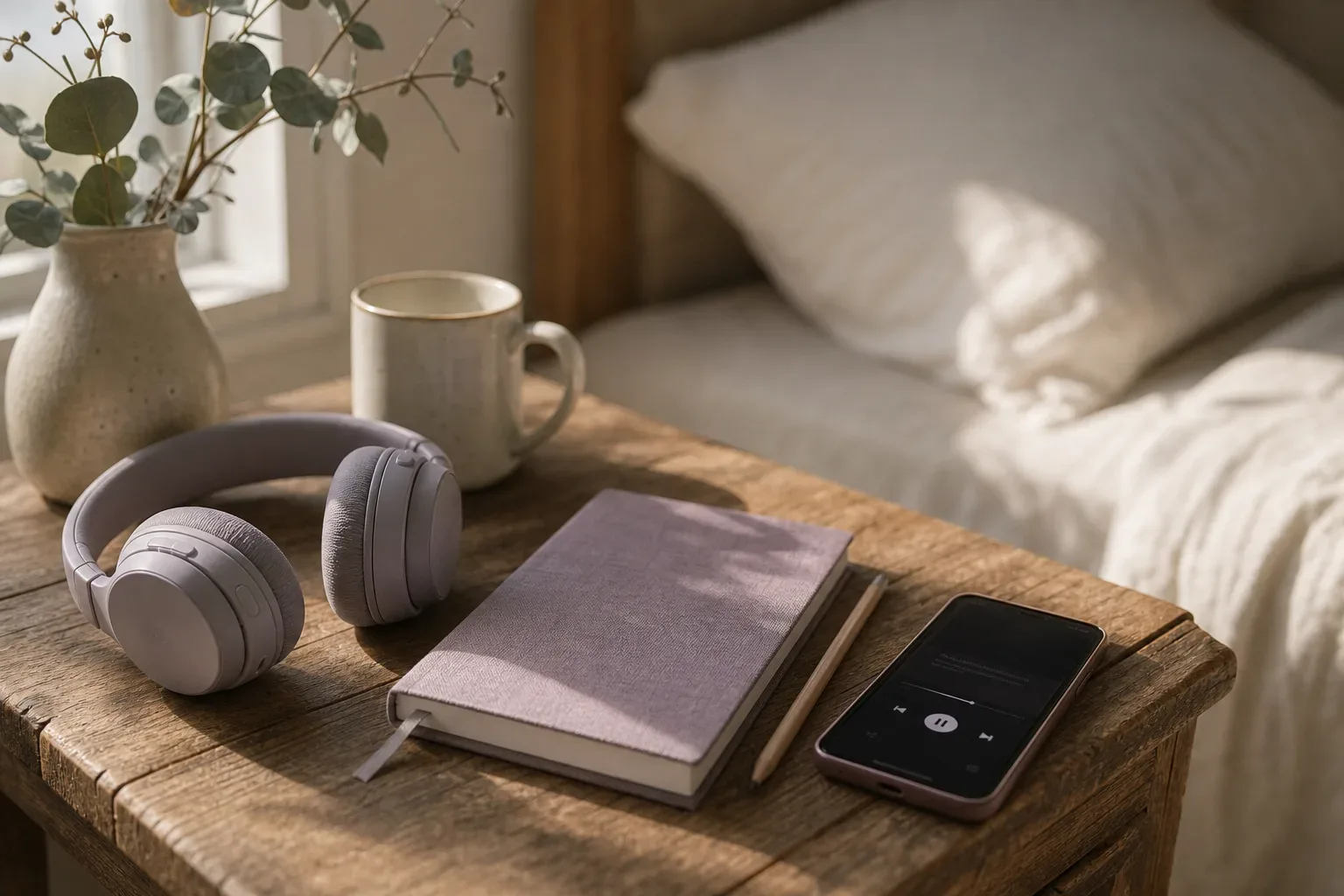
A manifestation playlist works best when your Dream-Self audio comes first. Not a song. Not a mood track. The practice begins with the future-self recording, then music and silence can hold it. Keep it short, repeat it daily, and let the first sound tell your attention where to return.
Why should your Dream-Self audio come first?
Your Dream-Self audio should come first because the opening sound becomes the cue your attention learns to trust.
The first 30 seconds matter. Behavioral scientists often talk about cues because the brain likes a beginning it can recognize. In the 2009 habit study by Phillippa Lally and colleagues at University College London, a new behavior took a median of 66 days to become automatic, with wide variation from 18 to 254 days. Repetition was not glamorous. It was simply repeated contact.
A manifestation playlist is not there to impress you. It is there to return you. If you start with a song, your attention may follow the song. If you start with your Dream-Self Moment, your attention meets the words before the mood. That order is quiet, but it changes the practice.
The AYA Method is a daily audio manifestation practice. Each day you listen to a short personalized recording — your Dream-Self Moment — narrated from the version of you who has already manifested the life you intend. Listening is the practice. Repetition is the work. The audio is the method. You can read the full practice at the AYA Method.
The first sound teaches the mind what matters. That sentence is worth keeping. In a playlist, order is not decoration. It is instruction.
For a simple start, use this order:
- Dream-Self Moment audio
- 30 to 90 seconds of silence
- One soft instrumental or grounding track
- Optional daily affirmation, spoken or written after listening
- Stop before the practice becomes something you postpone
If you want a broader frame for this work, the manifestation pillar explains why repetition, attention, and identity matter more than forcing a result.
How do you build a manifestation playlist without making it too much?
You build it by choosing the smallest sequence you can repeat without bargaining with yourself.
A good playlist may be only 7 minutes. The Centers for Disease Control and Prevention says most adults need at least 7 hours of sleep, yet many people try to add long morning routines while already tired. The practice should fit the life you have now. Otherwise it becomes another quiet way to feel behind.
Think of the playlist as a room with one chair. Your Dream-Self audio sits in that chair. Everything else stands around it, useful only if it helps you listen. The music is not the method. The silence is not the method. The daily affirmation and the Manifestation Board can support the practice, but the audio remains the center.
Here is a plain structure you can copy:
| Part | Length | Purpose |
|---|---|---|
| Dream-Self audio | 2-4 minutes | Names the identity and scene |
| Silence | 30-90 seconds | Lets the words land |
| Instrumental track | 2-5 minutes | Keeps the body settled |
| One sentence note | 30 seconds | Captures what felt true |
The best manifestation playlist is the one you do not have to negotiate with. If it asks too much, it will become a symbol instead of a practice.
Use these filters when choosing sounds:
- No lyrics that argue with your intention.
- No tracks you associate with grief, drama, or someone else’s story.
- No long intro that makes you impatient.
- No volume that makes the voice compete.
- No playlist longer than your ordinary day can hold.
For words that support the audio afterward, the affirmations pillar can help you keep one sentence clean and believable.
What kinds of music belong after the audio?
The music after the audio should help your body stay near the message without stealing the room.
Instrumental music is often safer than lyrics because speech and speech compete. Cognitive load theory has been studied for decades, including work by John Sweller beginning in the 1980s: when too many channels ask for attention, learning gets weaker. Your Dream-Self audio is language. Give it space.
After the audio, choose one track that has a steady tempo and no sudden emotional turn. Around 60 to 80 beats per minute can feel close to a resting heart rate for many adults, though bodies vary. The point is not a perfect number. The point is not to startle yourself out of listening.
You might choose:
- Low piano with long notes.
- Soft strings without a dramatic rise.
- Field recording of rain, sea, or early street sound.
- Brown noise, if it steadies you.
- A song with lyrics only if every line still feels true.
A playlist is a boundary around your attention. It says: for these few minutes, I am not collecting more noise.
Some people like to place a favorite song first because it opens the mood quickly. I understand the temptation. I also know how fast a song can become a memory of another person, another year, another self. Put the Dream-Self Moment first so the practice begins in the life you are rehearsing, not the life a song remembers.
If your manifestation practice also includes timing by moon phases or birth chart symbolism, keep that as a layer, not the center. The piece on astrology and manifestation is useful for that. The audio still comes first.
When should you listen to the playlist?
You should listen at the time you can repeat most easily, not the time that sounds most impressive.
Morning is common because the day has not filled itself yet. But if mornings are loud, crowded, or shared with children, the practice may belong somewhere else. Edison Research’s 2024 Infinite Dial reported that 67% of Americans age 12 and older listened to online audio in the past month. Audio already lives in ordinary pockets of the day. Your practice can live there too.
Attach the manifestation playlist to a cue that already exists. B. J. Fogg’s behavior model at Stanford emphasizes tiny behaviors anchored to existing routines. You do not need to become a different person by 6:00 a.m. You need one reliable doorway.
Try one of these cues:
- After you put your feet on the floor.
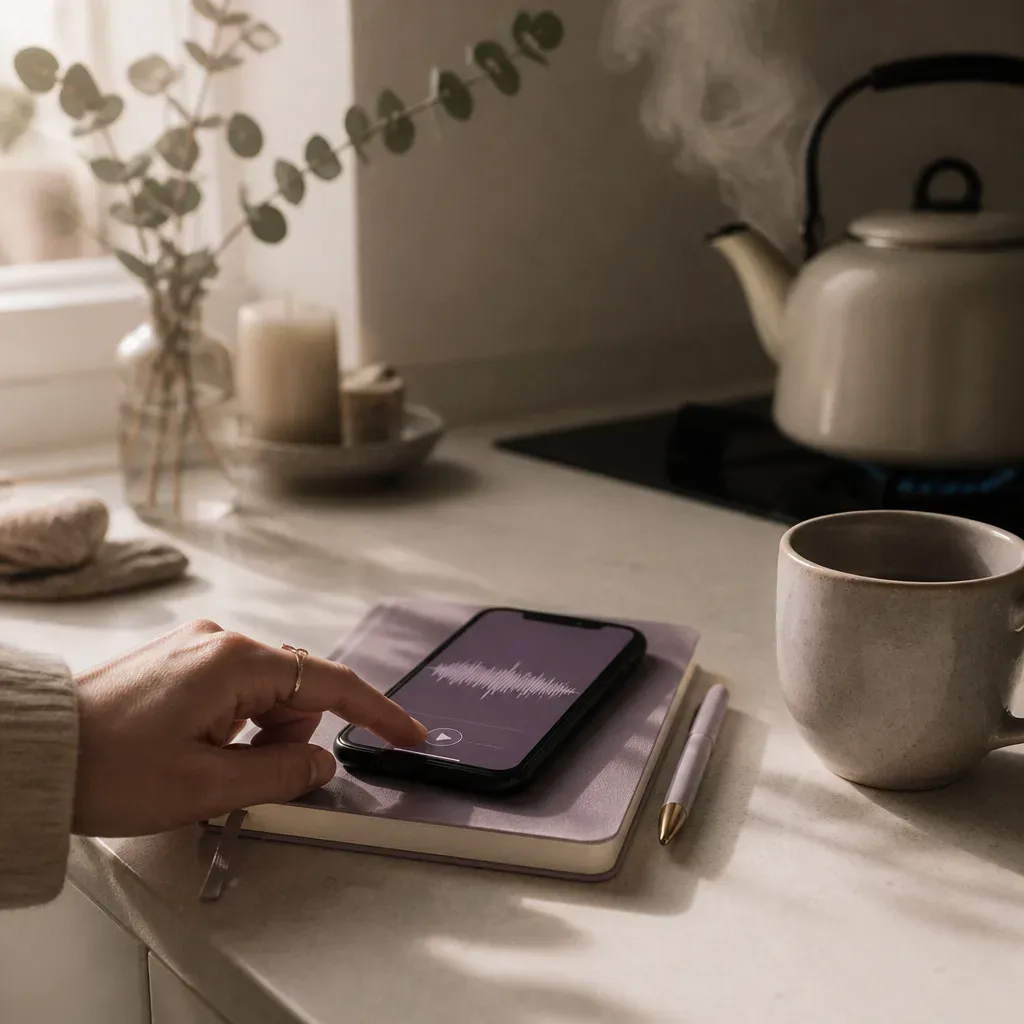
- While water heats for coffee or tea.
- After brushing your teeth.
- Before opening your inbox.
- During the first 10 minutes of a walk.
- After closing work for the day.
- Before sleep, if the audio does not make your mind too bright.
The right time leaves a trace of peace, not pressure. If listening before bed makes you restless, move it earlier. If listening while walking makes the words feel more real, keep walking.
I like the hour before a city fully wakes. In Brussels, it is often grey. The windows are half mirrors. The playlist begins before the first message arrives, and for 8 minutes nothing needs to be answered.
How do you use affirmations without letting them take over?
Use affirmations as a small echo after the audio, not as the main practice.
Affirmations can help because repeated self-statements may shape attention and behavior, especially when they feel believable. In social psychology, self-affirmation theory is often traced to Claude Steele’s 1988 work on the self’s need to maintain integrity. Later studies are mixed, and that matters. A sentence that feels false can create resistance instead of steadiness.
So keep the affirmation close to the Dream-Self Moment. Do not write 20 lines. Write one. It should sound like something your nervous system can allow today.
Better:
- “I can take one clean step today.”
- “I know how to return to myself.”
- “I am allowed to practice before I see proof.”
- “I can receive what is already true in me.”
Harder to hold:
- “Everything I want is mine now.”
- “I never doubt.”
- “Nothing can touch me.”
A true sentence does not have to be large. It has to let you stay. That is the test.
If you use the app’s daily affirmation, place it after the Dream-Self audio or read it once when the playlist ends. If you use a Manifestation Board, look at it after listening, not before, unless the image helps you settle. The board is visible support. The audio is the practice.
For a fuller foundation, return to the AYA Method when you need to remember the order: listen first, repeat daily, let the future self become familiar.
How often should you update the manifestation playlist?
Update the playlist once a week or when a track begins to pull you out of the practice.
Daily editing can become another form of avoidance. Weekly review is enough. Lally’s 2009 habit research also showed that missing one day did not ruin habit formation, but inconsistent repetition made automaticity slower. The same mercy applies here. You do not need a perfect streak. You need a practice you return to.
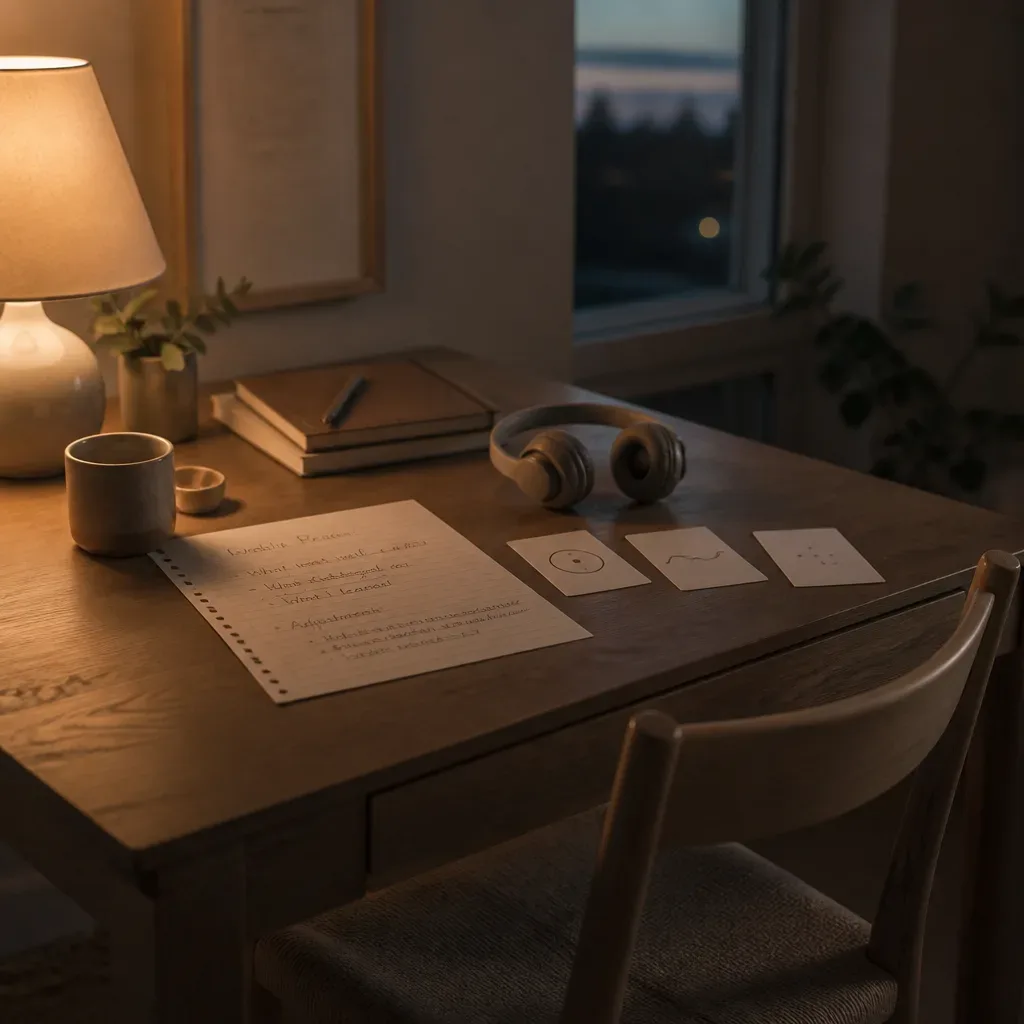
Set a 7-day review. Listen once without multitasking. Notice what happens in the body. Does the first track still open attention? Does the silence feel supportive or awkward? Does the song after the audio help you stay near your Dream-Self Moment, or does it send you elsewhere?
Use this small checklist:
| Question | Keep it if… | Remove it if… |
|---|---|---|
| Does it support the audio? | The words remain clear | The sound competes |
| Does it feel true now? | Your body softens | You perform a feeling |
| Is it repeatable? | You can play it daily | You keep skipping it |
| Is it short enough? | It fits your real schedule | It needs a special day |
You can also keep a simple note after each review: “This week, the playlist helped me listen,” or “This week, the song was too much.” Ten words are enough. Tracking does not have to become another mirror you judge yourself in.
Neville Goddard wrote often about assuming the feeling of the wish fulfilled. Joe Dispenza speaks about mental rehearsal and the body learning a new state. You do not have to adopt every claim from every teacher. You can take the practical piece: repeat the inner scene until it becomes familiar enough to act from.
What should you do if the playlist starts to feel flat?
If the playlist feels flat, reduce it before you replace it.
Flatness often means the practice has become background noise. That is not failure. It is information. The brain habituates. In neuroscience, habituation describes reduced response to repeated stimuli; it is one of the simplest forms of learning and has been observed across many species. Familiarity can soothe, but it can also blur.
First, remove everything except the Dream-Self audio and 60 seconds of silence. Do that for 3 days. No extra track. No affirmation. No board. Just listen. See what returns when the practice is bare.
Second, change the listening position before you change the content. Sit instead of lying down. Walk instead of sitting. Put one hand on the chest if that helps. Lower the volume. The smallest physical shift can make the same words reachable again.
Third, revise only what is no longer true. If your Dream-Self Moment names a desire that has changed, update the audio. If the desire is still true but your attention is tired, keep the audio and refresh the space around it.
Here is the 3-day reset:
- Day 1: Dream-Self audio only.
- Day 2: Dream-Self audio plus one minute of silence.
- Day 3: Dream-Self audio, silence, then one sentence in your notebook.
You do not need to make the manifestation playlist interesting. You need to make it honest.
For visual support after the reset, a simple board can help, but keep it in its place. The Manifestation Board practice is a complement when images help you remember. It is not a replacement for listening.
What does a finished manifestation playlist look like?
A finished manifestation playlist looks almost too simple: your Dream-Self audio, a little quiet, and one sound that helps you carry it.
Here are three examples you can adapt:
| Style | Track 1 | Track 2 | Track 3 | Total |
|---|---|---|---|---|
| Morning | Dream-Self Moment | 60 seconds silence | Soft piano | 8 min |
| Walking | Dream-Self Moment | Street or sea field sound | One steady song | 10 min |
| Night | Dream-Self Moment | Brown noise | No affirmation | 6 min |
The American Psychological Association has reported for years that stress affects sleep, focus, and health behavior; in the 2023 Stress in America report, adults named money, health, and the future as common stressors. A short practice cannot fix the whole day. It can give the day one clear beginning.
Before you save the playlist, ask four quiet questions:
- Does the Dream-Self audio begin the sequence?
- Can I repeat this on a normal day?
- Does every sound support listening?
- Do I feel more here when it ends?
If the answer is yes, stop editing. Save it. Use the same one for 7 days. The mind learns by returning to the same door.
You may want to keep reading, planning, collecting. That can be useful. It can also become a way to stand outside the practice. If you need language for the wider field, read manifestation. If you need one clean sentence, read affirmations. Then come back to the audio.
The playlist is ready when it asks less from you and brings you closer to what is true.
Begin with the voice that remembers you.
Listen on Aya

