manifestation 101
Whisper Method Manifestation vs Future-Self Audio
A quiet comparison of whisper method manifestation and future-self audio, with evidence, examples, and a softer way to choose your daily practice.
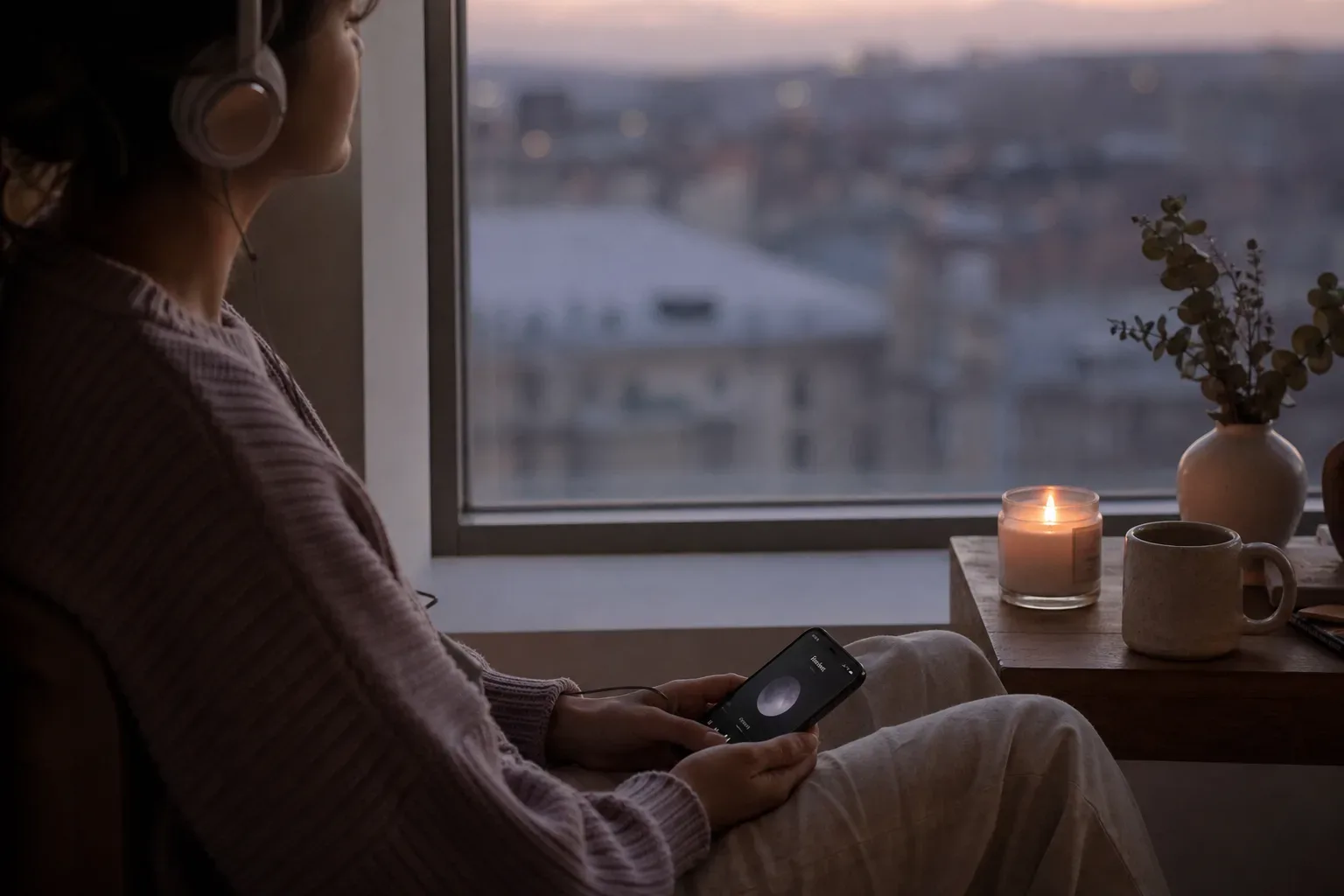
The lamp is low. Your phone is face down. Whisper method manifestation asks you to picture someone and send them a thought; future-self audio asks you to listen to the version of you who already lives differently. The quieter, steadier practice is usually the one that brings the focus back to you.
What is whisper method manifestation, really?
Whisper method manifestation is a visualization ritual where you imagine whispering a desired message to someone in your mind.
The common version is simple. You close your eyes. You picture a specific person. You imagine walking toward them, leaning near their ear, and whispering what you want them to think, say, or do. On TikTok and YouTube, the steps often take less than 60 seconds to explain. That speed is part of why the practice spread.
It belongs to a larger family of mental rehearsal practices. Athletes have used imagery for decades; a 2012 review in the Journal of Mental Imagery noted that imagery rehearsal can support performance when it is paired with real-world action. But whisper method manifestation is more specific. It is not just picturing yourself acting with steadiness. It often places another person at the center.
That matters. A practice can be private and still shape how you meet the world. If you rehearse being calm before a difficult message, your body may enter the real conversation with less bracing. If you rehearse controlling someone else, the practice can feed fixation. The line is quiet, but it is real.
In plain terms, manifestation works best when it changes your perception, choices, and repetition. It becomes less steady when it depends on another person becoming the proof. A wish aimed outward can keep you waiting. A practice aimed inward can give you a next step.
A manifestation practice should not make another person your remote control.
What is future-self audio, and why does it feel different?
Future-self audio is a listening practice that rehearses identity from the inside rather than trying to press a thought into someone else.
The AYA Method is a daily audio manifestation practice. Each day you listen to a short personalized recording — your Dream-Self Moment — narrated from the version of you who has already manifested the life you intend. Listening is the practice. Repetition is the work. The audio is the method.
That definition matters because it keeps the method clean. The audio is not background decoration. It is not a mood. It is the practice itself. The daily affirmation and the Manifestation Board can help you see or name what you are living into, but they are complements. The Dream-Self Moment is the center.
There is a somatic reason this can feel easier than visualizing. Listening gives the body a track to follow. You do not have to hold the whole scene in your mind. You receive a voice, a pace, a set of words. In studies of guided imagery, including work summarized by Holmes and Mathews in 2010, imagery can affect emotion more strongly when it feels vivid and embodied. Audio can help with that vividness.
A future-self recording also narrows the field. Instead of asking, what are they thinking about me, it asks, how do I stand when I already know I am safe enough to act. That is a very different question. One pulls your attention outward. One brings it home.
| Practice | Main focus | Daily cue | Risk point | Best use |
|---|---|---|---|---|
| Whisper method manifestation | Another person’s imagined response | Visualization | Fixation or consent confusion | Calming yourself before honest contact |
| Future-self audio | Your own lived identity | Listening | Avoiding action if used passively | Repeating a chosen self-state before daily choices |
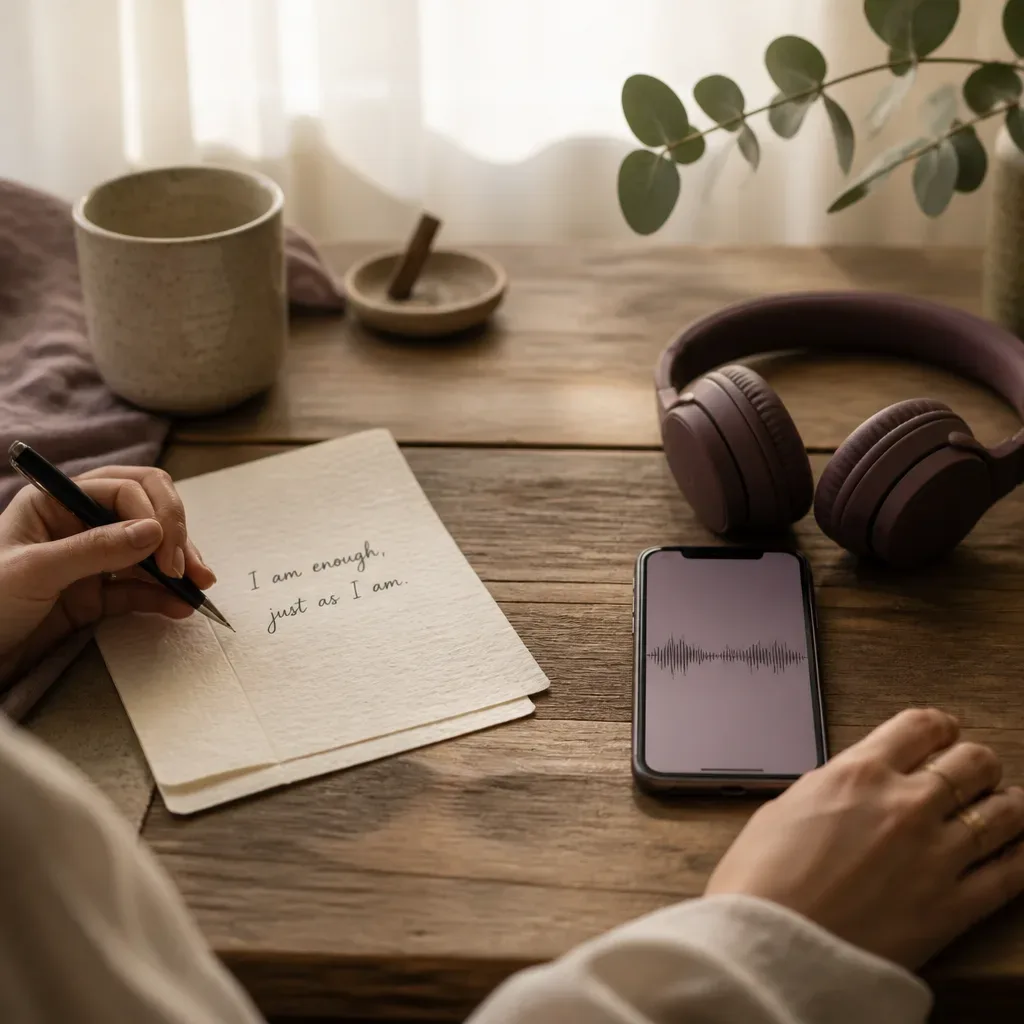
Which one has better evidence behind it?
Future-self audio has stronger support by association because it uses repetition, self-relevance, and guided mental rehearsal, while whisper method manifestation has little direct research.
There is no major peer-reviewed body of research proving that whispering a message in visualization can make another person think or act differently. Claims like that should be held gently. Princeton Engineering Anomalies Research studied mind-matter questions for 28 years before closing in 2007, and even its reported effects were small and contested. That is not a solid base for trying to influence a specific person.
There is better evidence for practices that change your own attention and behavior. Self-affirmation research is one nearby field. In a 2005 Psychological Science study, Creswell and colleagues found that self-affirmation helped buffer stress responses in a lab task. Later work has been mixed, but the useful thread is this: words can affect how threatened or resourced you feel before you act.
Future-self audio also benefits from habit science. In a 2009 European Journal of Social Psychology study, Phillippa Lally and colleagues found that habit automaticity took 66 days on average, with a range from 18 to 254 days. The number is often flattened online, but the point is better than the myth. Repetition changes the friction around a behavior.
Whisper method manifestation may still offer something when used carefully. It can help you notice the exact sentence you wish someone would receive. That sentence may become the honest message you need to send. But the evidence points toward self-regulation and rehearsal, not invisible control.
The strongest manifestation practice is the one that changes how you show up when no one is watching.
How do both practices affect the body?
Both practices can shift the body, but future-self audio gives the nervous system a steadier object to follow.
As a somatic practitioner, I pay attention to the jaw, the breath, the eyes, and the hands. Whisper method manifestation can tighten all four if the desire is charged. The body may lean forward. The breath may become shallow. The imagined whisper can become a grip. This is not failure. It is information.
Future-self audio tends to ask for less effort. You can sit, lie down, walk slowly, or listen before sleep. The voice carries part of the load. Dr. Andrew Huberman has often spoken about the role of repeated cues and physiological state in learning; the broader neuroscience is clear that attention and repetition help shape neural pathways. A 2023 review in Neuroscience and Biobehavioral Reviews noted that repetition and salience both affect learning strength.
The difference is also relational. Whisper method manifestation often activates longing toward a person. Future-self audio activates recognition toward yourself. That distinction can be felt in the chest. One says, please become the answer. The other says, remember what is already yours to practice.
Try noticing these signs:
- If your throat tightens, you may be rehearsing persuasion rather than truth.
- If your breath settles, the practice may be giving your body a usable cue.
- If you feel urgent after practicing, pause before taking action.
- If you feel clearer, choose one small behavior within the next 24 hours.
The body is not a side note. It is where the practice lands.
When might whisper method manifestation be useful?
Whisper method manifestation can be useful when it helps you clarify your own voice before a real conversation.
There is a softer way to use it. Instead of whispering, text me now, you might imagine whispering, I am ready to speak plainly. Instead of rehearsing someone else choosing you, you rehearse yourself staying present whether they say yes, no, or not yet. The method becomes less about control and more about regulation.
That shift is supported by research on implementation intentions. Peter Gollwitzer’s work, widely cited since the late 1990s, showed that if-then plans can improve follow-through. If I feel the urge to check my phone ten times, then I will place it in another room for 20 minutes. This is not mystical. It is practice made specific.
You can use whisper imagery as a bridge into action:
- Name the person without making them responsible for your peace.
- Notice the sentence you want them to understand.
- Translate that sentence into something you can say or do honestly.
- Choose a time boundary, such as within 48 hours or after one night of sleep.
- Let the outcome belong to real life.
This is where affirmations can help, as long as they stay honest. A sentence like I can speak without chasing is clearer than they will want me by morning. One strengthens your spine. The other keeps your nervous system waiting at the door.
There is no shame in wanting to be heard. Just do not build a practice that makes your peace depend on someone else’s unseen mind.

When is future-self audio the better choice?
Future-self audio is the better choice when you want a repeatable practice that centers your own becoming and your next behavior.
The word repeatable is not small. Most practices fail because they ask for too much. A 2019 Pew Research Center report found that many adults use spiritual or reflective practices outside formal religion, and a 2023 Pew report found that 70% of U.S. adults describe themselves as spiritual in at least some way. The desire is common. The hard part is returning tomorrow.
Audio lowers the threshold. You press play. You listen. You do not need a perfect mood, a long ritual, or a flawless mental image. The Dream-Self Moment speaks from the life you intend, in language made personal enough for your body to recognize. That recognition is not magic. It is rehearsal with a pulse.
Future-self audio is also cleaner for desire involving love, work, money, or timing. It does not require you to make another person the hinge. If you are curious about timing systems, astrology and manifestation can be used as a reflective calendar, but the core remains the same: listen, repeat, act from the self you are practicing.
Use future-self audio when:
- You keep changing practices every few days.
- You struggle to visualize clearly.
- You want desire to feel grounded in your body.
- You need a practice that works in 3 to 7 minutes.
- You want to pair inner rehearsal with one real daily choice.
Listening is not passive when it changes what you do next.
How should you choose between them today?
Choose whisper method manifestation for a brief clarity check, and choose future-self audio for your daily practice.
If you are deciding tonight, make it simple. Ask what the practice leaves behind in your body after 5 minutes. If you feel more urgent, more hooked, or more dependent on a specific reply, stop. If you feel more settled, more honest, and more able to take one clean action, keep that thread.
Here is the quiet comparison I give clients in small workshops. Whisper imagery is like writing a sentence in the air. Future-self audio is like hearing the house key turn in your own door. One may reveal what you want. The other can help you live from it again tomorrow.
A practical test:
- Set a timer for 4 minutes.
- Try the practice without forcing a result.
- Write one sentence about how your body feels.
- Choose one action within your control.
- Repeat the same practice for 7 days before judging it.
Seven days is not enough to build a full habit, but it is enough to notice friction. In Lally’s 2009 study, the average was 66 days, yet the first week still showed whether a behavior could fit into ordinary life. That is the point. A practice must be true enough to repeat.
For a wider base, keep reading the Manifestation pillar, then let the audio carry the part your mind keeps trying to hold alone.
Stay with the practice that lets you come back to yourself.