audio manifestation
Habit Stacking Manifestation With 3-Minute Audio
Habit stacking manifestation becomes easier when you attach a 3-minute Dream-Self audio to something you already do each day.

The kettle clicks off. Your phone is already there. Habit stacking manifestation means placing a 3-minute Dream-Self audio beside a habit you already do, so the old habit becomes the cue and the listening becomes the practice. You do not need a longer morning. You need a smaller door.
What is habit stacking manifestation, really?
Habit stacking manifestation is the act of attaching a short manifestation practice to an existing habit, so repetition can happen without a daily debate.
The idea comes from behavior design. BJ Fogg, a Stanford behavior scientist, popularized the tiny habit formula: after I do this, I will do that. James Clear later made the phrase habit stacking familiar in Atomic Habits, which has sold more than 20 million copies according to its publisher. The reason it works is plain. Your life already has hooks in it.
A hook can be brushing your teeth. It can be opening the curtains. It can be waiting for the tram at 8:12. The new practice borrows the memory of the old one. You are not building a temple. You are adding one quiet chair to a room you already enter.
For manifestation, the stack matters because vague intention is often too slippery. You may want to practice. You may even believe in practice. Then Tuesday arrives with wet hair, a missing sock, and one message you should not have opened. A 2022 Pew Research Center report found that 31 percent of U.S. adults said they were online almost constantly. Attention is not sitting patiently at the table. It has to be invited back.
That is where audio helps. The AYA Method is a daily audio manifestation practice. Each day you listen to a short personalized recording, your Dream-Self Moment, narrated from the version of you who has already manifested the life you intend. Listening is the practice. Repetition is the work. The audio is the method.
A practice gets real when it has somewhere to live.
If you want a wider map of the word itself, the manifestation pillar is there. But for this piece, keep it simple. One existing habit. One 3-minute audio. One return.
Why does a 3-minute Dream-Self audio fit the stack?
A 3-minute audio fits because it is short enough to finish and specific enough to become memorable.
Three minutes is not a symbolic number. It is practical. It is shorter than most songs. It is close to the time many people spend brushing teeth, since the American Dental Association recommends brushing for 2 minutes twice a day. It is also shorter than the attention span many people think they need before they begin a practice. That matters.
Long practices can be beautiful. They can also become decorative. I know this from the library. The ambitious books return with bookmarks in the first chapter. The small ones come back bent, carried, used. A practice has to pass the same test. Does it get finished when you are tired?
The Dream-Self audio gives the mind one scene to hear. Not a lecture. Not a list of wishes. A scene. In mental rehearsal research, Dr. Joe Dispenza often speaks about the body learning a future through repeated inner practice. You do not have to accept every claim made in that field to see the useful part. Repetition teaches salience. What you repeat becomes easier to notice.
There is also a nervous system reason to keep it small. Dr. Andrew Huberman has often noted that behavior change works better when friction is reduced and cues are clear. A 3-minute listen lowers the threshold. It asks less of the self that woke up late.
Here is the quiet comparison:
| Practice length | What it asks of you | Best use | Risk |
|---|---|---|---|
| 1 minute | Almost nothing | Starting on hard days | May feel too thin |
| 3 minutes | One small pause | Daily audio practice | Easy to dismiss because it is simple |
| 10 minutes | Protected attention | Weekends or slower mornings | More missed days |
| 30 minutes | A changed schedule | Retreat-like practice | Becomes rare |
The shortest practice is not always the weakest one. Sometimes it is the one that survives.
Where should you attach the audio in your day?
Attach the audio to the most reliable habit in your real life, not the prettiest one in your mind.
Start by naming what already happens. Not what should happen. What actually happens. In habit research, context stability is a known factor. A 2009 study by Phillippa Lally and colleagues in the European Journal of Social Psychology tracked 96 people and found that automaticity developed over a median of 66 days. The habit needed repetition in a consistent context. The cue was part of the work.
Good cues are physical and ordinary. They are not moods. Do not stack your audio onto when I feel ready. Ready is too expensive. Stack it onto something with a sound, surface, or movement.
Try one of these:
- After I press start on the coffee machine, I listen.
- After I put on my shoes, I listen before opening the door.
- After I sit on the train, I listen once.
- After I wash my face at night, I listen with the bathroom light low.
- After I close my laptop, I listen before checking messages.
The cue should be close enough that you do not cross three rooms and lose the thread. If your audio lives in an app, place it where your thumb can find it in two taps. If you use headphones, keep them near the cue. Each extra step is a small gate. Small gates are still gates.
This is also where affirmations can sit gently beside the practice. One daily affirmation after the audio may help you name what you heard. But it is not the pillar. The audio remains the method. The affirmation is a note in the margin.

A cue is not a command. It is a small bell you agree to hear.
How do you build the stack in five steps?
Build the stack by choosing one cue, making the audio easy, listening once, adding one tiny response, and repeating before you revise.
Here is the simple version. Write it somewhere if that helps. The paper does not have to be nice.
- Choose one daily cue. Pick something that happens at least 5 days a week. Daily is better, but 5 is enough to begin. The cue should take place in roughly the same location.
- Place the audio before the moment arrives. Open the app. Save the recording. Put headphones in a visible place. Behavioral scientists call this reducing friction. I call it being kind to your future tired self.
- Listen once for 3 minutes. Do not test whether you believe every sentence. Just listen. The ear is allowed to be ahead of belief.
- Mark the end with one small response. Write one line. Take one slow breath. Put a hand on your chest. Choose one action for the day that belongs to the Dream-Self you heard.
- Keep the same cue for 14 days. Do not keep improving the ritual. Finish it. Then adjust.
Fourteen days is not magic. It is a fair trial. In Lally’s 2009 study, habit formation varied widely from 18 to 254 days, so two weeks will not prove everything. It will prove something more useful: whether the stack fits your life.
If you miss a day, do not make a moral story out of it. The same study found that missing one chance did not necessarily stop habit formation. This is good news. A missed day is information. It is not a verdict.
The practice should feel almost too small at first. That is often the sign that it can be kept.
What should you listen for inside the Dream-Self audio?
Listen for identity, detail, and one believable next action rather than a rush of certainty.
Your Dream-Self audio is narrated from the version of you who has already manifested the life you intend. The phrasing matters because it lets the mind visit a future as if it has texture. Neville Goddard called this living from the end. His language was older, more theatrical at times, but the useful instruction is spare: feel the fact of the fulfilled state.
Feeling does not mean forcing drama. It can be quieter than that. You might hear how your future self speaks to herself in the morning. You might notice the room she wakes in. You might hear the calm way she handles money, love, work, or her own body. Specificity gives attention something to hold.
Researchers who study mental imagery have found that vivid, repeated imagery can affect motivation and emotion. For example, work in the Journal of Behavioral Medicine has linked guided imagery practices with stress reduction in medical settings, though results vary by design and population. It is wise to be careful with claims. Audio will not do your life for you. It can help you rehearse the self who does.
After listening, ask three questions:
- What did I hear that felt true, even softly?
- What did I resist, and can I stay curious about it?
- What is one small action today that would not betray this future self?
That last question matters. Manifestation without contact with action can become a beautiful hiding place. The action does not have to be large. Send the email. Drink the water. Say no once. Leave 10 minutes earlier. Write the first ugly sentence.
For a wider view of how practice and belief meet, you can read the manifestation guide. Keep returning to the audio, though. Reading can explain the door. Listening is walking through it.
What can make the stack fail quietly?
The stack usually fails because the cue is weak, the practice is too ornate, or you keep changing it before it has roots.
The first failure is choosing a cue that does not really happen. Morning pages after a serene breakfast. Meditation after a workout you do twice a month. A candle at 5 a.m. when you have a child who believes 5 a.m. belongs to them. Be honest. Honesty is not pessimism. It is good design.
The second failure is adding too much. You begin with a 3-minute audio. Then a journal prompt. Then breathwork. Then a board. Then tea of a certain kind. By Thursday, the practice requires props, silence, and a better personality. It is gone.
This is why the Manifestation Board inside Aya is best used as a complement. It can give your future self a visible shape. But it should not compete with the listening. The app also includes a daily affirmation, and that can be useful too, especially if words steady you. Still, the center stays simple. The audio is the method.
The third failure is checking for results too quickly. Princeton Engineering Anomalies Research, often called PEAR, ran studies on intention and random systems for decades, from 1979 to 2007. Its findings remain debated, and mainstream science has not treated them as settled proof. What they do show culturally is how long people have tried to study intention with seriousness. Your own practice deserves the same patience, minus the laboratory coat.
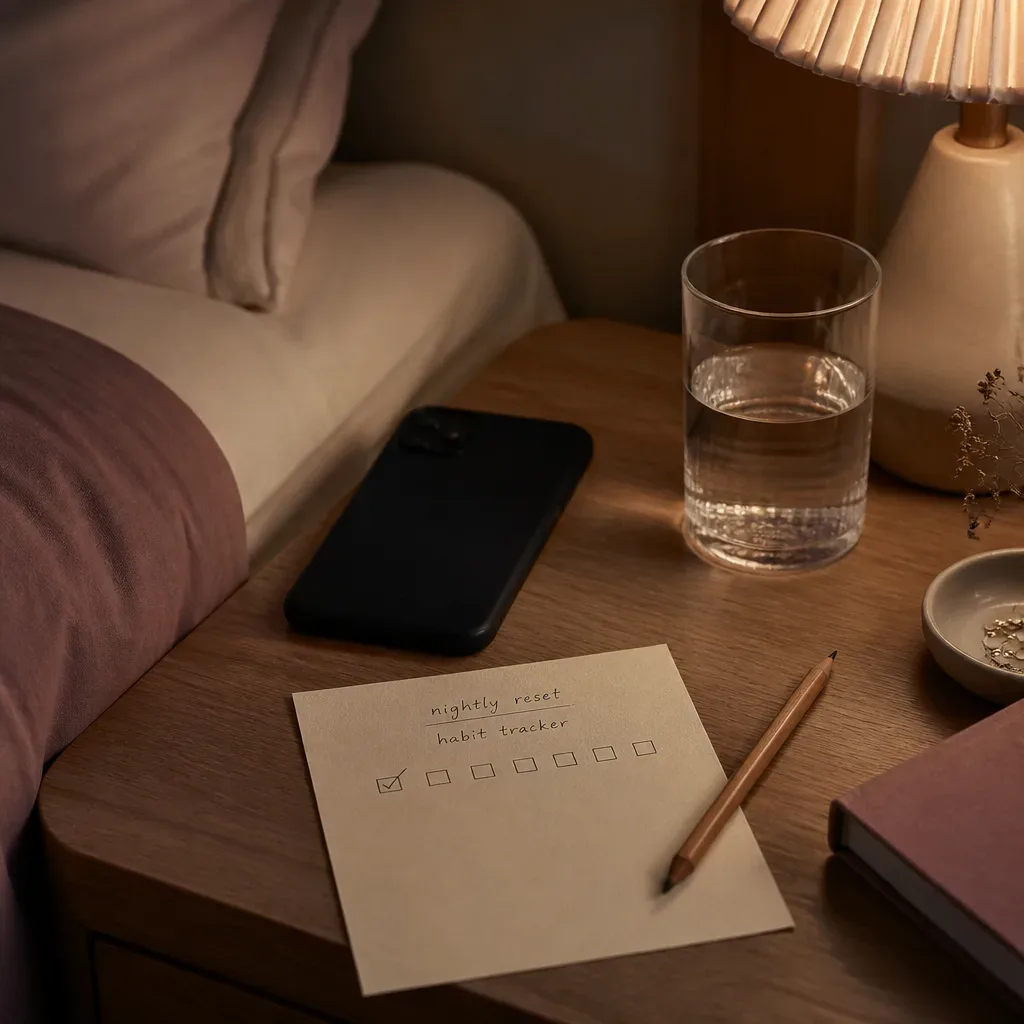
If the stack is not working, adjust one variable at a time:
- Move the cue to a more reliable moment.
- Shorten the response after the audio.
- Put headphones where you can see them.
- Listen while walking instead of sitting.
- Stop tracking mood. Track completion.
You are not failing the practice. You are editing the shelf it sits on.
How do you know it is working?
You know it is working when the cue begins to call the audio by itself and your choices become a little more faithful to the self you hear.
Do not wait for fireworks. They are noisy and brief. Look for quieter signs. You reach for the audio without negotiating. You notice one old habit sooner. You recover faster after forgetting. You make one decision that the former you would have postponed for 3 months.
Tracking can help if it stays small. A 2015 study in the American Journal of Public Health found that self-monitoring is often associated with better behavior change outcomes, especially when the tracking is simple and repeated. But tracking can also become a second job. Use a mark, not a spreadsheet, unless spreadsheets are your native language.
Try this 7-day check:
| Day | Did I hear the audio? | One word after listening | One small action |
|---|---|---|---|
| 1 | yes or no | calm, afraid, clear | email, walk, rest |
| 2 | yes or no | one word only | one action only |
| 3 | yes or no | one word only | one action only |
| 4 | yes or no | one word only | one action only |
| 5 | yes or no | one word only | one action only |
| 6 | yes or no | one word only | one action only |
| 7 | yes or no | one word only | one action only |
If you like timing your practice with the sky, you may enjoy astrology and manifestation. A moon phase can be a poetic cue. Just do not let it replace the daily one. The moon will move without you. Your 3 minutes need your hand.
There is one more sign. The practice becomes less impressive from the outside and more useful from the inside. This is the best kind. No performance. No announcement. Just the kettle, the shoes, the bus, the audio, the return.
The life you keep hearing starts to recognize your footsteps.