manifestation 101
Manifestation Techniques Without Journaling: 3 Minutes
Manifestation techniques without journaling can be simple: listen for 3 minutes, let the body receive the future, and repeat daily.
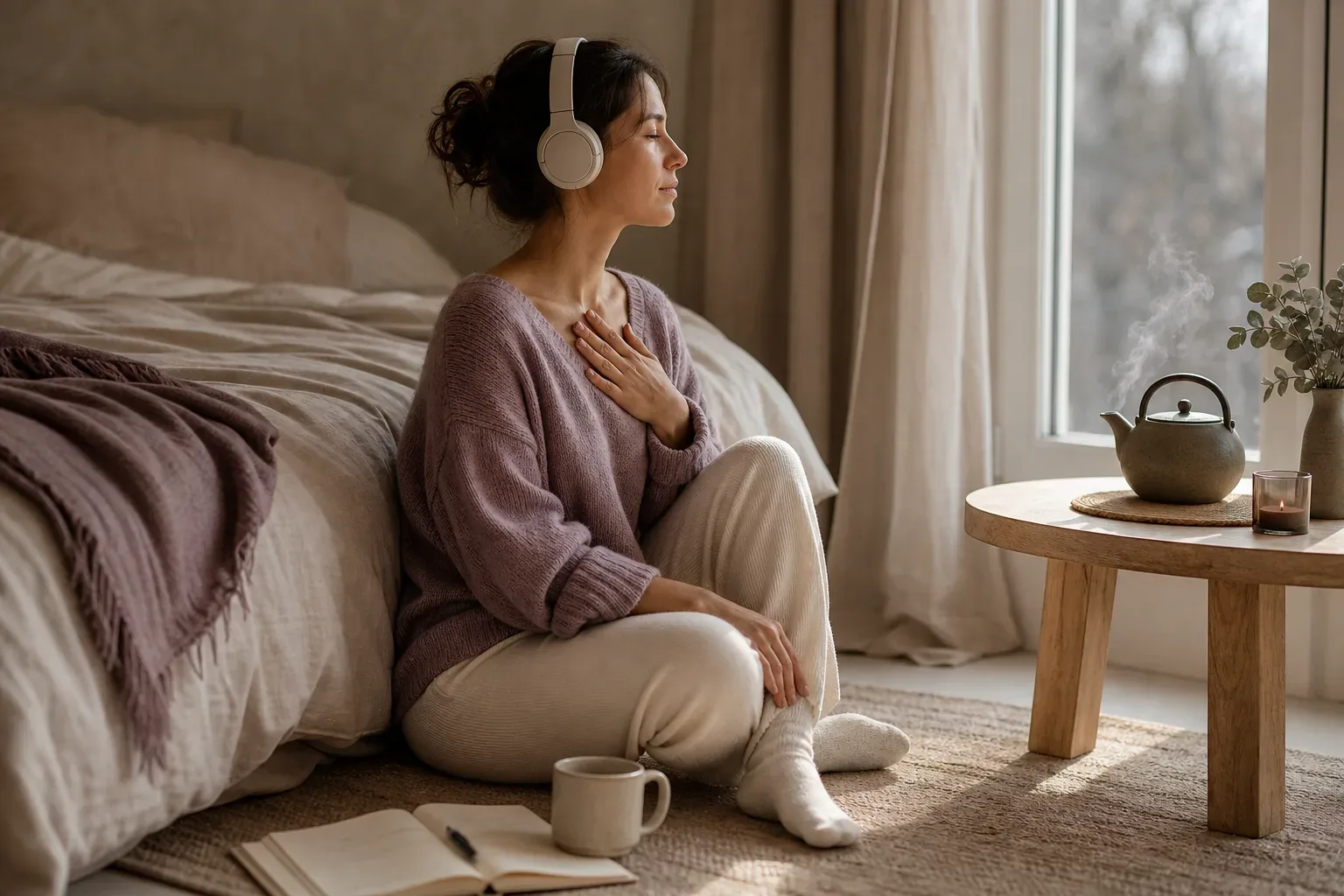
The kettle clicks off. You do not open a notebook. Manifestation techniques without journaling can be as simple as listening to a 3-minute recording of the self you are practicing becoming, feeling one body signal, and repeating it daily. The method is quiet because the audio carries the words for you.
What counts as manifestation without journaling?
Manifestation without journaling means you practice intention through listening, speaking, sensing, or seeing instead of writing.
A notebook can be kind. It can also become another place to perform. Some days the page asks too much. You sit there with a pen, already tired, trying to make desire sound clean. A 3-minute audio practice asks for less. It asks you to receive first.
In manifestation, the central question is not whether you wrote enough. It is whether your attention, body, and daily choices keep returning to the life you mean. Three minutes is 180 seconds. That is small enough to fit between brushing your teeth and looking at your phone. Small counts when it repeats.
Journaling is a technique, not a law. Listening, visualization, spoken sentences, body-based rehearsal, prayer, and ritual timing all belong to the wider family of manifestation practice. Research on habit formation gives this softness some structure. In a 2009 study by Phillippa Lally and colleagues at University College London, 96 people took an average of 66 days to make a new behavior feel automatic, with wide individual variation. Repetition mattered more than drama.
A practice that depends on your best mood is not yet a practice.
If writing makes you honest, keep it. If writing makes you freeze, leave it for now. The work can begin through the ear.
Why does listening work when writing feels like too much?
Listening works because it reduces the effort of language while still giving the nervous system a repeatable future cue.
Writing asks you to generate. Listening lets you receive. That difference matters. Cognitive psychology has studied working memory for decades. George Miller’s 1956 paper described the famous 7 plus or minus 2 limit, and later research refined the number downward for many tasks. Either way, the mind has a ceiling. When you are tired, choosing words can fill the whole room.
Audio changes the load. A voice gives pace, tone, and sequence. Your body can follow without inventing the next sentence. This is why a song learned years ago can return after one opening line. Auditory memory has a different doorway than a blank page.
Dr. Andrew Huberman often speaks about the nervous system through the lens of state, attention, and repetition. You do not need to turn that into a performance. You only need to notice that your state affects what feels possible. A 3-minute recording gives the body one stable signal: this is where I return.
There is also the matter of belief. If you write I am ready and feel false, the page may stare back at you. If you hear a future-self narration, you can let belief lag behind the body. You do not have to force agreement. You can listen as if listening to a letter from someone patient.
Listening is not passive when it changes what you practice being.
Small studies on self-affirmation, including work by David Creswell and colleagues in 2005, suggest that affirming valued identity can buffer stress responses. The point here is not to make a grand claim. It is simpler. A sentence repeated in a safe tone may be easier for the body to consider than a sentence you are ordered to produce.
How do you do the 3-minute listening practice?
You do it by choosing one audio, anchoring the body, listening without fixing yourself, and ending with one sensation.
Here is the whole practice. It takes 3 minutes. If you need a timer, set it once and stop negotiating.
- Choose one short audio.
- Sit, stand, or lie down in a way you can repeat.
- Put one hand on your sternum, belly, or thigh.
- Press play.
- Let the words arrive without testing them.
- When the audio ends, name one body signal.
- Return tomorrow at the same cue.
The hand matters. Touch gives the practice a location. In somatic work, location helps the mind stop floating. It might be the sternum, where grief and hope both like to gather. It might be the belly, where old fear sometimes tightens before thought catches up. It might be the thigh, plain and neutral.
If the mind wanders 12 times, the practice is still happening. Meditation research often uses breath return as a basic unit of attention training. You do not win by staying blank. You return. That is the rep.
| Minute | What you do | What to notice |
|---|---|---|
| 0:00 to 0:30 | Place the body and press play | Contact, breath, jaw |
| 0:30 to 2:30 | Listen to the future-self audio | Images, resistance, warmth |
| 2:30 to 3:00 | Stay quiet after the last word | One true sensation |
Do not add a full debrief. Do not grade the practice. If you want one sentence, make it bodily: my chest softened, my breath shortened, my shoulders dropped. That is enough data for one day.

What should you listen to?
Listen to a short recording that speaks from the future you intend, not a lecture about becoming better.
The AYA Method is a daily audio manifestation practice. Each day you listen to a short personalized recording — your Dream-Self Moment — narrated from the version of you who has already manifested the life you intend. Listening is the practice. Repetition is the work. The audio is the method.
That definition matters because it keeps the center clean. The daily affirmation and Manifestation Board are complements, not pillars. They can help. The app also includes them. But if you only have 3 minutes, listen to the Dream-Self Moment. Let the audio be the place where the future speaks in the present tense.
Good manifestation audio is specific without becoming noisy. It does not need 40 goals. It may name the kitchen you stand in, the steadiness in your voice, the way you answer messages without shrinking, the ordinary ease of paying for what your life requires. Specificity gives the body something to recognize.
Bad audio tries to impress you. It shouts. It stacks promises. It asks you to believe too quickly. Your nervous system may not trust that. In my workshops, I have seen a room of 10 people soften more from one plain sentence than from a long speech. Tissue likes truth at human speed.
You can pair the audio with affirmations if a single line keeps returning. Say it once after listening. Not 33 times unless that feels kind. Once can be enough when the body is actually there.
The future self does not have to sound grand. She has to sound known.
What does your body do during the practice?
Your body listens for safety, timing, and permission before it accepts a new identity.
This is the part I trust most. The body is honest in small ways. The jaw sets before the thought arrives. The breath shortens around an old wish. The shoulders answer before the mouth does. When you listen to a future-self recording, you are not only feeding the mind new content. You are watching the body decide how close it can come.
A simple breath rhythm can help. Research on heart rate variability often discusses resonance breathing near 0.1 Hz, which is about 6 breaths per minute, though individual bodies vary. Lehrer and Gevirtz wrote about this in 2014 in Frontiers in Psychology. You do not need to count perfectly. You can simply let the exhale be a little longer than usual.
Try this inside the 3 minutes:
- soften the tongue away from the roof of the mouth
- let the back of the eyes rest
- feel both feet if you are standing
- notice whether the belly moves at all
- let one shoulder drop before the other
These are not decorations. They are signals. A body that feels chased will not easily rehearse receiving. A body given one quiet contact point may stay long enough to learn.
There may also be resistance. Good. Resistance is information, not failure. If your chest tightens when the audio says I let myself be seen, you have found the doorway. Do not kick it open. Stand there. Listen again tomorrow.
Intention travels at the speed of tissue, not the speed of thought.
How do you keep it daily without making it another task?
You keep it daily by attaching the 3 minutes to a cue that already exists.
Discipline is softer when it borrows a doorway. Do not make a new morning if your current morning is already full. Use something that happens anyway: the kettle, the shower warming, the first parked minute before work, the last light off before sleep. In 2006, Peter Gollwitzer and Paschal Sheeran reviewed 94 studies on implementation intentions and found that if-then planning had a reliable effect on goal follow-through. If the kettle clicks, then I listen.
This is how the practice stays humble. You are not building a ceremony that collapses when life gets loud. You are placing 180 seconds beside a thing already alive in your day.
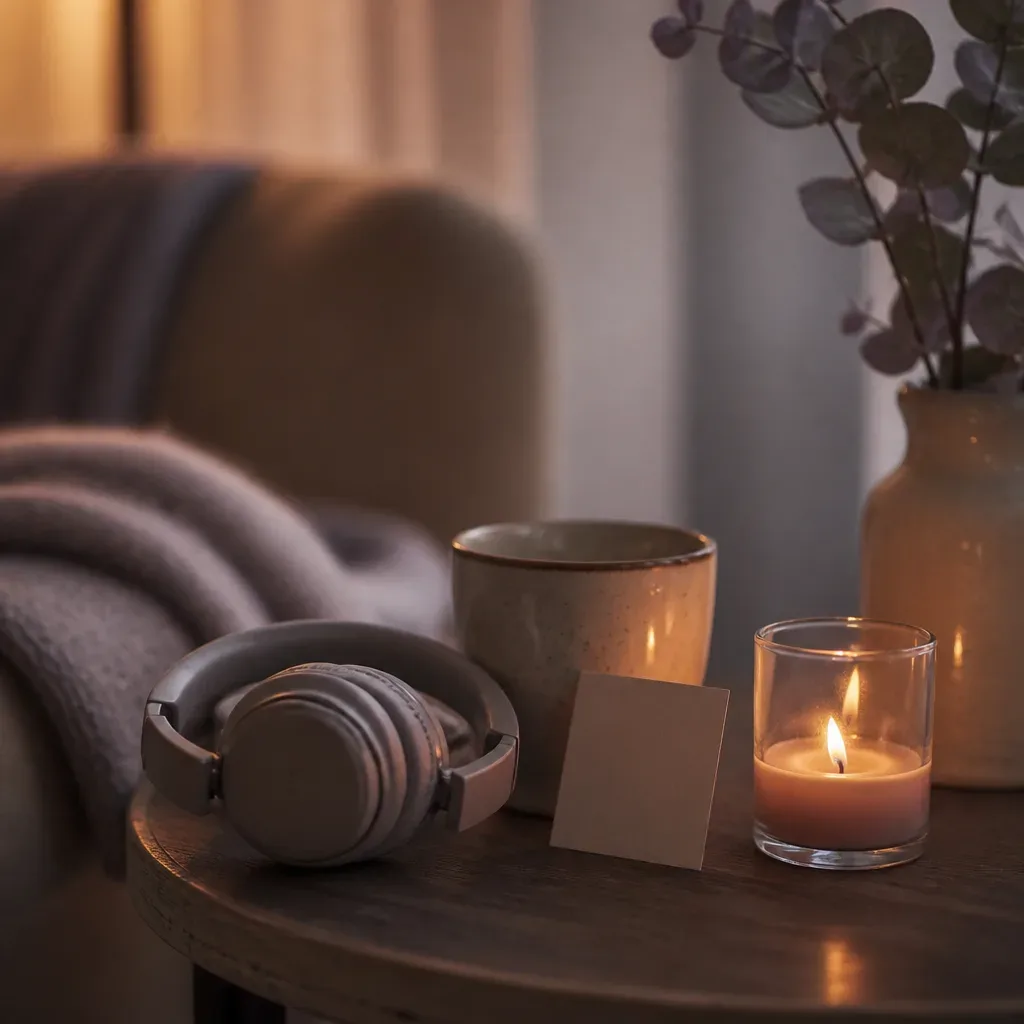
You can also use visible cues. Put headphones beside the mug. Leave the app on the first screen. Place a small card where your hand already goes. The brain likes fewer steps. Behavioral design often returns to the same plain truth: friction changes behavior.
If you miss a day, do not create a punishment ritual. Lally’s habit study also noted that missing one opportunity did not necessarily erase progress. Return at the next cue. That is the whole repair.
Some people like timing their practice with lunar or seasonal markers. If that helps you listen, fine. Astrology and manifestation can be a soft calendar, not a command. The daily practice still has to live in the body on a Tuesday.
When is journaling still helpful, and when can you leave it?
Journaling is helpful when it brings clarity, and you can leave it when it turns intention into pressure.
There is no need to make writing the enemy. A page can hold what the ear cannot. If you are making a choice, grieving a pattern, or noticing the same fear for the 5th time, writing may show you the shape. Expressive writing research by James Pennebaker and others has linked structured emotional writing with benefits for some people, though results vary by person and context.
But journaling can also become surveillance. Did I write enough? Did I say it right? Did I sound grateful enough? That is not practice. That is inspection.
Use this simple comparison when you are choosing for today:
| If you feel | Choose listening | Choose journaling |
|---|---|---|
| tired or wordless | yes | no |
| mentally crowded | yes | maybe, later |
| full of unnamed emotion | maybe | yes, for 10 minutes |
| afraid of wanting too much | yes | yes, gently |
| steady and curious | yes | optional |
The cleanest rhythm for many people is daily listening and occasional writing. Three minutes of audio each day. Ten minutes of journaling once a week, if needed. That gives the practice a spine without making the notebook responsible for everything.
You can learn the wider map through the AYA Method, manifestation, and affirmations, but keep the order kind. Listen first. Let the body answer. Write only if something remains and wants a place to land.
You do not have to document every becoming for it to be real.
The room is quiet enough to hear what is already yours.