audio manifestation
Subconscious Reprogramming Audio in 3 Minutes
A quiet 3-minute subconscious reprogramming audio practice using repetition, identity rehearsal, and attention without needing a long routine.

A cup cools beside your hand. Three minutes of subconscious reprogramming audio can be enough when it gives your mind one clear identity cue, repeated daily, with attention. The practice is simple: listen, picture one ordinary proof, and return tomorrow. Short works because repetition teaches what intensity cannot.
What is subconscious reprogramming audio, really?
Subconscious reprogramming audio is a repeated listening cue that helps your mind practice a new self-concept in a steady, embodied way.
The phrase can sound larger than it is. I prefer the clay version. You press one small mark into soft material. Not once with force. Many times with care. The mark becomes part of the form because you keep returning before the shape has dried.
In psychology, the word “subconscious” is used loosely. Clinicians often speak more carefully about implicit beliefs, automatic thoughts, attentional bias, and habit loops. Daniel Kahneman’s popular distinction between fast and slow thinking, published in 2011, points to something similar: much of your response happens before deliberate reasoning has finished tying its shoes.
Audio matters because it arrives through time. You do not scan it like a page. You receive it line by line. A 2018 review in Neuroscience & Biobehavioral Reviews noted that mental imagery can recruit brain systems involved in perception and emotion; this is one reason a spoken scene can feel more real than a slogan on paper.
The AYA Method is a daily audio manifestation practice. Each day you listen to a short personalized recording — your Dream-Self Moment — narrated from the version of you who has already manifested the life you intend. Listening is the practice. Repetition is the work. The audio is the method.
That last sentence is the hinge. The audio is not a decoration around the practice. It is the practice itself. The app also includes a daily affirmation and Manifestation Board, but they are complements. They help you remember. They do not replace the listening.
A new self-concept rarely arrives as thunder. More often, it arrives as a sentence you stop arguing with.
If you want the wider frame, the quiet manifestation guide explains how intention, attention, and repeated choice work together without asking you to pretend your life is already perfect.
Why can 3 minutes be enough?
Three minutes can be enough because the nervous system learns from repeated cues more reliably than from rare, dramatic effort.
A long routine often fails for a very ordinary reason: it asks for too much room. In the studio, I can wedge clay for 3 minutes even on a bad day. I cannot always give an hour. The practice that survives a tired Tuesday has more teaching power than the beautiful ritual you abandon by Friday.
Habit research supports this modesty. In a 2009 study by Phillippa Lally and colleagues in the European Journal of Social Psychology, participants took a median of 66 days for a new behavior to become automatic, with a range from 18 to 254 days. The lesson is not that change is slow and hopeless. The lesson is that repetition in a stable context matters.
A 3-minute subconscious reprogramming audio practice uses that principle. It gives you a cue, a message, and a return point. You do not need to feel convinced every time. You only need to listen often enough that the sentence becomes familiar.
| Length | What it asks of you | Why it can work |
|---|---|---|
| 1 minute | One breath and one phrase | Good for rescue, too brief for a scene |
| 3 minutes | Attention plus imagery | Long enough to rehearse identity, short enough to keep |
| 10 minutes | Deeper rest | Useful, but easier to postpone |
| 30 minutes | A full practice window | Beautiful when available, fragile when life is full |
There is also the question of attention. A 2010 Harvard study by Killingsworth and Gilbert found that people reported mind-wandering in about 47% of sampled moments. A short recording respects this. It does not assume you can hold a candle-still mind. It gives you a narrow path back.
The small practice is not lesser. It is loyal.
How do you prepare before pressing play?
You prepare by choosing one cue, one posture, and one ordinary proof before the audio begins.
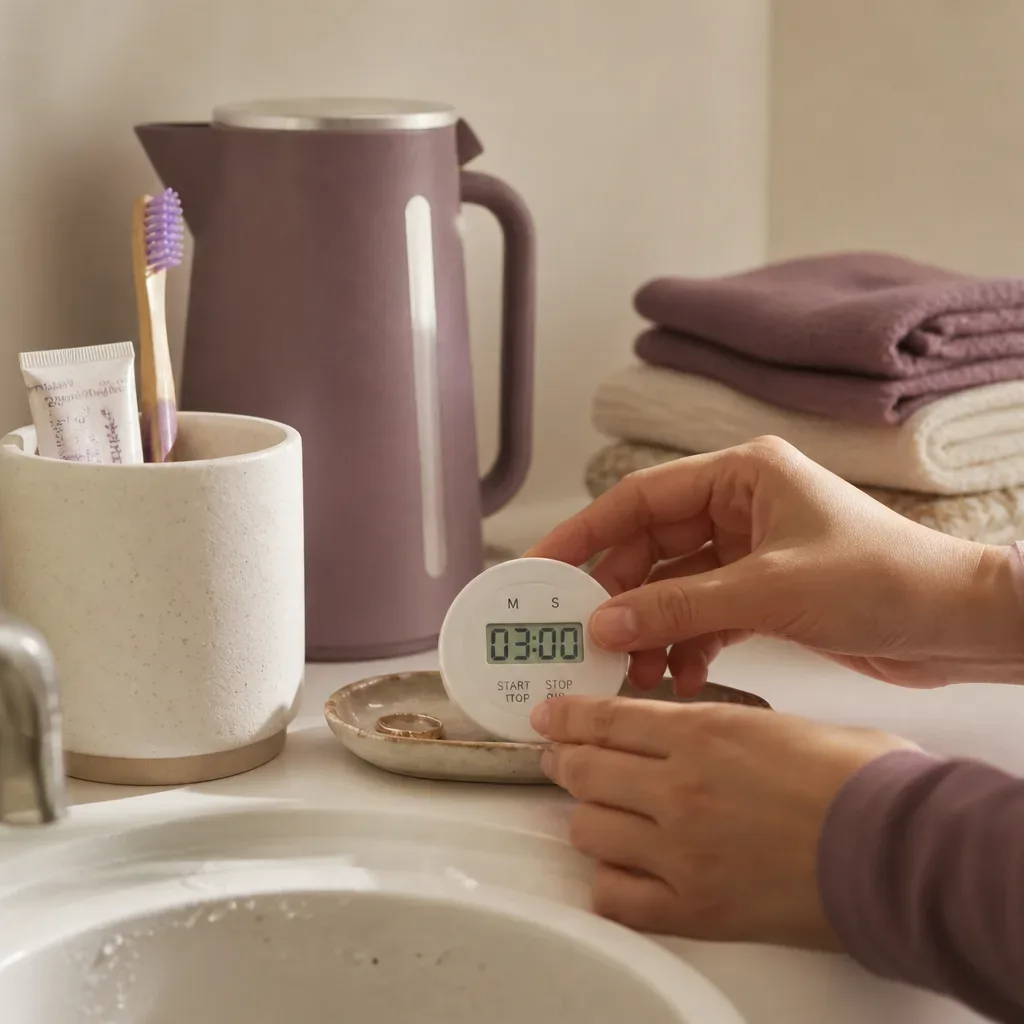
Do not build a temple around it. Put the practice where your life already has a hook. After brushing your teeth. Before the first message check. When the kettle clicks off. Behavioral scientists call this contextual cueing; the same setting helps the brain anticipate the same action. A 2020 review in Health Psychology Review found that habit formation is helped by consistency of context and repetition, especially when the behavior is simple.
Use this small setup:
- Choose one daily cue. Tie the audio to a thing that already happens.
- Choose one body position. Sit on the bed, stand by the window, or place one hand on your chest.
- Choose one ordinary proof. See a receipt paid, an email sent, a calm answer given, a clean kitchen at 9 p.m.
- Choose one measure. Track only whether you listened.
The proof matters because the mind believes the ordinary more easily than the theatrical. If your audio says you are steady with money, picture opening your banking app without flinching. If it says you are loved, picture putting your phone down because you do not need to check it again. Specific scenes ask less disbelief from the body.
This is where affirmations can help, but only lightly. One sentence after the audio is enough. “I answer from steadiness.” “I keep promises to myself.” “I am safe to be seen.” A sentence should fit in the mouth like a small cup. If it feels false, make it smaller.
Before you press play, lower the bar until it becomes honest. The practice should be so simple that your future self has no need to admire you for doing it.
What should you do during the 3 minutes?
During the 3 minutes, listen as if the voice is describing something already becoming normal in you.
The first minute is for settling. Let your shoulders drop. Let your eyes rest on one plain object. A wall. A chair. The rim of the cup. Dr. Andrew Huberman has often pointed to the value of longer exhales for calming the body; even without making breathwork the main event, 3 slow exhales can tell your system it does not need to defend itself from a sentence.
The second minute is for the scene. Do not chase many images. Choose one. Your Dream-Self Moment should feel like a lived fragment, not a poster. You hear yourself speak differently in a meeting. You walk past the bakery and buy bread without making it a moral trial. You open the studio door and begin before you are ready.
The third minute is for consent. Not dramatic belief. Just the quiet permission to let the words be near you. In self-affirmation research, including work by Claude Steele and later studies using brain imaging, people often respond better when statements connect to values and identity rather than empty praise. Your audio should name who you are practicing being, not flatter you into numbness.
If your mind wanders, nothing has gone wrong. Remember the Harvard sampling study: about 47% mind-wandering is common. Return when you notice. The return is not a repair. It is the repetition.
A useful 3-minute structure looks like this:
- 0:00–1:00: arrive in the body and hear the main identity cue.
- 1:00–2:00: see one ordinary proof in detail.
- 2:00–3:00: let one sentence land and repeat it once after the audio ends.
Belief is not a mood you force. It is a familiarity you practice.
This is why personalized audio can feel different from a generic track. Your name, your desire, your real scene, your ordinary proof. The mind has fewer places to hide.
How does this fit with manifestation without pretending?
It fits with manifestation when you treat listening as rehearsal for perception and choice, not as denial of what is hard.
There is a clean kind of skepticism I trust. It asks, “What exactly am I doing here?” The answer: you are practicing the inner narration that makes a different action easier to choose. If you want a grounded definition of manifestation, start with this manifestation page. It keeps the work close to attention, identity, and daily movement.
Neville Goddard wrote about assuming the feeling of the wish fulfilled. Joe Dispenza speaks about rehearsing a future self until the body recognizes it. You do not have to accept every claim from either teacher to use the practical center: repeated inner rehearsal changes what feels available. In small studies of mental practice, including sports psychology research from the 1990s onward, imagery has been linked with performance gains when paired with real-world practice.
The key is not pretending. Pretending says, “Nothing hurts.” Practice says, “This hurts, and I am learning a different response.” Those are not the same sentence. One splits you in two. The other gives you a handrail.
Some readers bring timing into the practice. If that is you, astrology and manifestation can be used as a reflective calendar, not a command. A new moon can remind you to begin. A full moon can remind you to notice what is complete. The audio still does the daily work.
Princeton’s PEAR laboratory studied mind-matter questions from 1979 to 2007, and its results remain debated. I mention this carefully because mystery is not permission to exaggerate. You do not need to prove that thought controls matter to benefit from a 3-minute practice that changes your attention, tone, and next choice.
How do you know the audio is working?
You know it is working when your recovery shortens, your choices shift slightly, and the new sentence feels less foreign.
Do not look first for fireworks. Look for smaller evidence. You pause before sending the sharp message. You make the appointment. You charge the fair price and survive the feeling in your chest. You notice the old thought, but you do not obey it as quickly. In behavior change, these are not small things. They are the doorway.
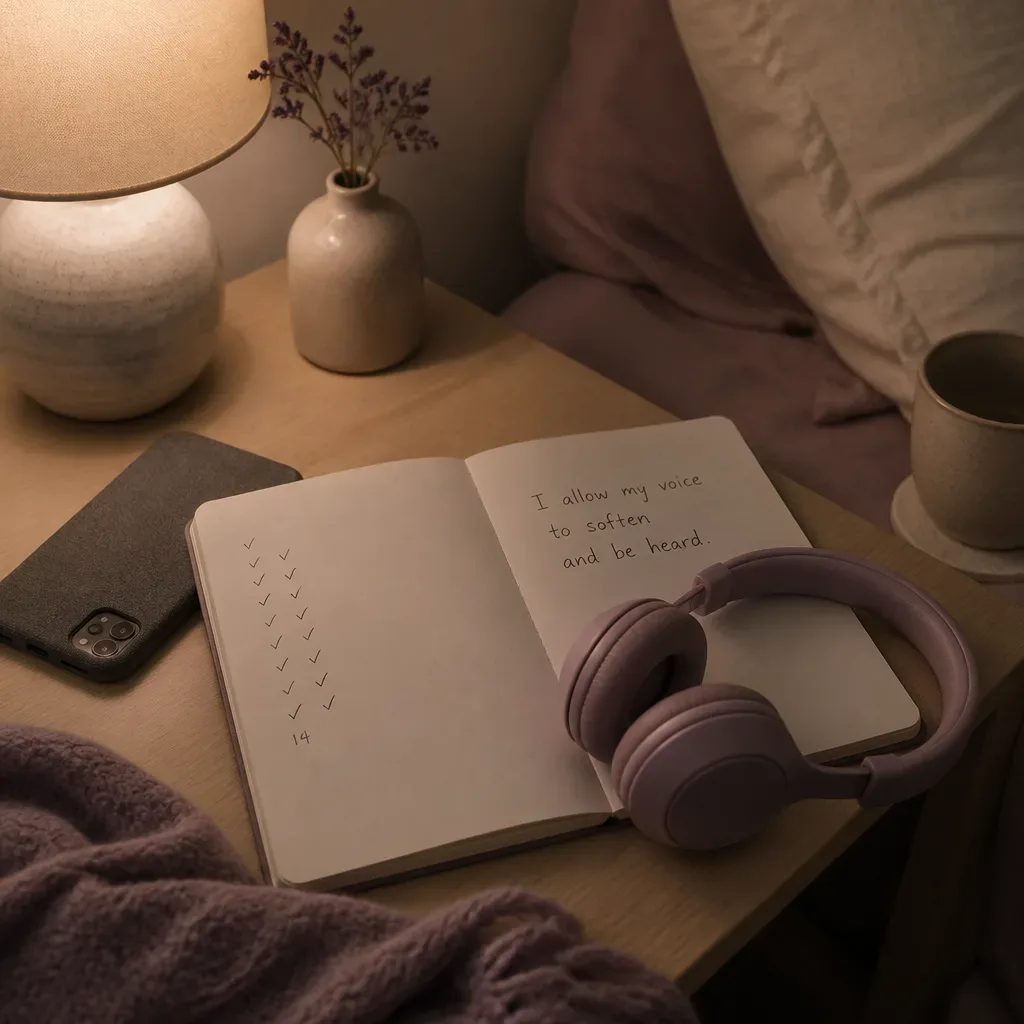
Use a 14-day test. Fourteen days is short enough to keep your attention and long enough to reveal friction. Track three marks only:
- Listened today: yes or no.
- One ordinary proof: what did you notice?
- Resistance level: 1 to 5, without analysis.
A 2019 paper in Social Cognitive and Affective Neuroscience reviewed evidence that self-related processing involves midline brain regions, including the medial prefrontal cortex. That does not mean a recording rewires you on command. It means identity is not abstract. The brain treats self-relevant material differently. A personalized Dream-Self Moment uses that doorway.
By day 7, you may simply know the words. By day 14, you may notice which line you resist. By day 30, the line may begin appearing in real moments. The 2009 habit study’s median of 66 days is useful here: give the practice enough time to become ordinary before you decide what it is.
The first sign of change may be that you stop needing the old story to be wrong. You just stop feeding it first.
If you miss a day, return the next day. No punishment. No debt. A skipped listen is information, not a verdict.
What is the simplest 3-minute practice to start tonight?
The simplest practice is to listen once, in the same place, with one chosen scene and one repeated line afterward.
Tonight is a good time because the day has already stopped asking you to perform. Put the phone on Do Not Disturb. Sit where you will not need to explain yourself. If you use the AYA Method, press play on your Dream-Self Moment and let the narration come from the self you are learning to recognize. If you use another recording, choose one that is specific, calm, and believable enough to stay with.
Here is the full 3-minute practice:
- Minute 1: Listen and soften. Let the first lines arrive. Take 3 slower exhales. Do not correct your thoughts.
- Minute 2: See one proof. Picture a plain scene that would show this identity in daily life.
- Minute 3: Receive one sentence. Choose the line that feels most true or most needed.
- After the audio: repeat the line once. Say it quietly. Then stop.
- Mark the return. Put one small mark on paper or in your app.
That is all. Not because you are doing the minimum, but because the minimum done daily becomes a trusted door. The American Psychological Association has noted for years that stress can make behavior change harder when goals are too broad. A tiny practice protects the beginning from your own impatience.
If you want to pair it with a visual, use the Manifestation Board after listening, not before. Let the audio lead. Let the image remind. If you want to pair it with a sentence, choose one daily affirmation after listening, not ten before. Let the method stay clean.
The kiln taught me this. You do the careful work. You close the door. Then heat and time finish what your hands began.
Return softly tomorrow.